Warehouse Renovation Woodworking
Historic Warehouse Renovations
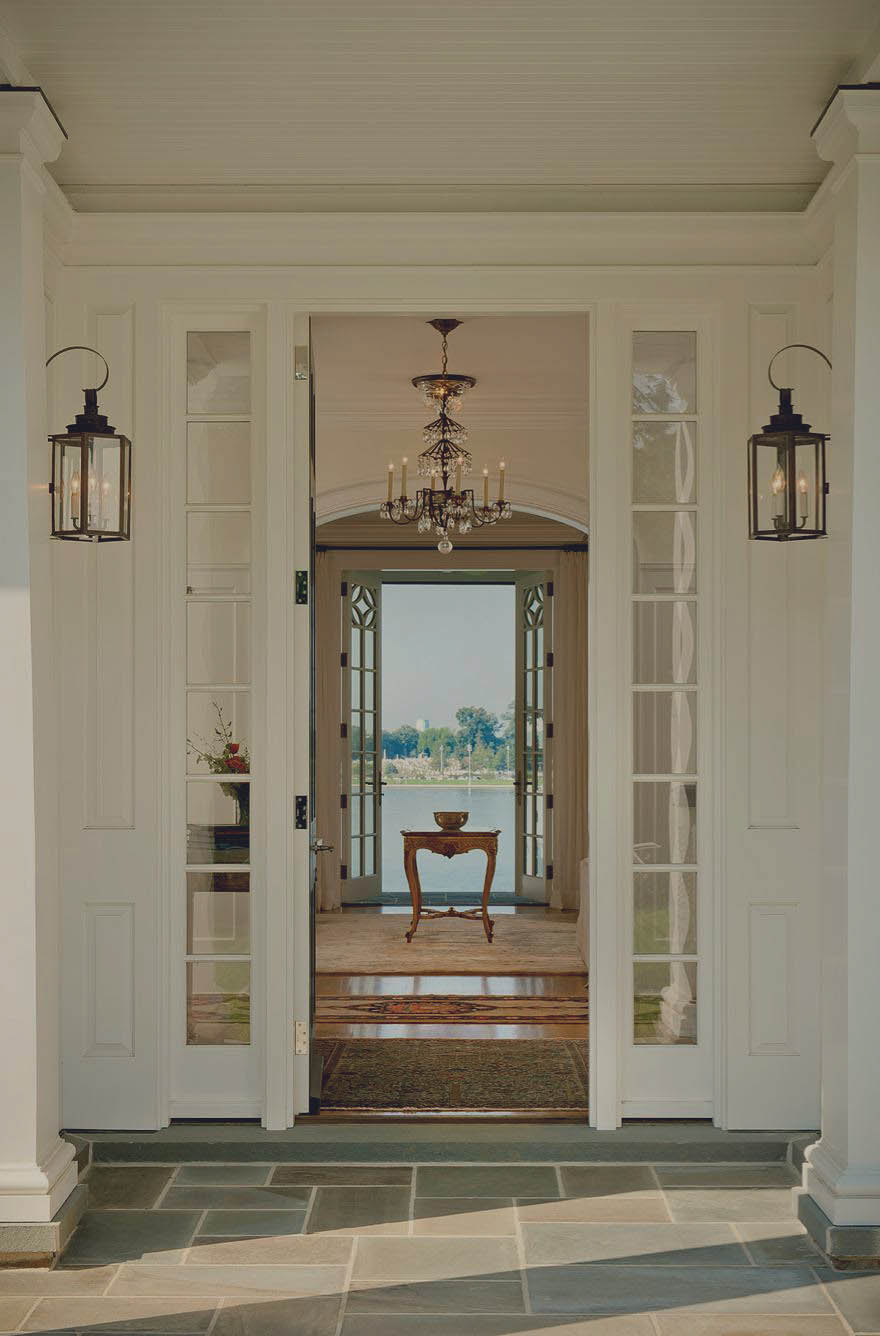
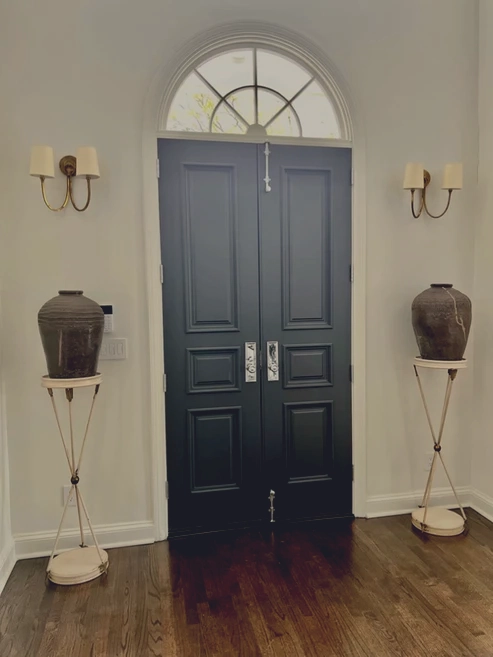
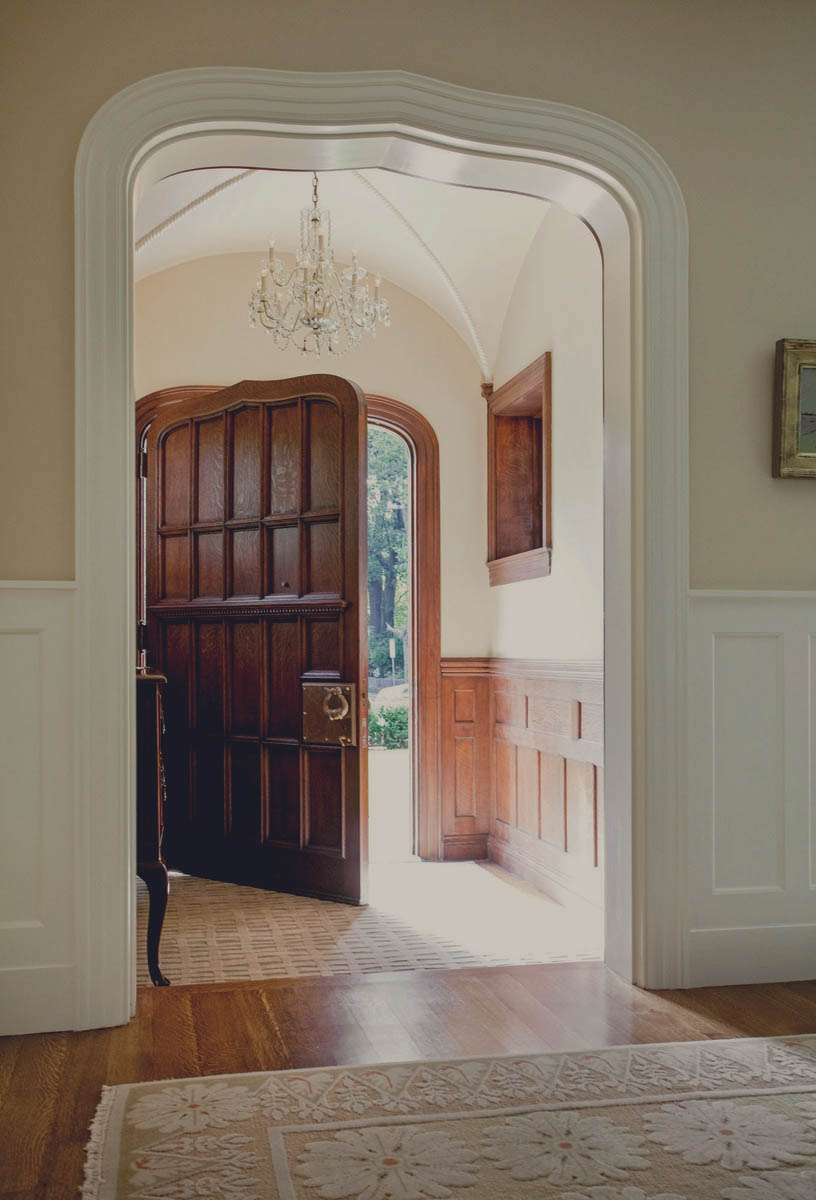
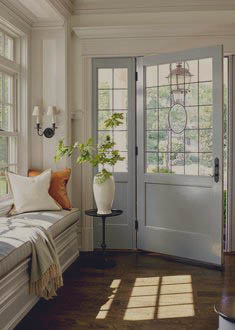
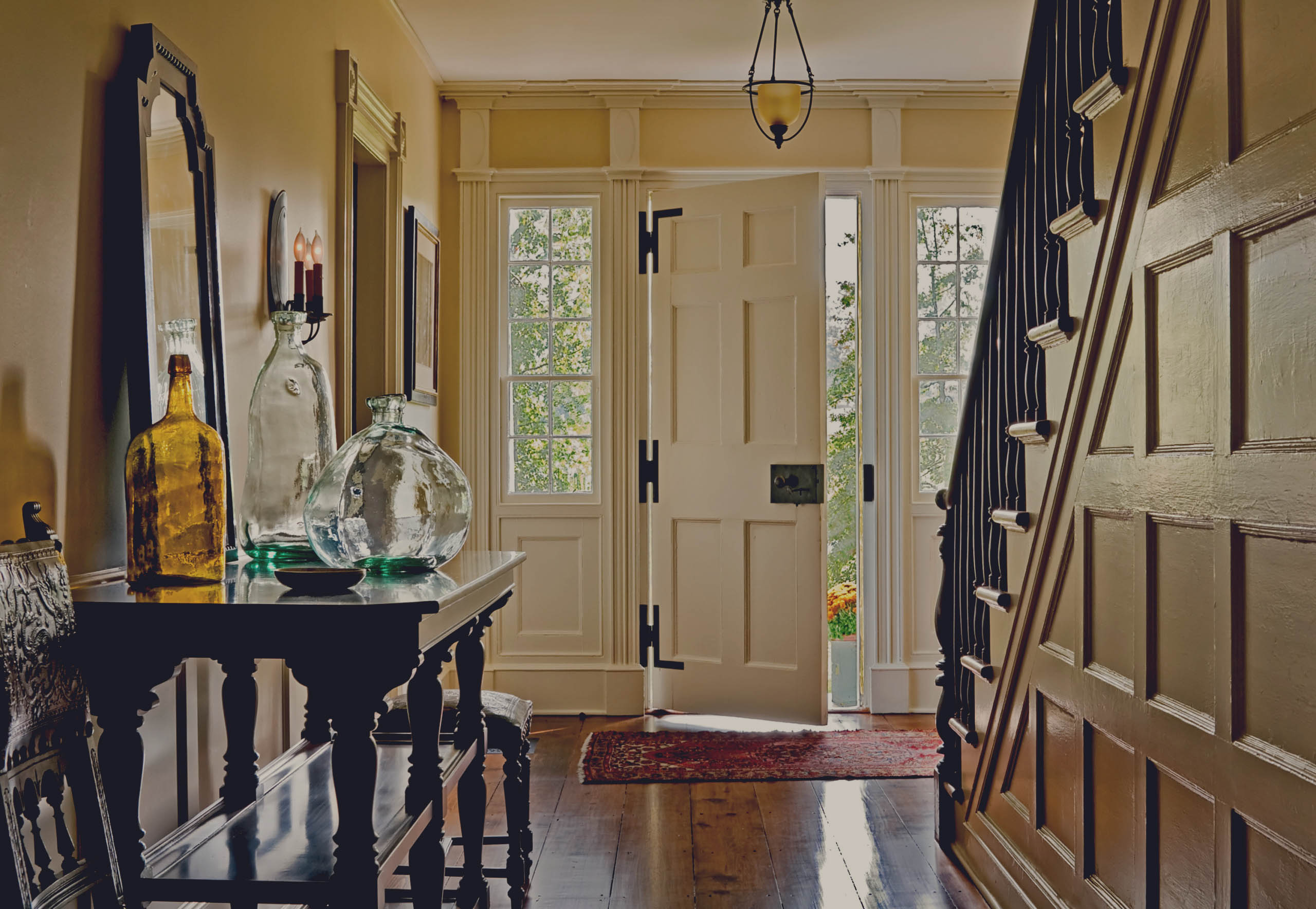
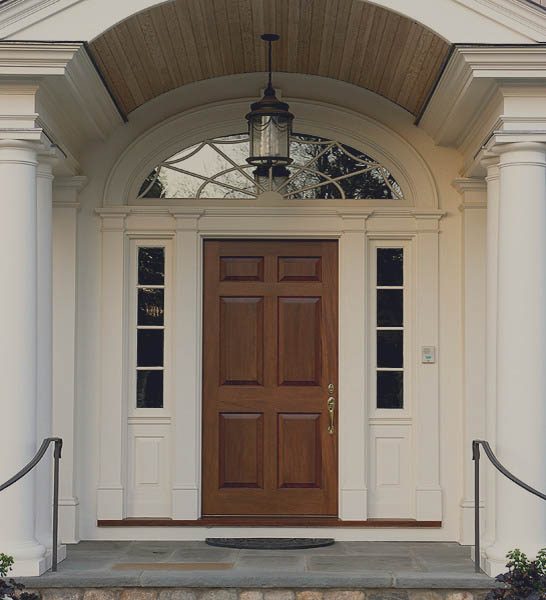
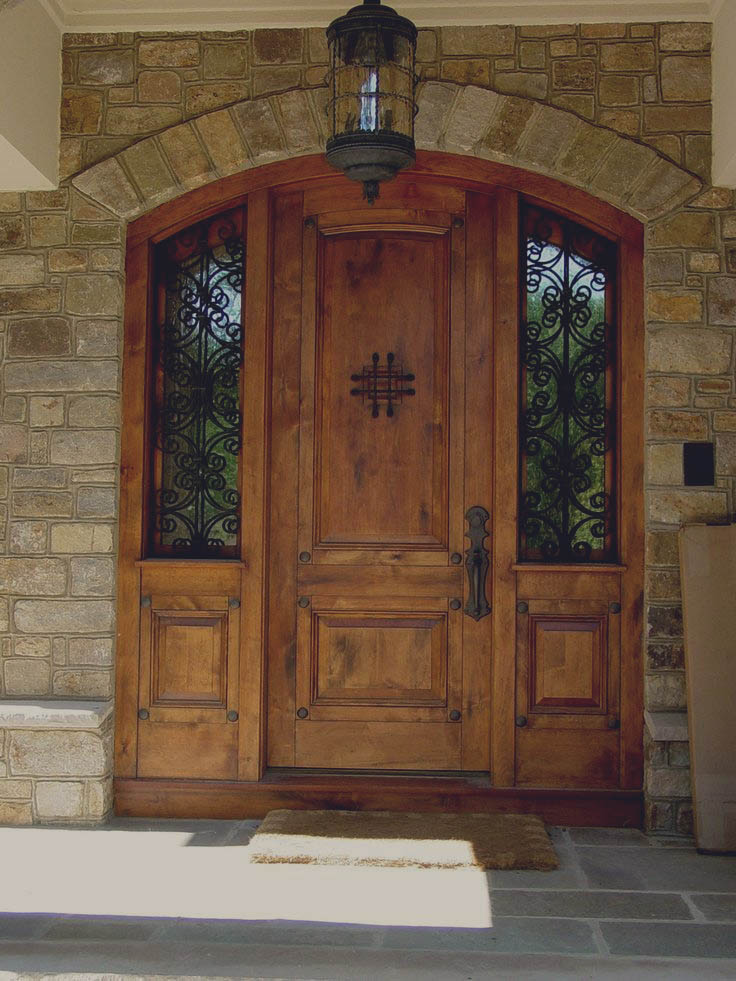
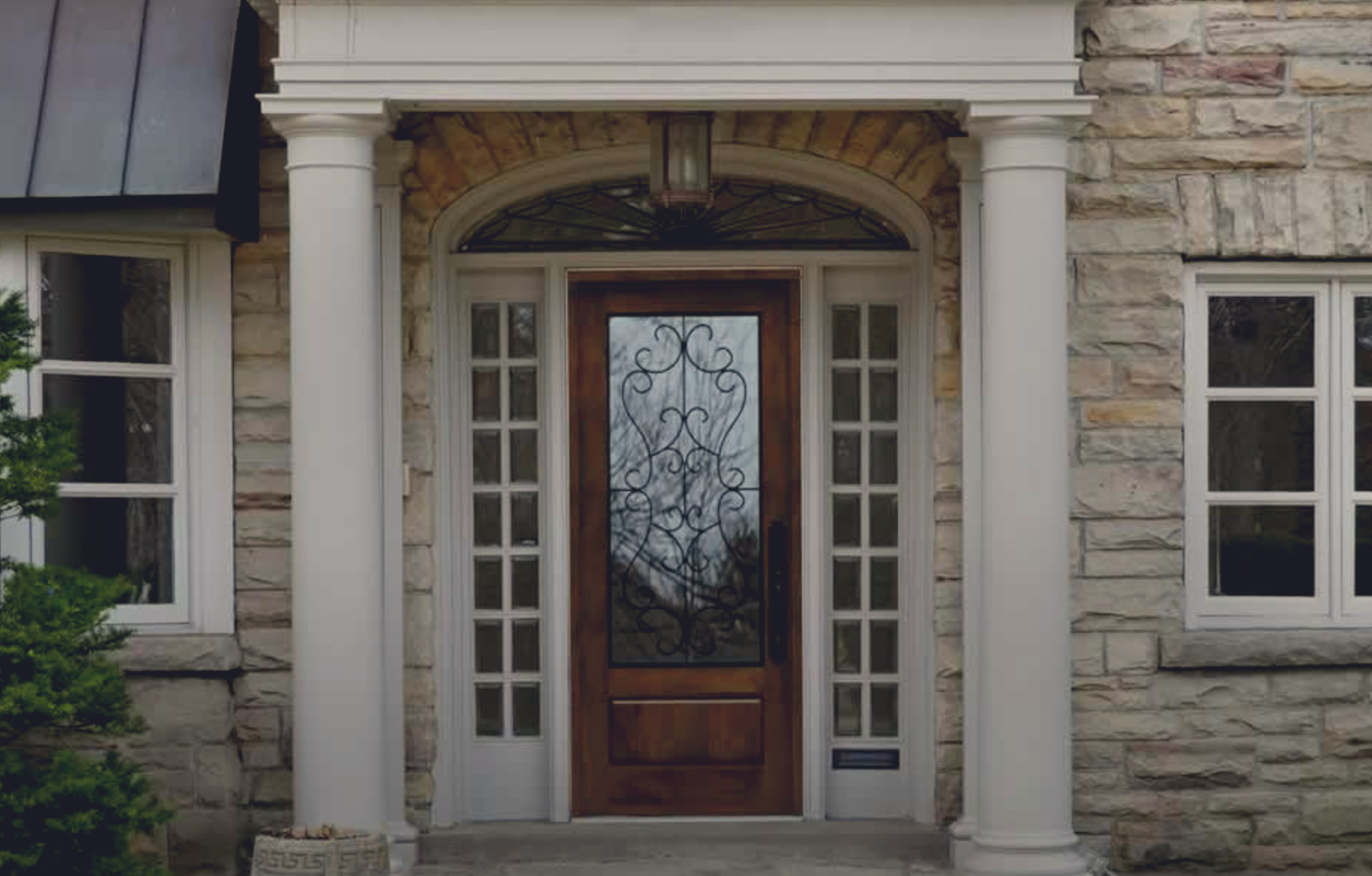
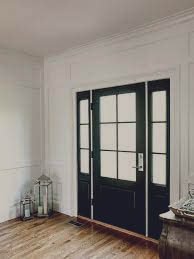
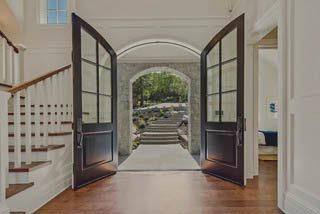
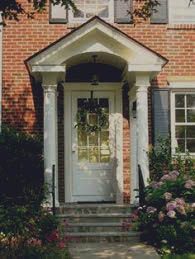
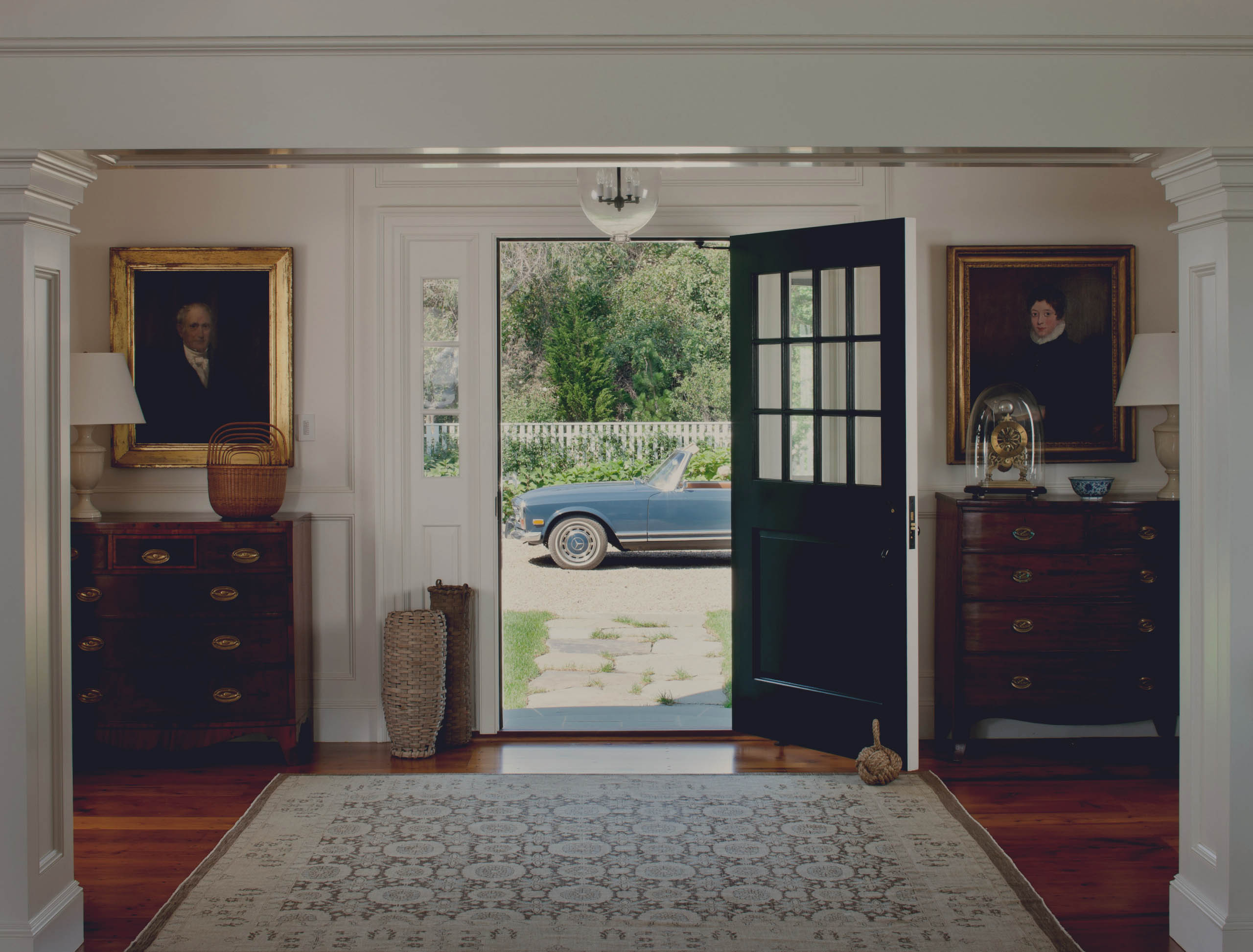
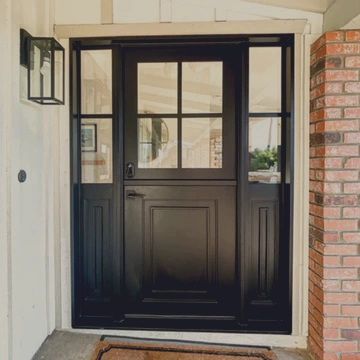
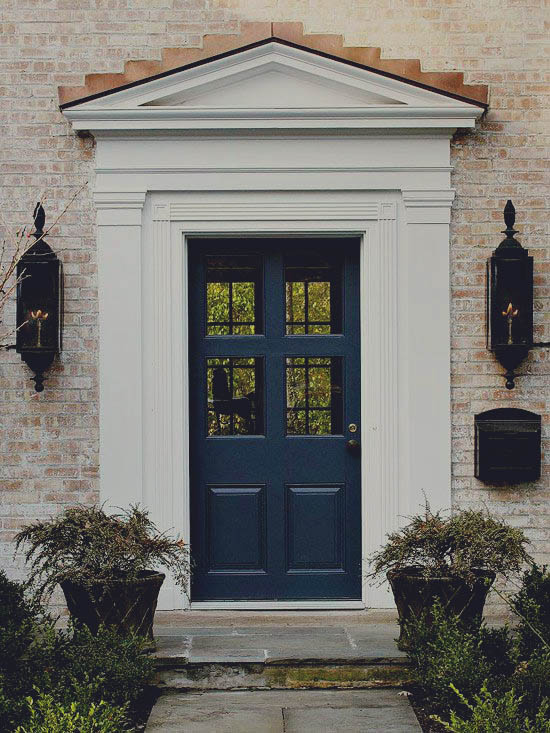
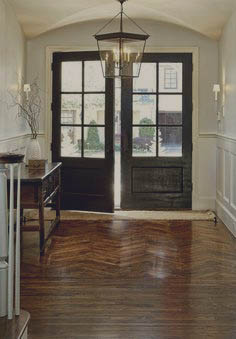
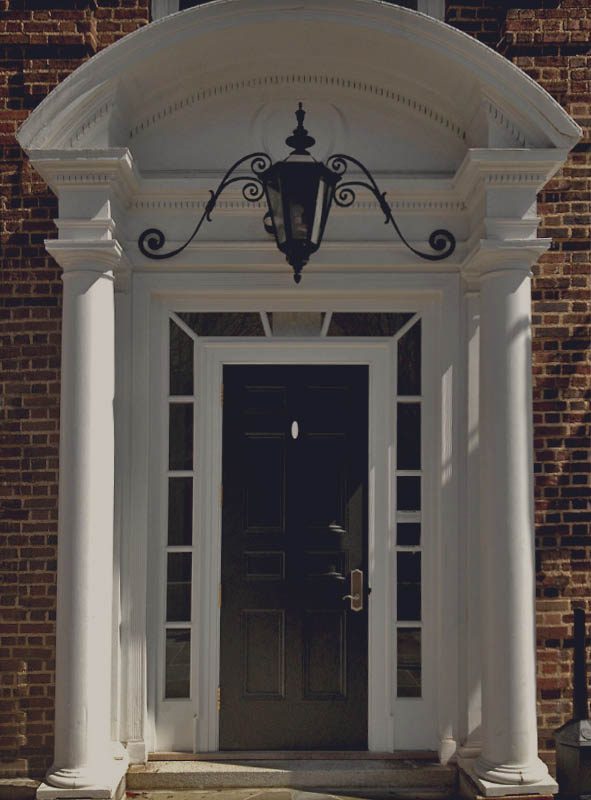
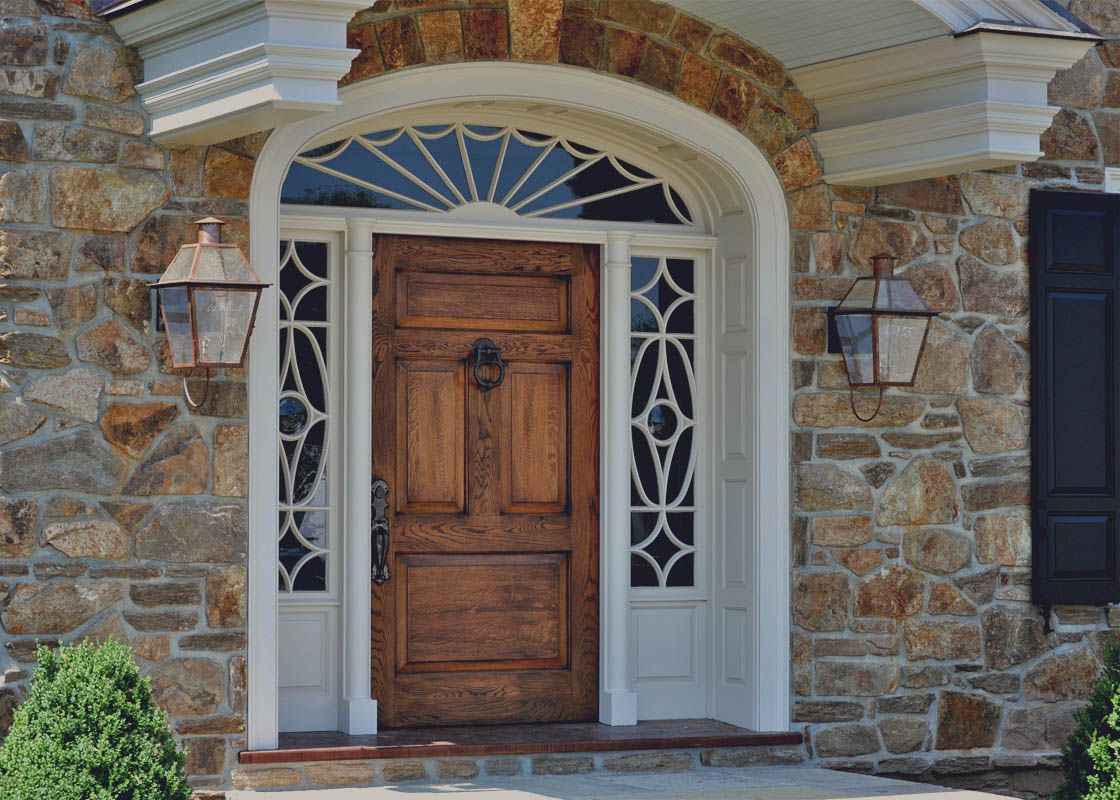
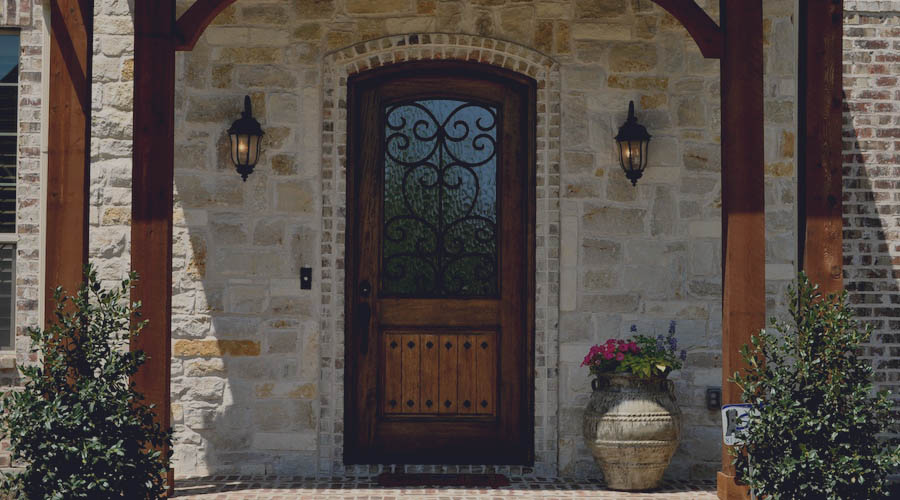
- Solid wood doors
- Historic replica windows
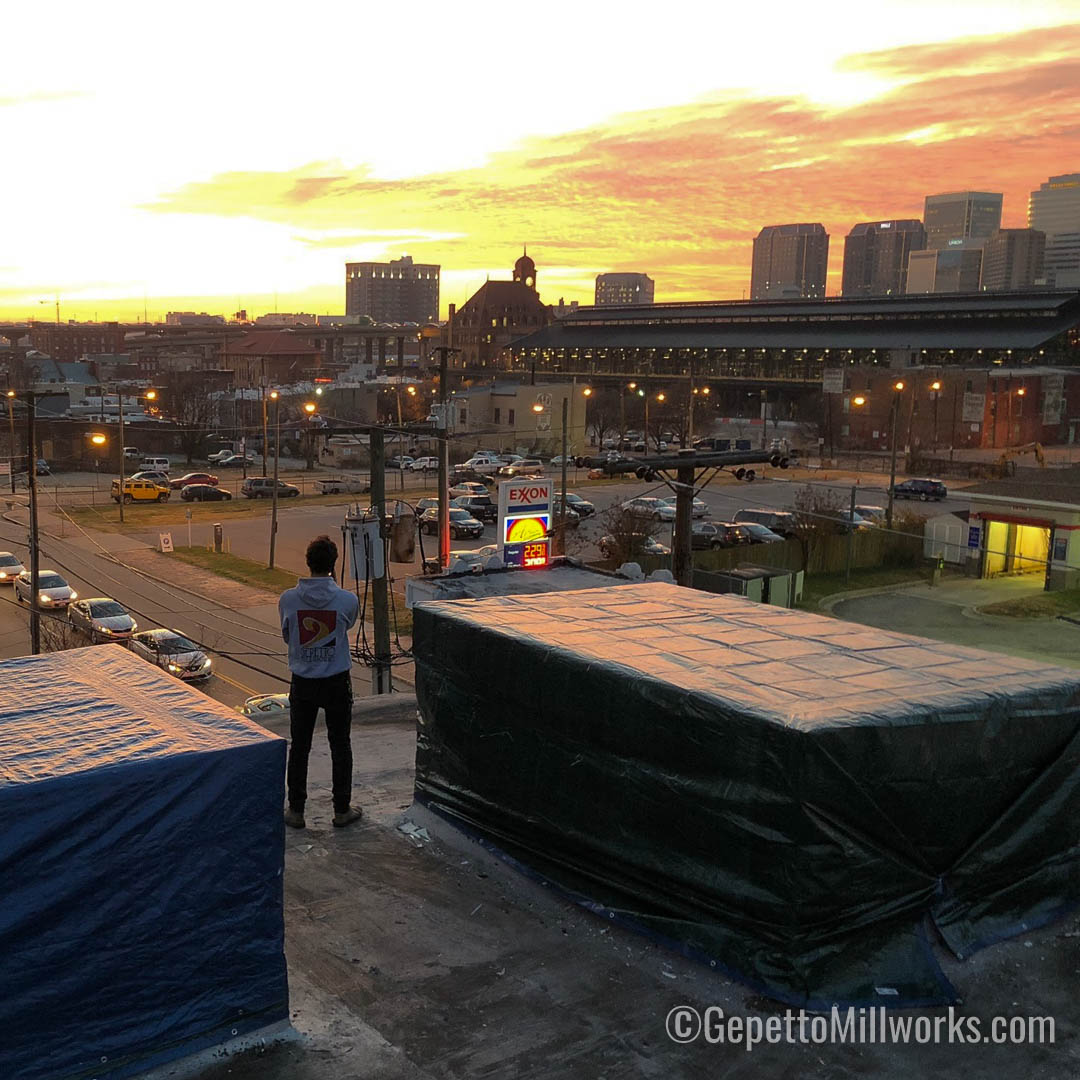
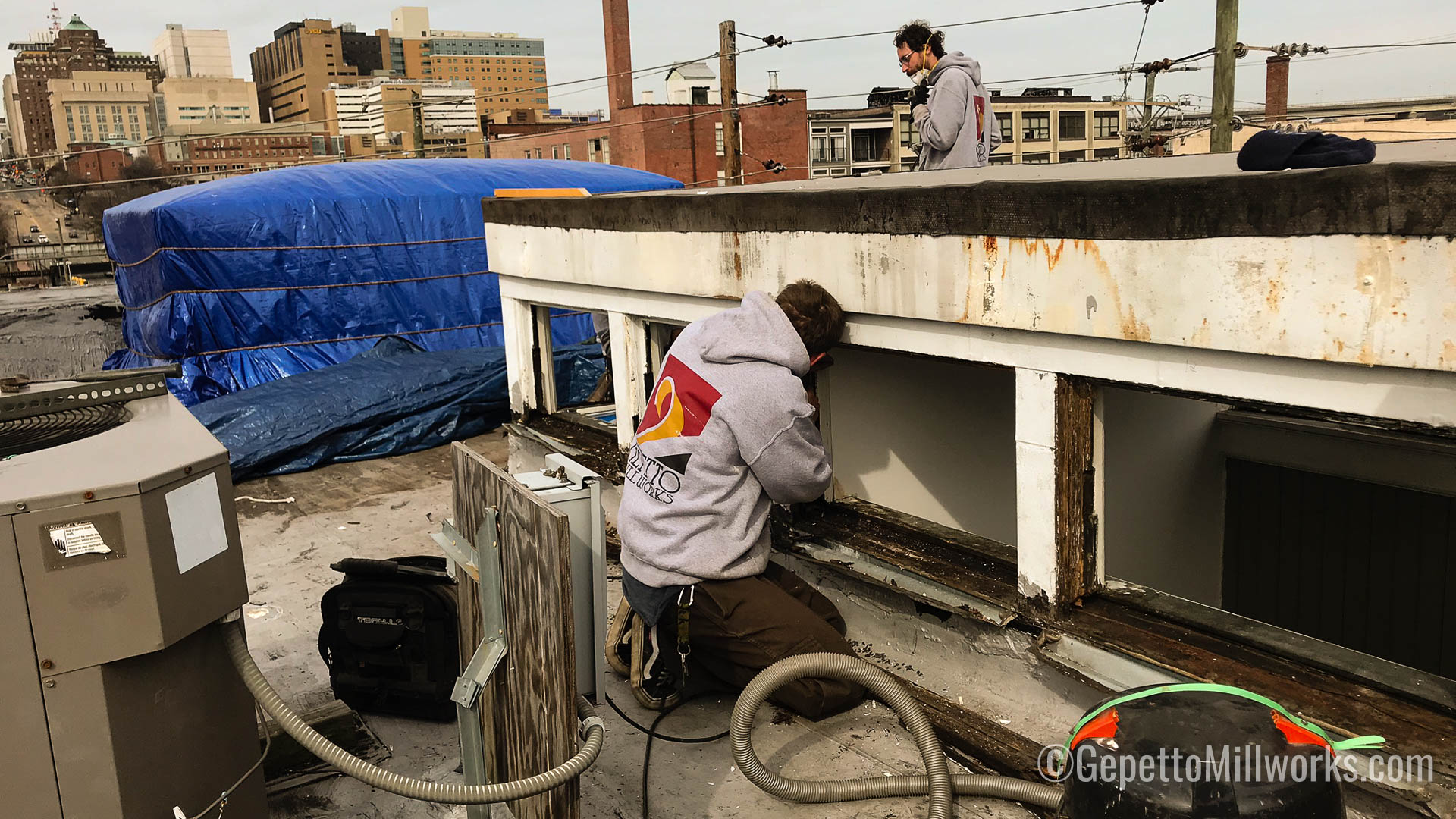
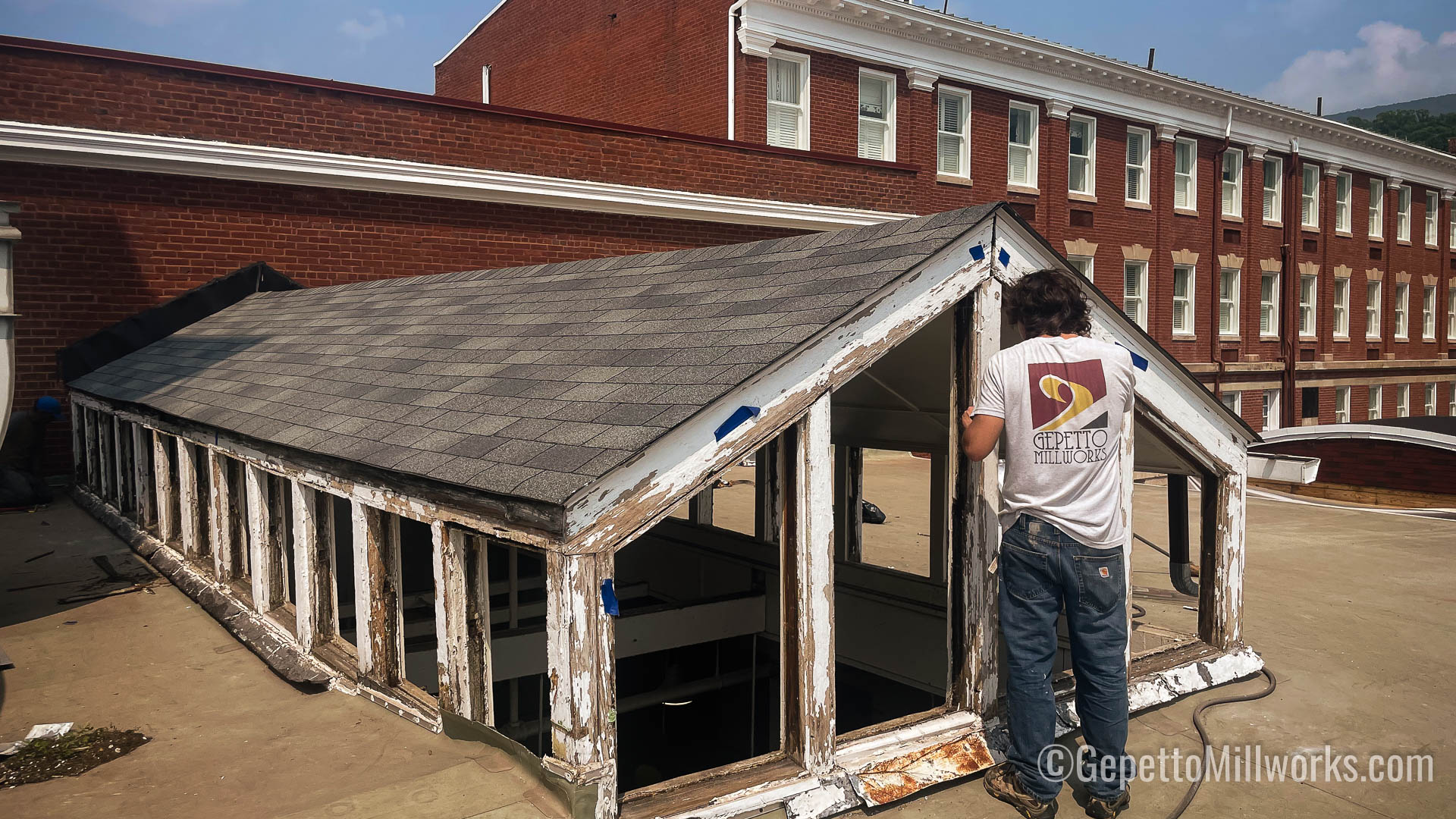
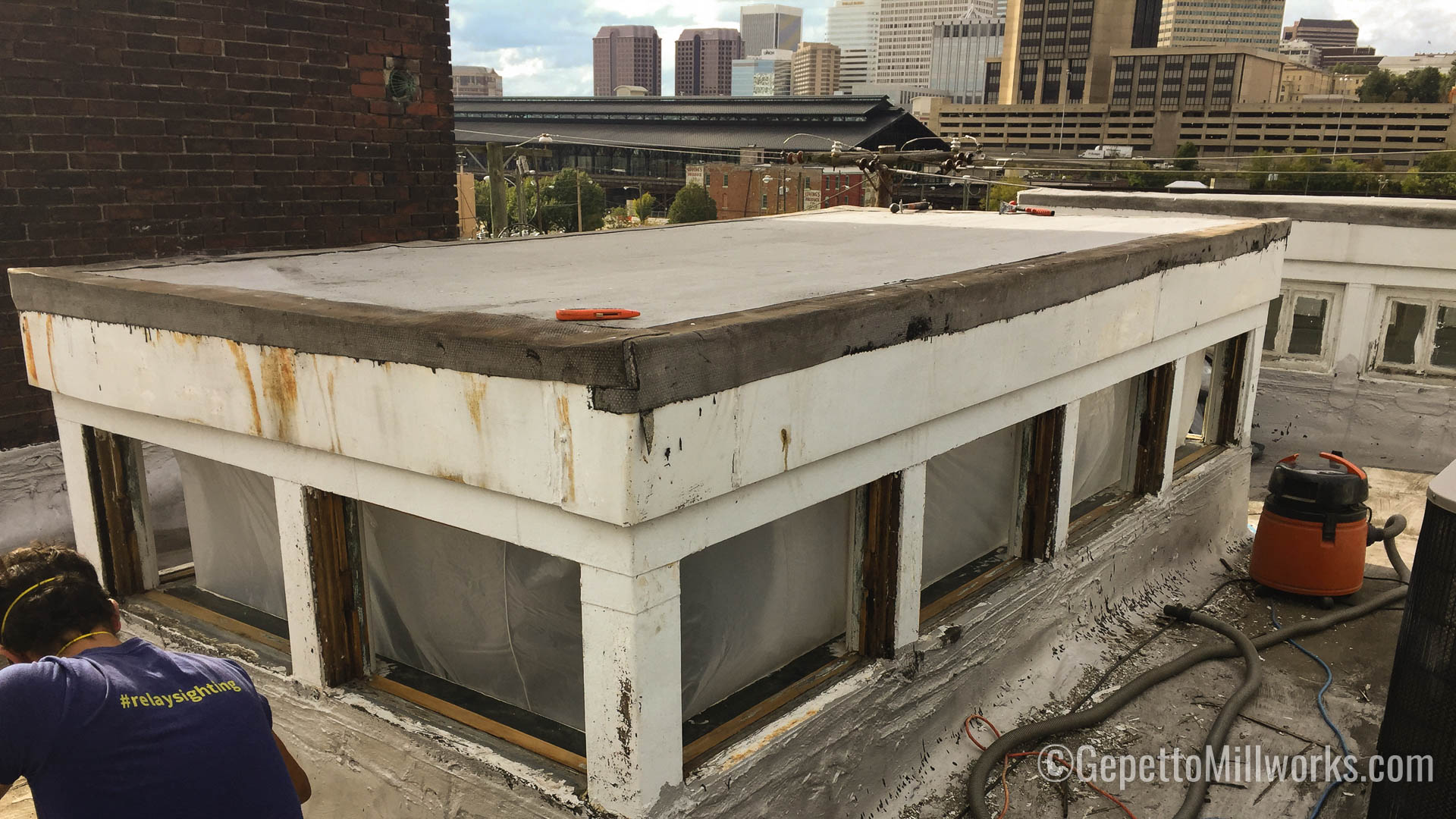
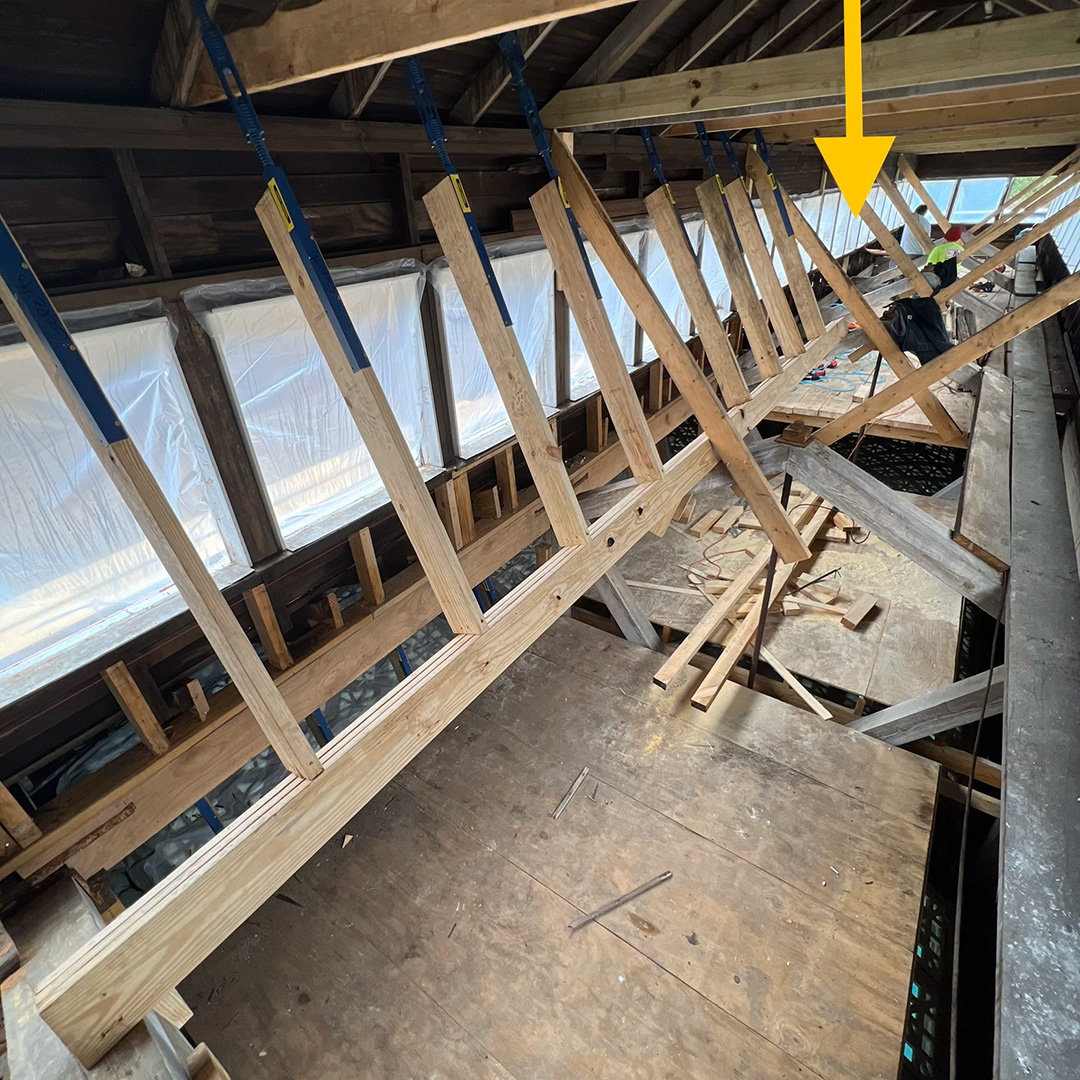
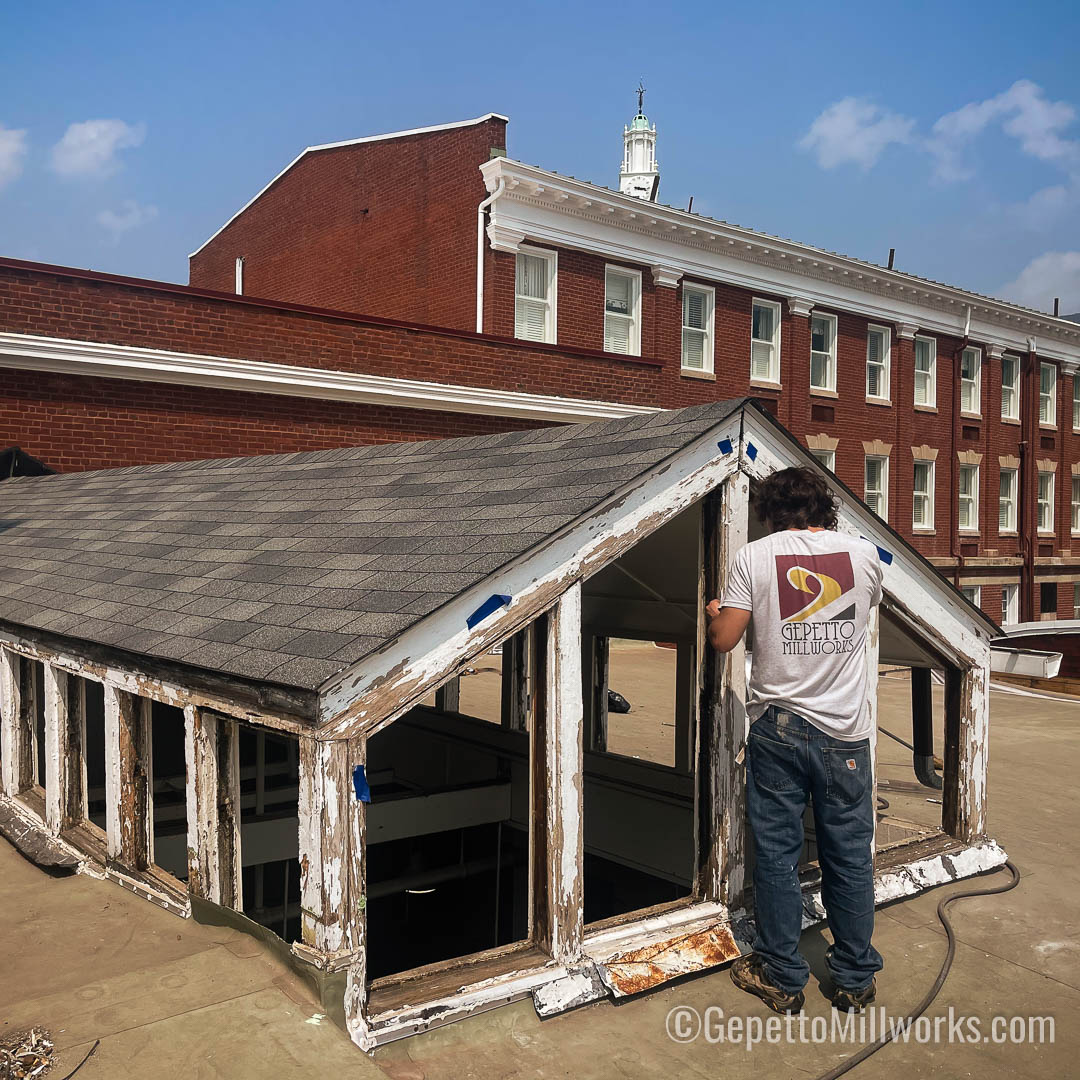
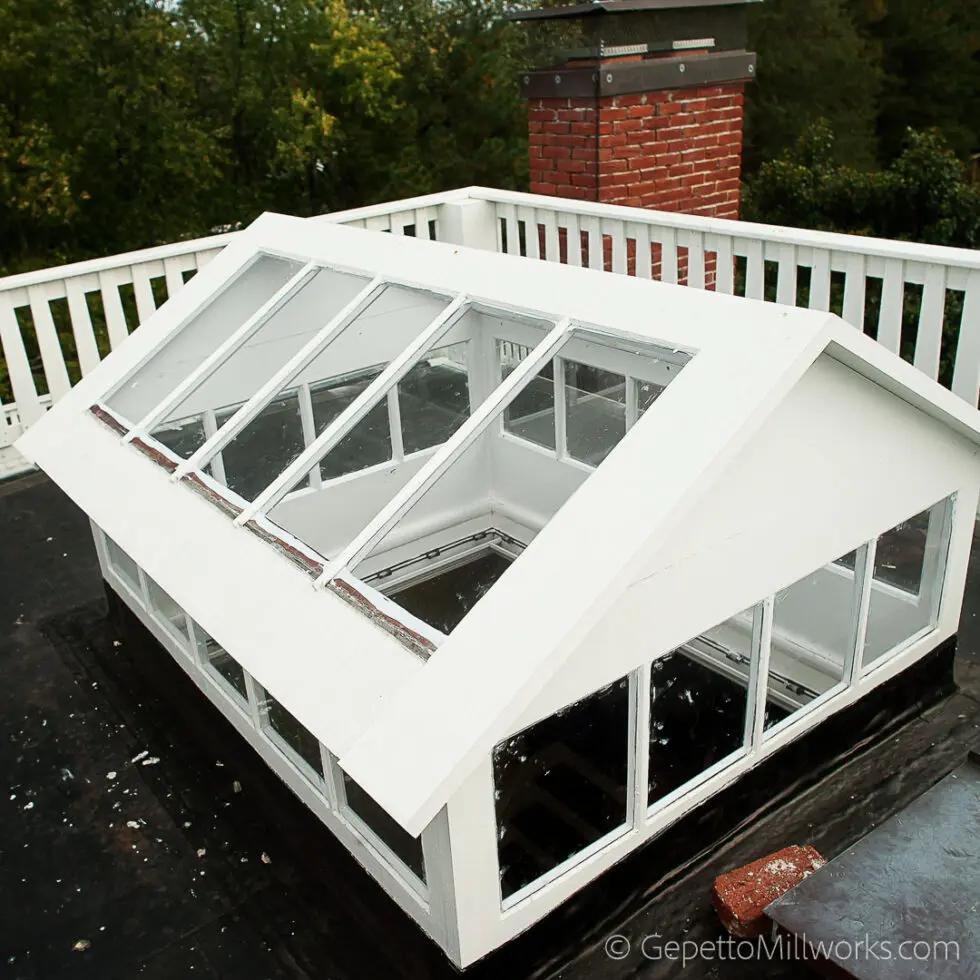
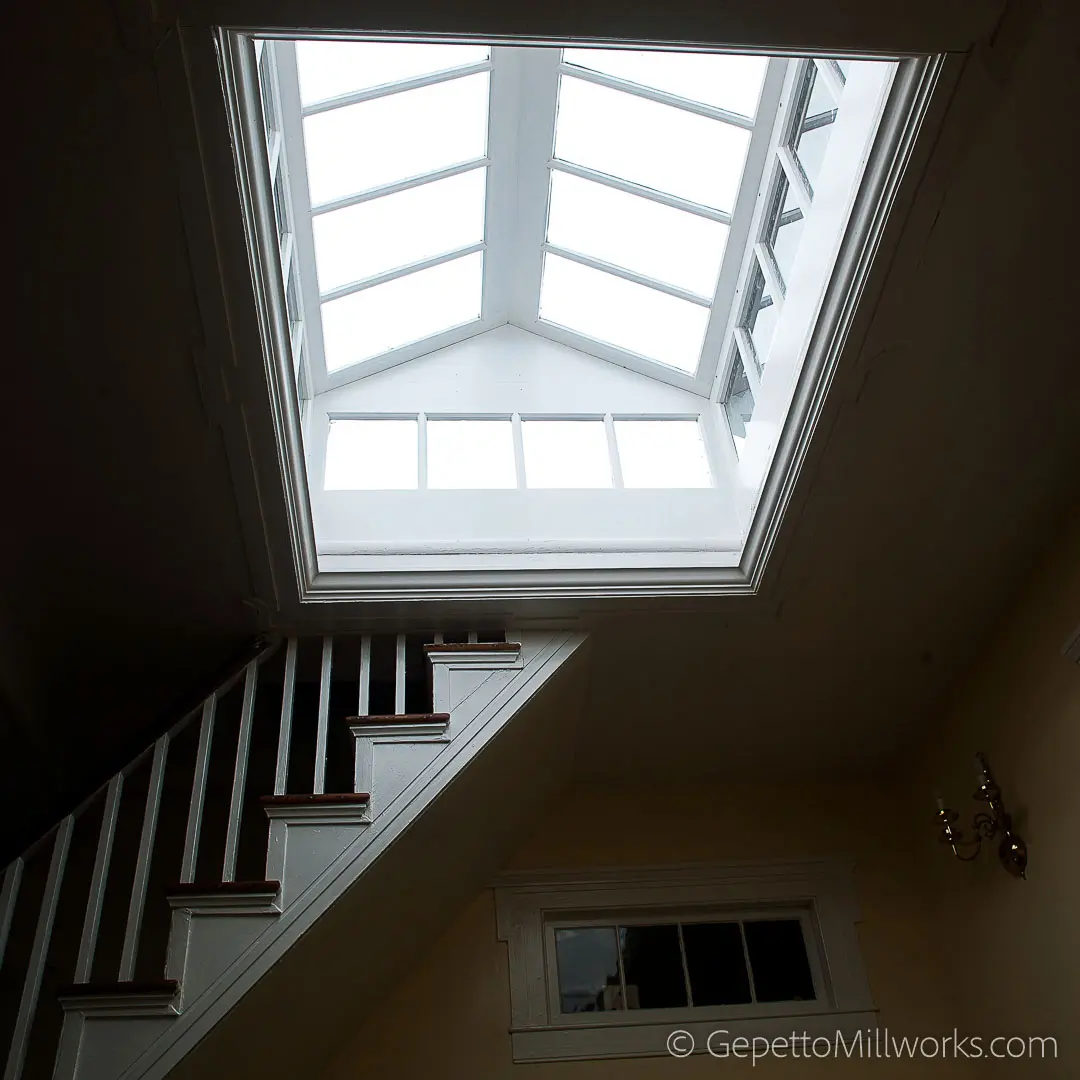
- Restored Wooden Skylights
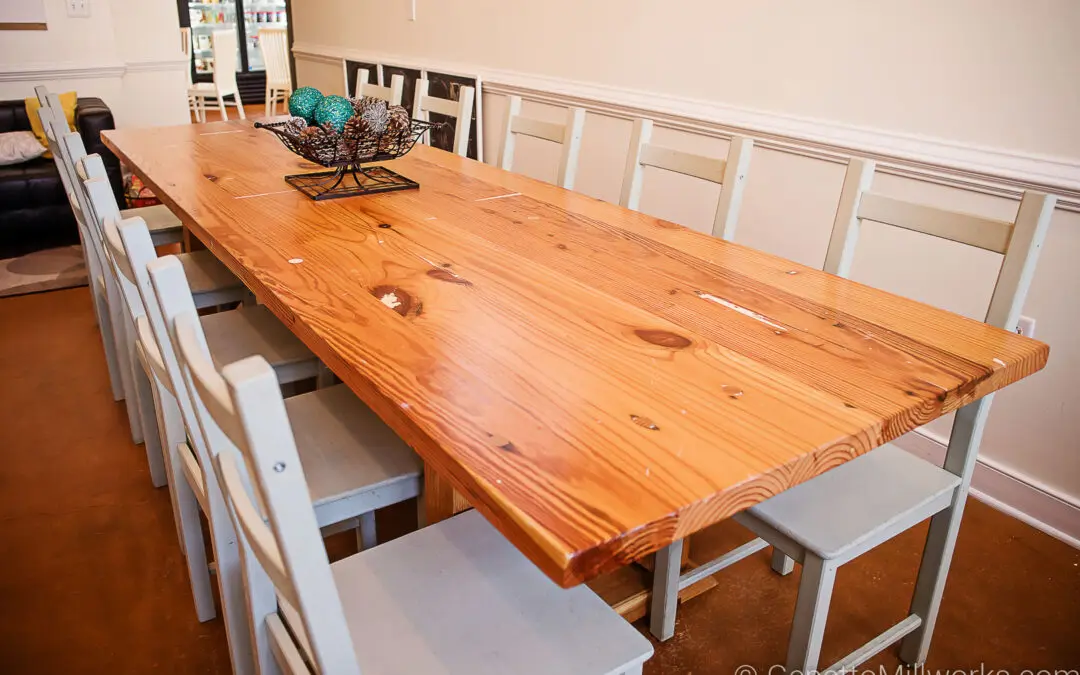
- Reclaimed wood flooring
Replica Wooden Windows being built on our shop assembly line.
We have finished one of our single largest historic renovation contracts creating 860 historic replica windows. Built by hand from African mahogany they passed all physical wear and environmental challenge tests before we began building. The Montgomery Building in Spartansburg SC renovated by Harper Construction. Our team has put in overtime, thought through materials problems and worked diligently through some long hours to make sure we met the project deadlines. Thank you all for your skills and dedication!
Gepetto craftsmen specialize in matching and remaking historic pieces for accurate and lasting renovations qualifying for historic tax credits. While the woodworking may not have changed, people’s expectations as to how long something should take sure have!
The solid mahogany window frames are to the millimeter replicas of the originals, however our bid and the general contractor’s timeline called for a 100 day turnaround on 860 windows. We had to devise a workflow that built 5 windows a day to meet that timeline!
When the tallest guy on your team can walk through a window frame without ducking, it’s a big job. The window frames are of pine, and so sourcing stable quality pine planks 8×2″ over 6ft long is also a trick of the trade that you’ll have to hire us to take advantage of fully. Part of our ability to meet detailed project requirements are our network that sources the raw wood materials right for your construction. The window frame boxes must be accurately joined to square and plumb and so in the video you see us filling the window frame boxes with the window sashes. We have a few more trade secret tips for weather sealing and glazing that helped us pass the stress and efficiency tests that were required by the contractor before they signed off on the whole project. Historically accurate, but meeting modern energy efficiency and weather resistance standards are a modern manufacturing success.
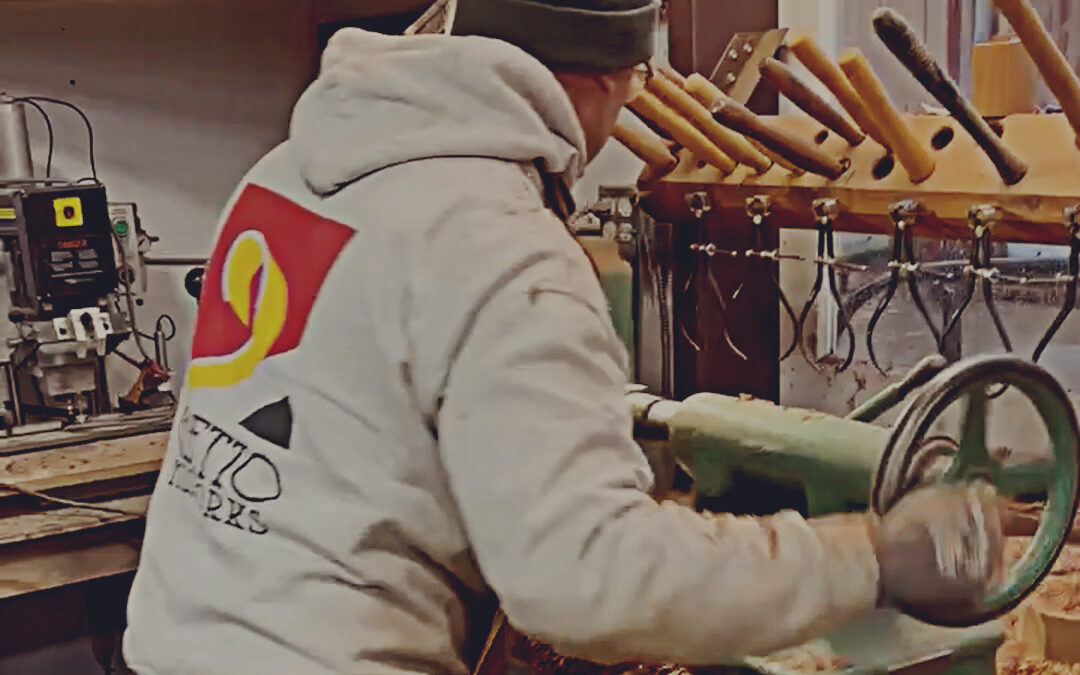
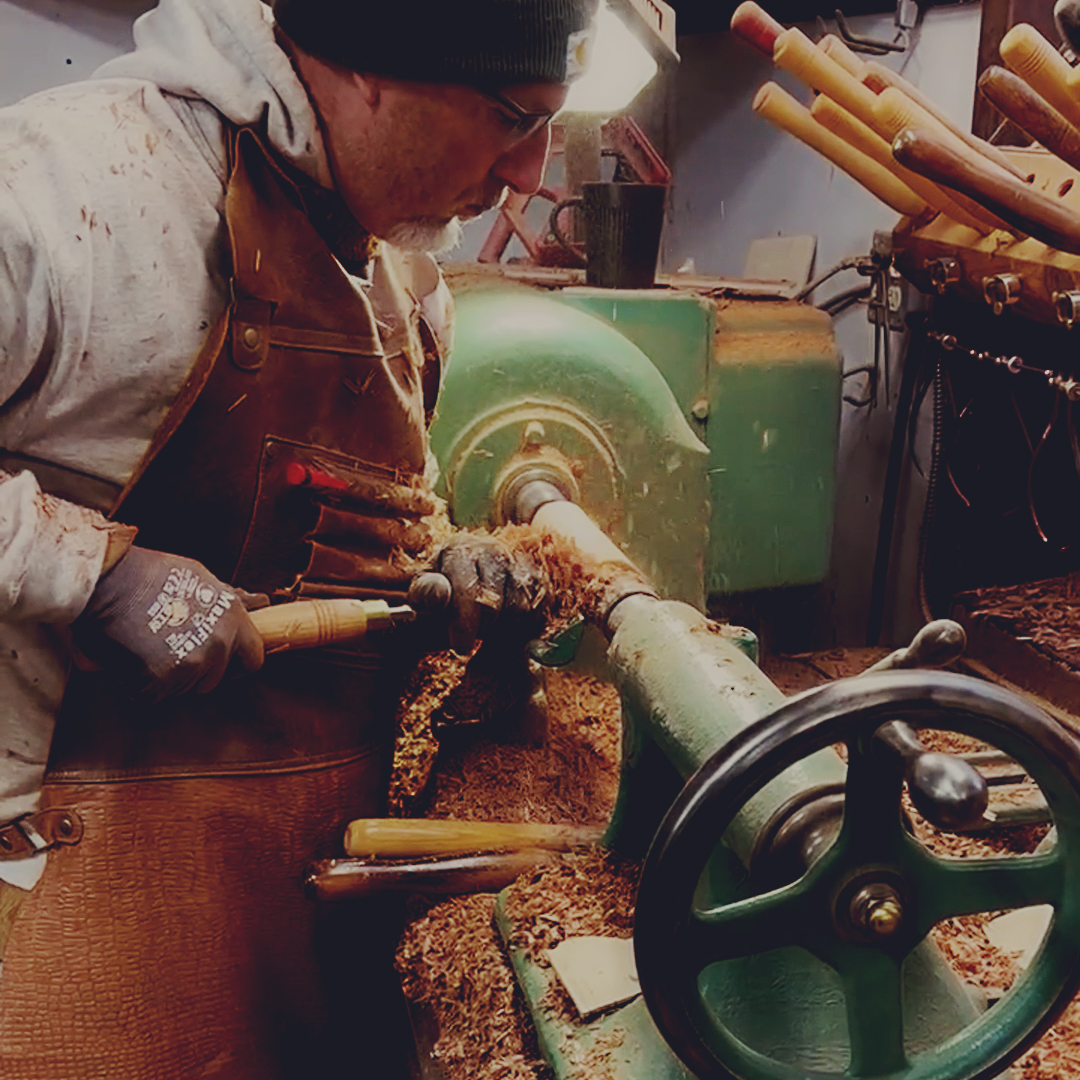
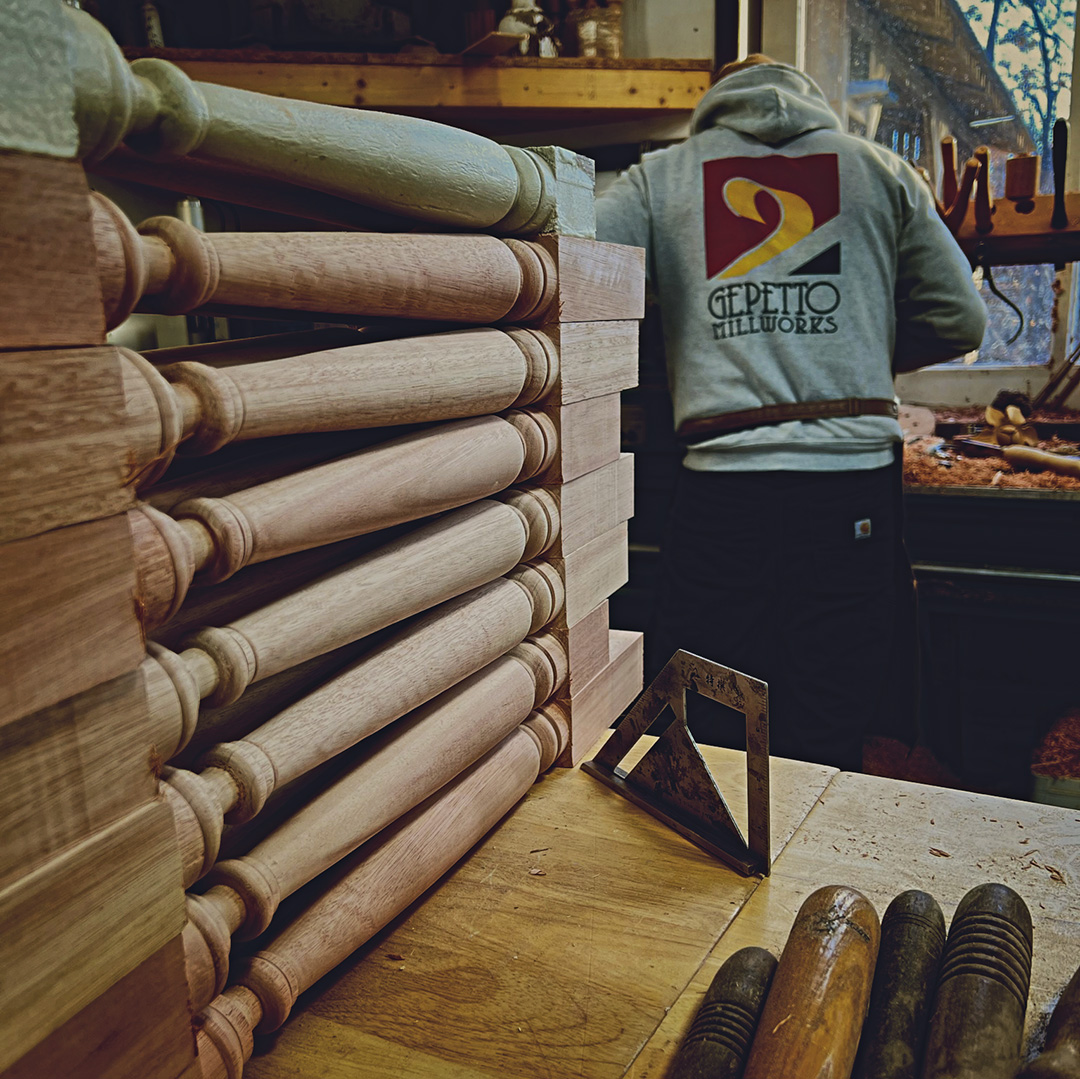
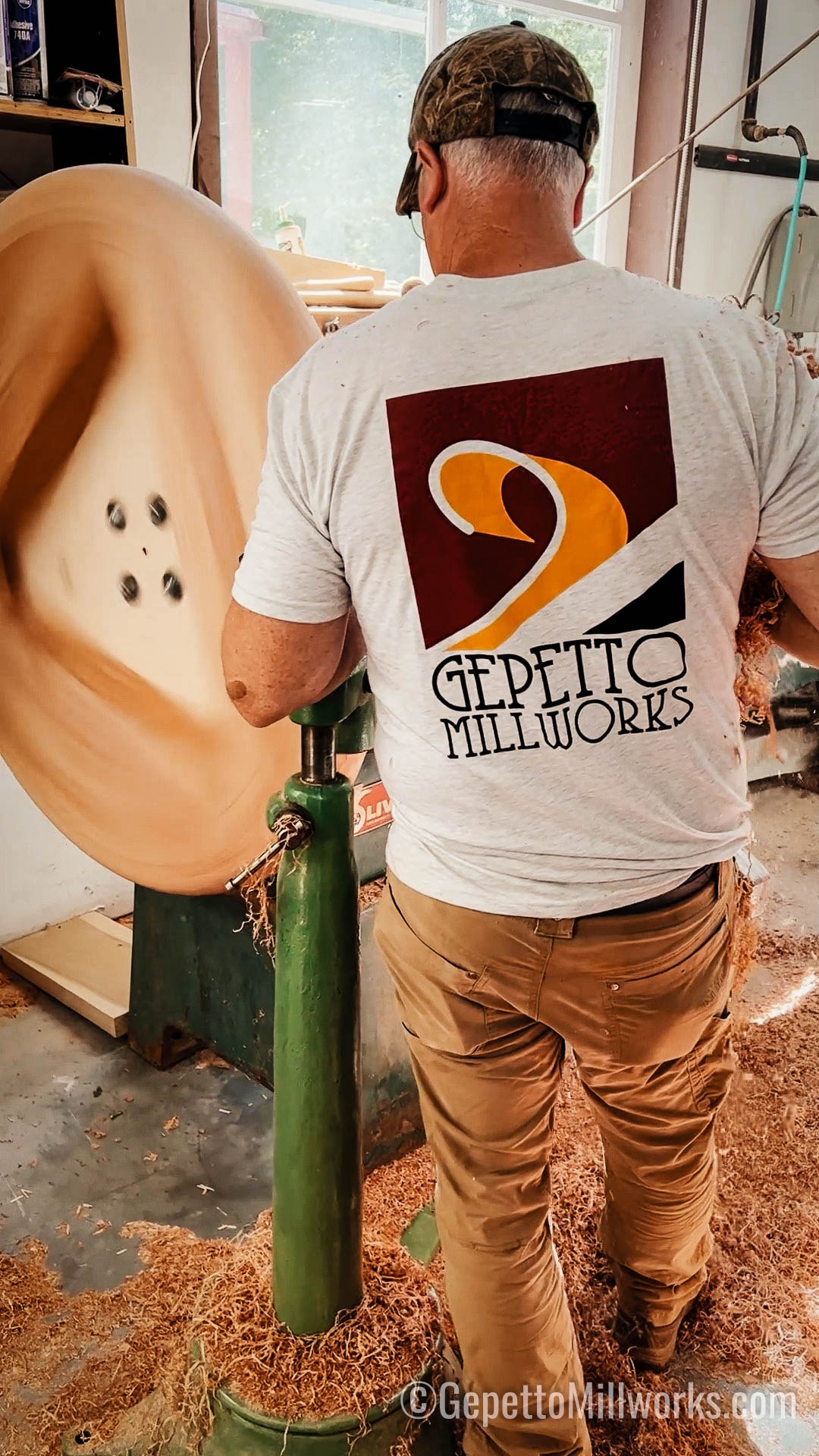
Matthew (with the logo t-shirt in the foreground) intently solving the positioning and fit puzzle that manufacturing wood projects presents on a daily basis. He teaches the craftsmen who are observing the process as well as the sensibility for checking the work. Unlike metals, cement or fiberglass – wood can only be shaped once. Forming a miter joint must be done with exacting precision or it’s too loose and fails. The solid wood construction of these windows include over 20 joints that must be tended to individually. The decision making process of the craftsman guides the fitting and because we have such a large manufacturing scale – the craftsman makes better choices. If piece A is too tight, he can choose from the source stack of forty or fifty pieces to find a better fit without creating wasted pieces or time.
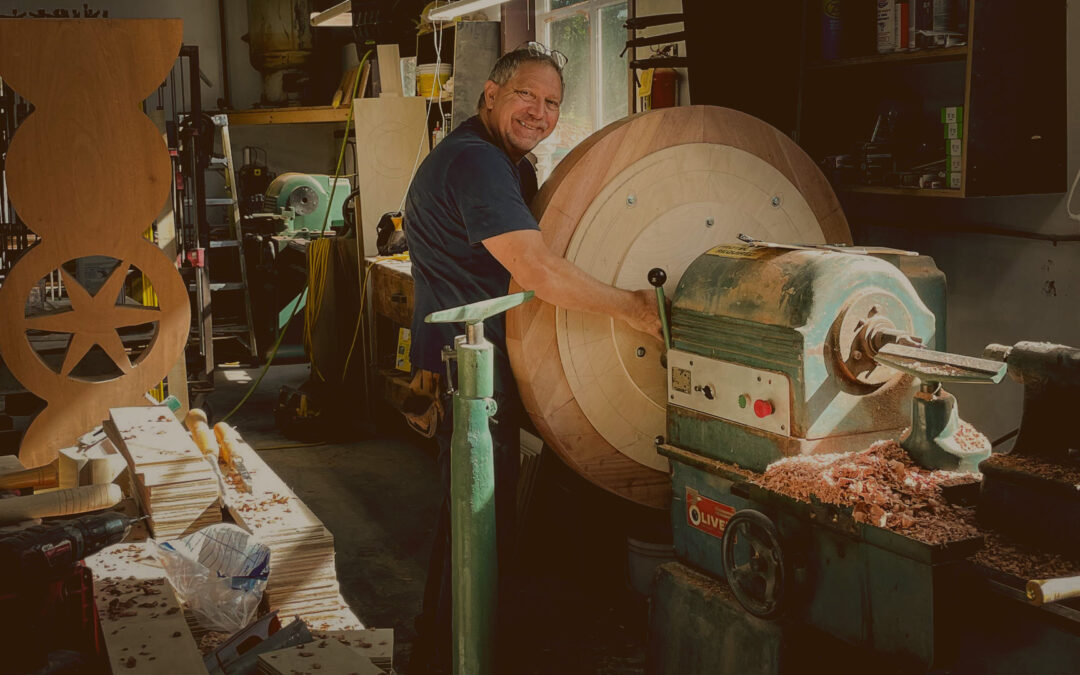
20 years of experience in the field of mill-work has brought Matthew to the level of managing million dollar contracts for large scale production. Nothing in the wood construction field is quite as organized as you might assume, in the above picture Matthew is measuring and calculating the quantity of raw beams needed to be transported from the warehouse to the shop. Materials management, time management and building a skilled workforce that can solve problems as they develop in manufacture all contribute to meeting your project demands.
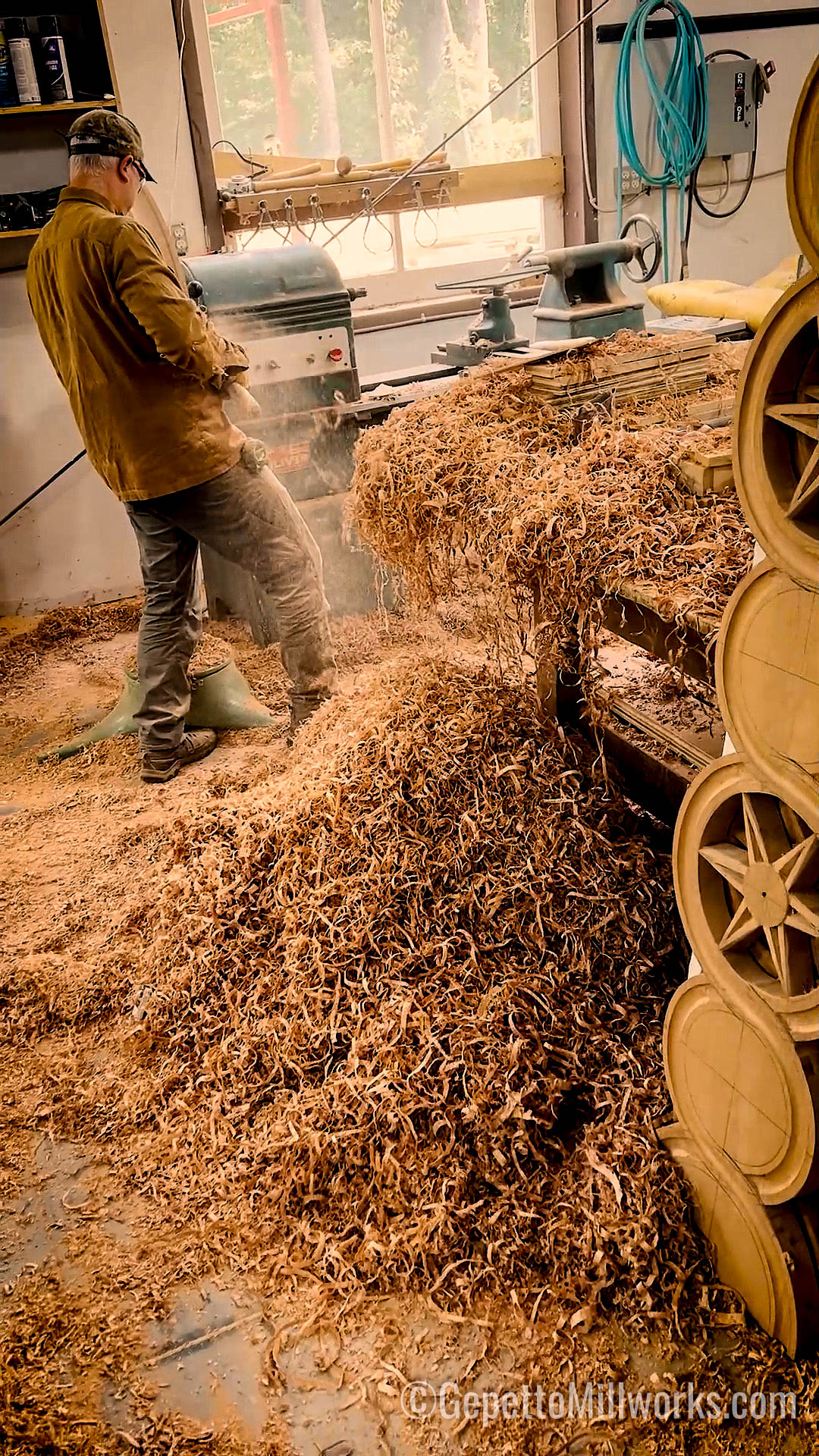
Raw lumber comes from raw nature – she’s not perfectly uniform. These planks are from 8ft to 12ft long and any width from 4 inches to 34 inches! We have to mill the mahogany from it’s beam size to a 3.8 ” wide window sill. The plank mahogany will be sorted and ripped before the decorative edge is milled into the side to replicate the historic windows from the 1920’s era building.
Timelapse video of Replica Wooden Windows being built on our woodshop assembly line in Richmond VA. Built for a historic renovation in Spartansburg SC our craftsmen forge raw mahogany planks into finely tuned handmade windows. We complete jobs in Virginia, North Carolina, South Carolina, Texas, Georgia, and New York. Even contractors in Illinois and Missouri rely on us to supply historically accurate wooden windows.
Contact us to bid your historic renovation and you might be surprised at the price. We have managed many large construction orders for clients across the Eastern United States. The windows in the video are shipped to South Carolina where the coastal towns of Charleston and Savannah Georgia have beautiful sections of historic homes. We supply warehouse and industrial space reconstruction projects in Maryland, Delaware and as far north a Connecticut as the move to re-purpose industrial spaces trends throughout the building and architectural trades.
Gepetto Millworks makes to order any type of historic replica of existing windows. For historically accurate renovation or commercial re-purposing projects that wish to keep the historic charm and effectiveness of mahogony built windows.
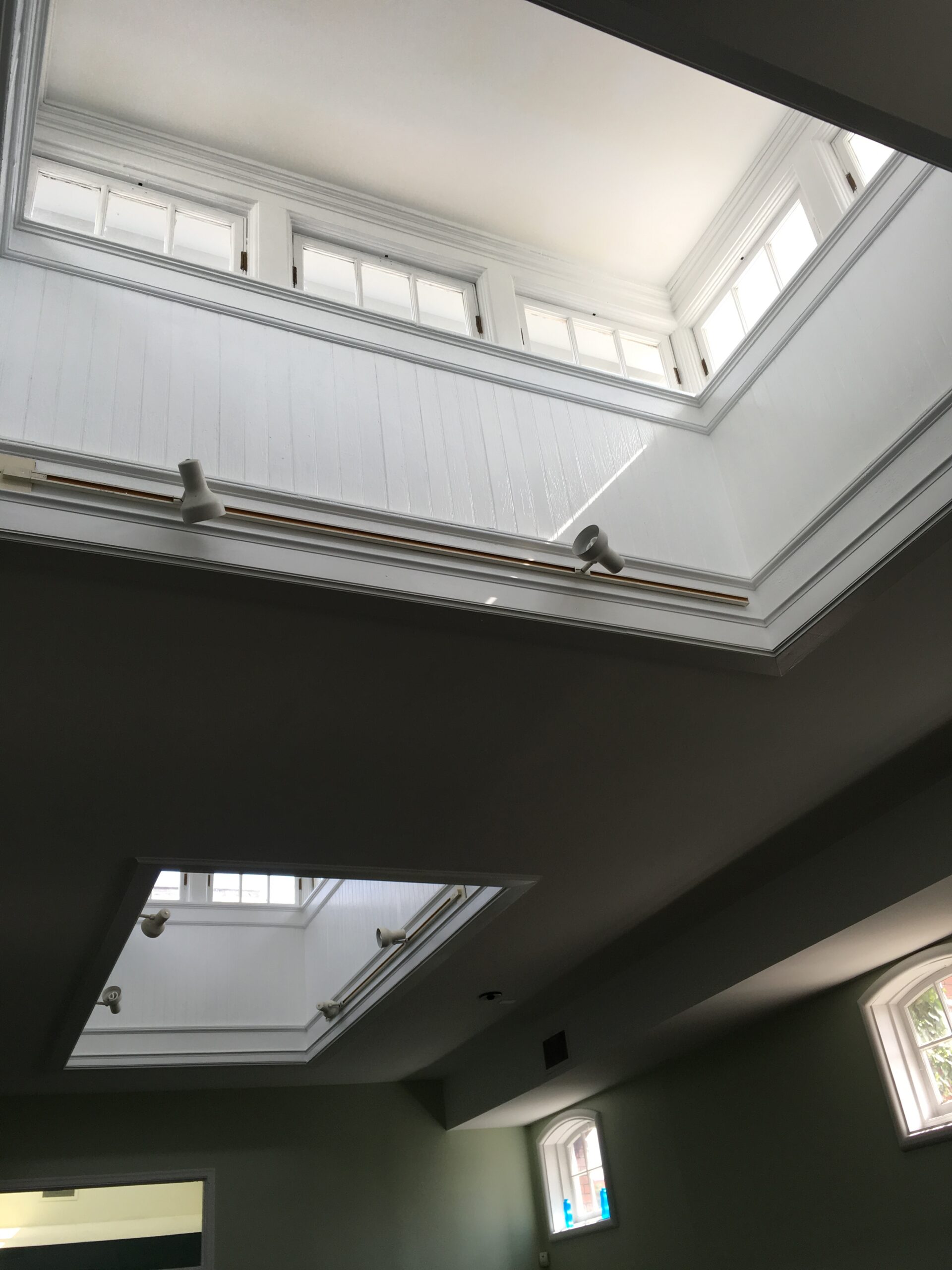
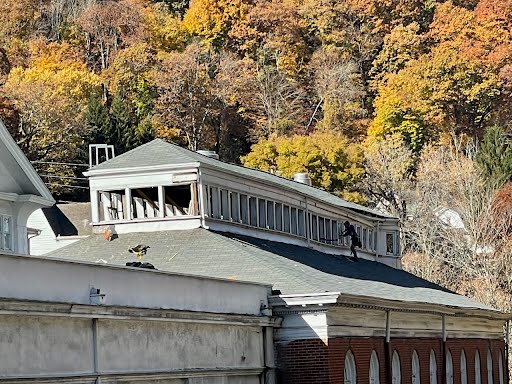
Something our architects and designers were not forced to do after the turn of the 20th century. So for houses built after 1900, you are less likely to find skylights and other natural light gathering features because the designer or builder just assumed you would switch on a lightbulb. Gepetto craftsmen have specialized in renovating, repairing and building true to original wooden skylights in historic homes across Virginia. Contact us to get a site visit or quote scheduled.
Many of mother nature’s subtle and pervasive forces work against a skylight! Thermal shifting, structural movement from settling or shifting, high UV radiation, wind vibration and water pressure. The glazing system must defend against all mother nature offers as disturbance. Shed and drain water, support and cushion the glass, avoid mechanical pressure points, and seal against thermal leakage.
Gepetto craftsmen fabricate the most complex interior and exterior projects made of wood that you can imagine or provide CAD for us to construct.
If your architectural drawings are complete, have us competitively bid your:
We accept CAD drawings and standard multi-view 2D architectural drawings by mail or PDF.
A drive through Richmond gives a tour of an abundance of vintage architectural styles from Greek Revival (circa 1820s-1860) to Italianate (1840-1885) through Georgian & Queen Anne, Federal Beaux Arts and Arts and Craft. If you listen to Ayn Rand’s first literary success “The Fountainhead” as an audiobook and pretend you’re the idealist Howard Roark as you drive, you will have 32 hours and one minute to contemplate if exterior architectural styles are worth preserving. Richmond’s rich history showcases the architectural influences just like Howard has to quit his draftsman’s job and work on a steel construction site to learn what steel can do for a building. The struggles and influences of the evolution of glass making in England and the U.S. forms the look and style of many of the oldest Historic restorations we accomplish. Our knowledge of wood craftsmanship influences how we bit and build a job to be the longest lasting and most effective use of the material.
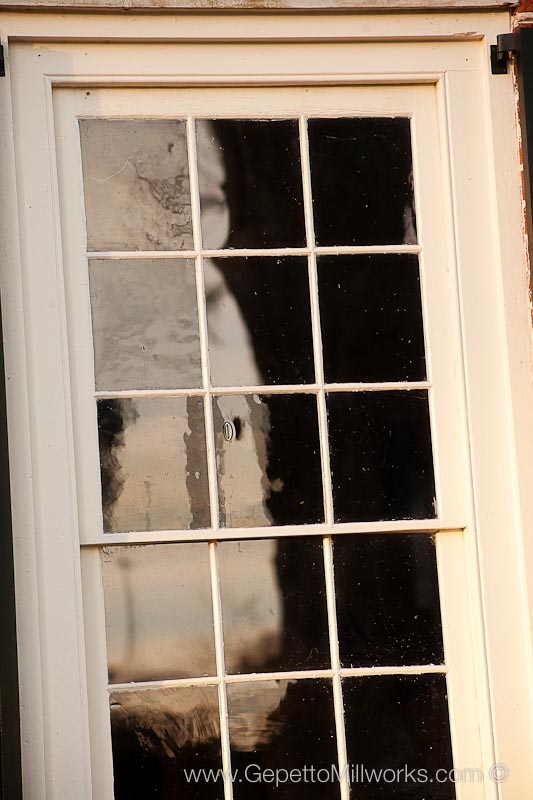
The earliest windows are made of crown glass, which was blown onto a crown or hollow globe, flattened and then spun into a flat disk. Even though extremely thin, the glass was durable and many individual panes still live on. The individual sections of glass which are called “lights” in the trade can be sourced to give actual historic context to your new build. The thinnest glass was at the edge of the disk, while the glass at the center was thicker and more opaque. Take a close look at this high-res photo to notice the irregularities in the historic lights:

Historic Window Glass Light
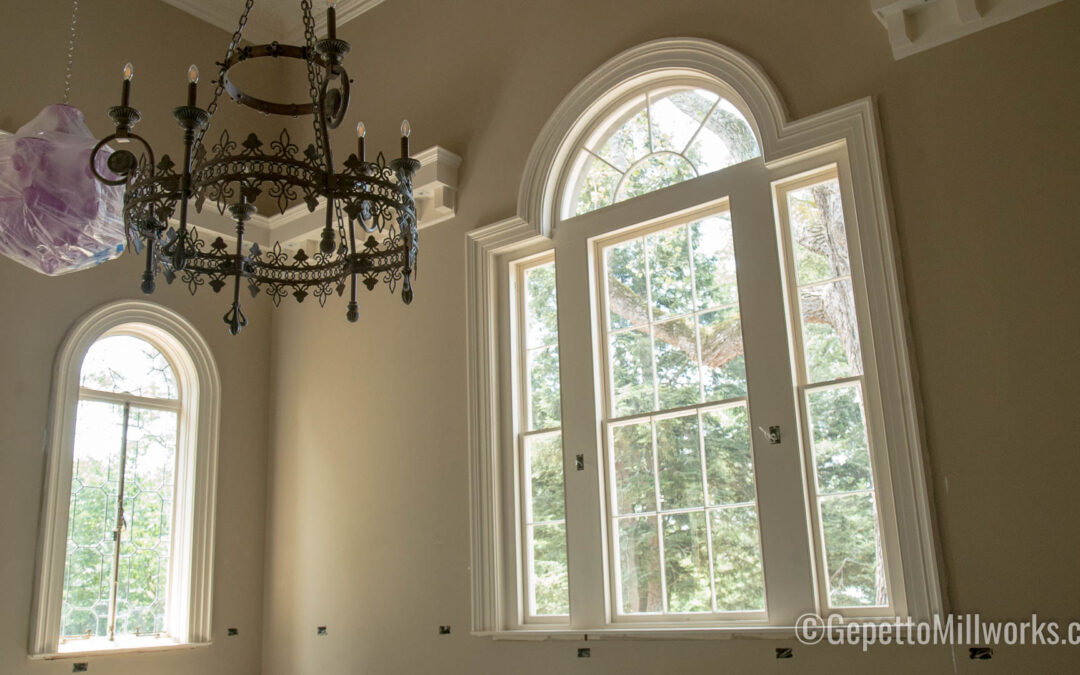
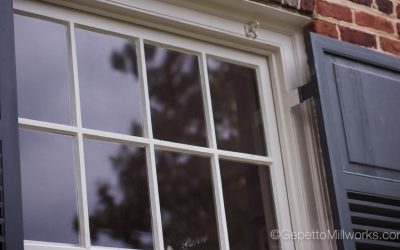
The windows on many historic buildings set and define the architectural character of the buildings in which they allow light into. The external window casings and their decorative elements show the difference between the architectural styles and historic periods in which they were favored. Restore or renovate your home or multi-story building to historic standards eligible for tax credits using classically created wood products from here in Virginia.
Design, craftsmanship, and glass qualities make wooden windows worthy of preservation. We regularly restore windows 100+ years old and expect our solid wood newly built windows to last as long with regular maintenance.
This is self-evident for ornamental windows, but it can be equally true for warehouses or factories where the windows may be the most dominant visual element of an otherwise plain building.
Evaluating the significance of these windows and planning for their repair or replacement can be a complex process involving both objective and subjective considerations which our experienced estimators and installers will take care of for you.
Gaithersburg, Maryland Fit and Finish Wood Trim for windows, doors, and interior rooms. Historic Window builder using authentic construction techniques for solid wooden windows.
Legal Disclaimer:
Gepetto Millworks does not install or service windows directly in the District of Columbia. Local Liscensed Contractors may deliver window sashes and or frames to our Virginia facility outside Charlottesville for restoration services provided by our experienced craftsmen and pickup for installation from our shop.
American Siding and Windows is a local contractor available for on-site service.
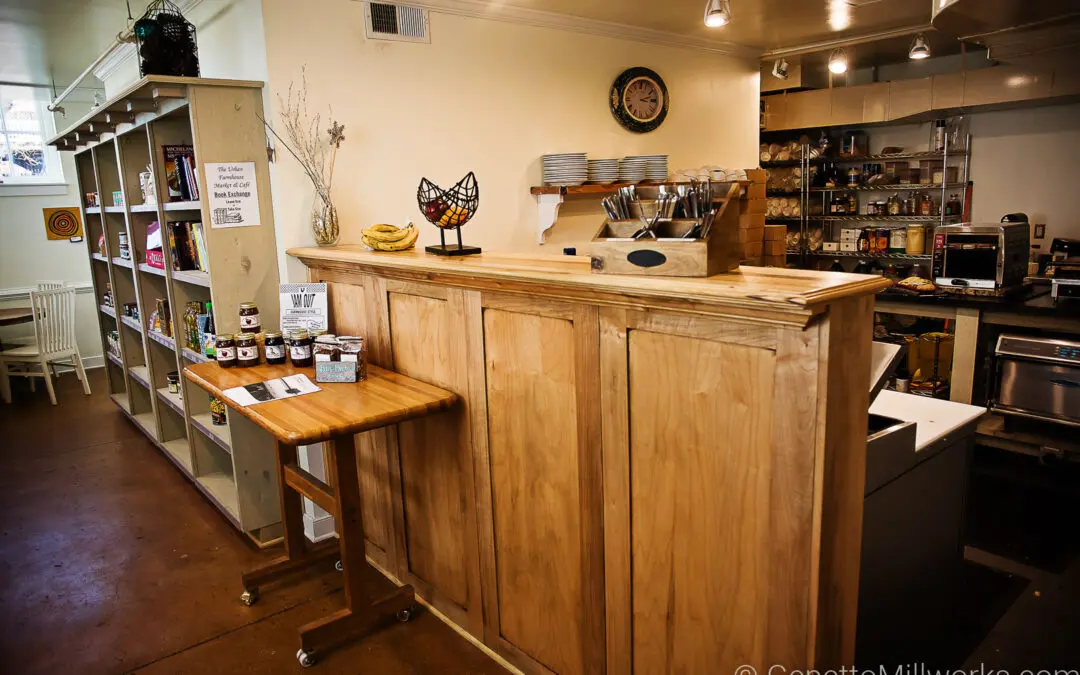
We design our kitchens to expose the beauty in the materials and fabricate them by hand from reclaimed lumber to allow the natural processes of aging to show in the finished product.
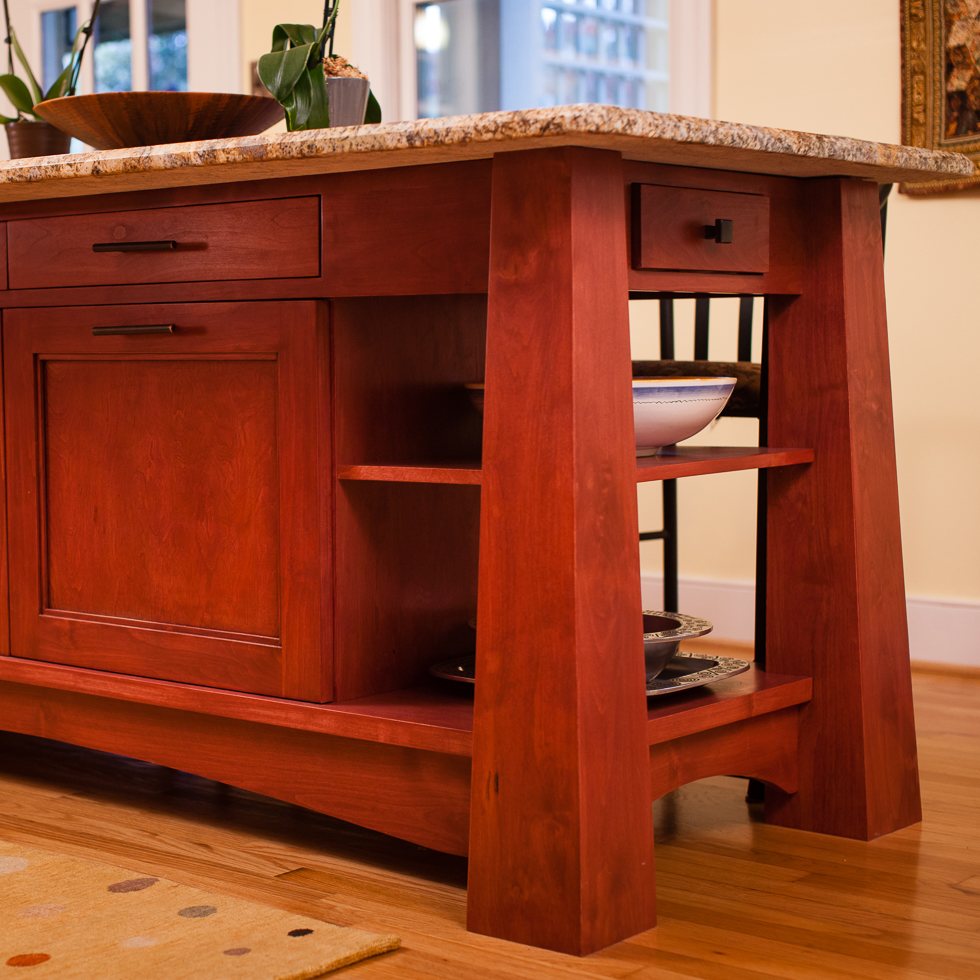
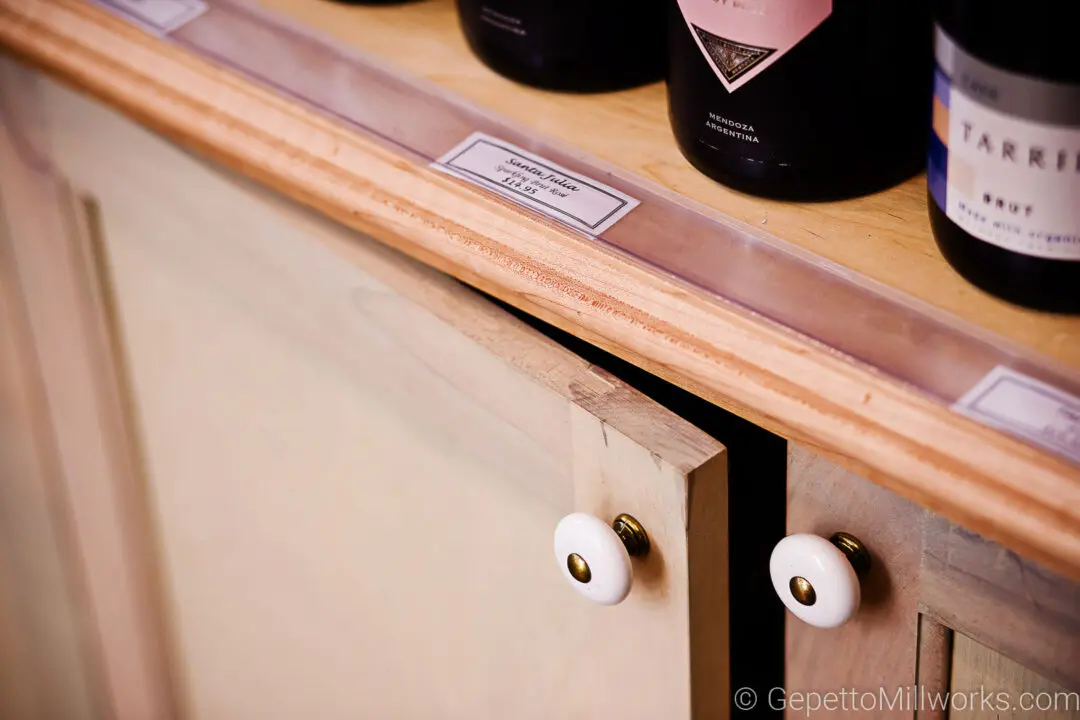
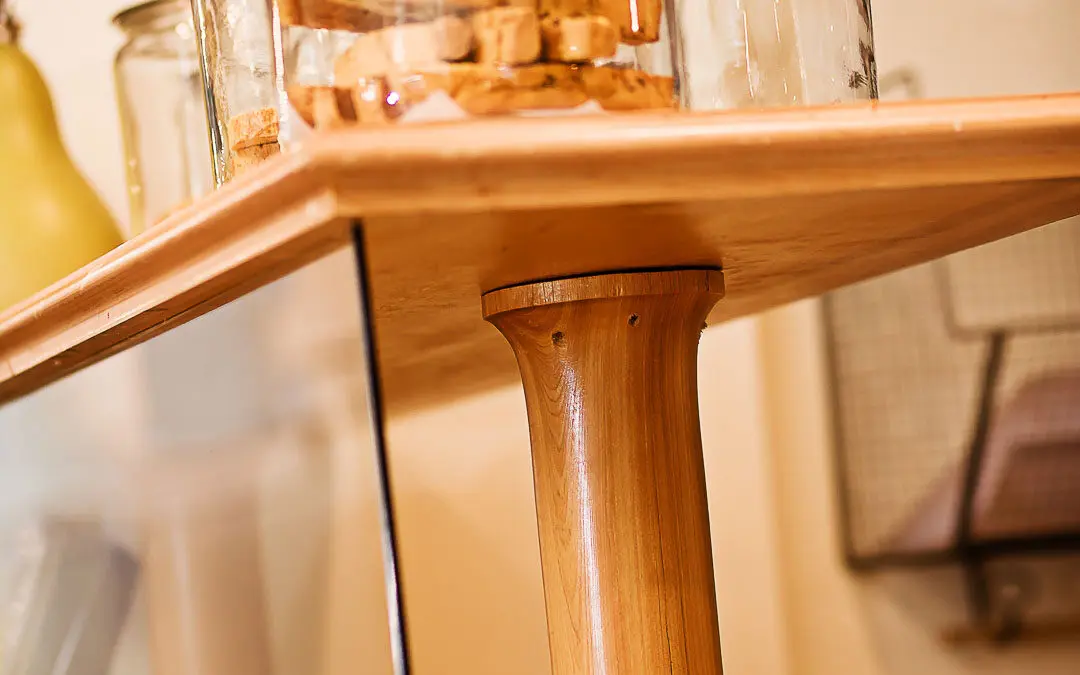
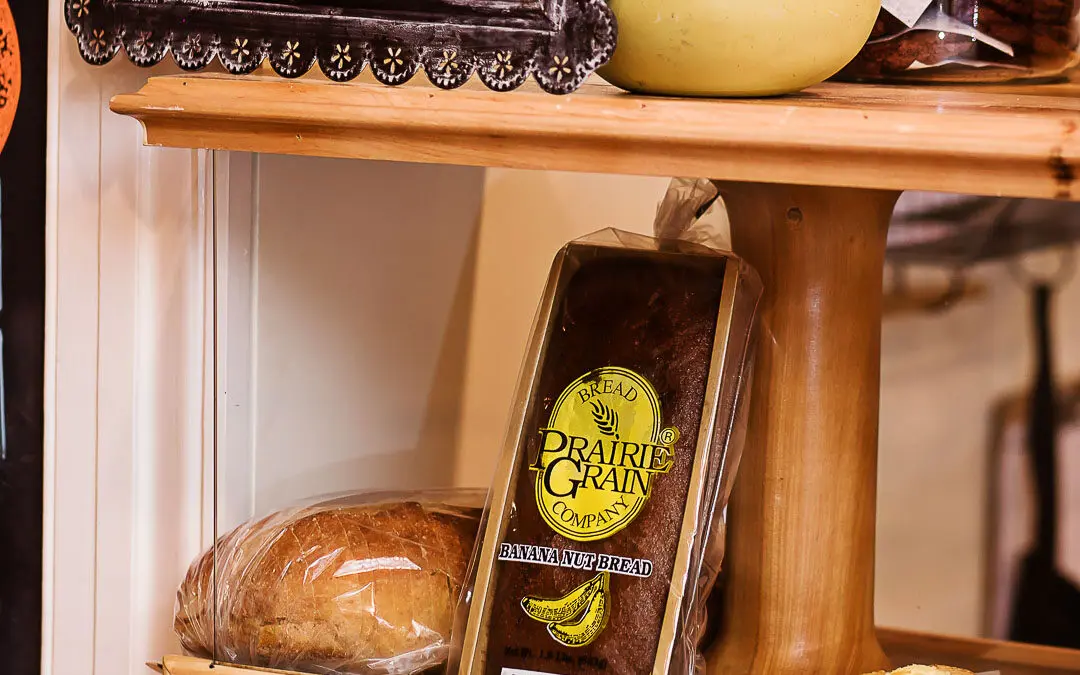
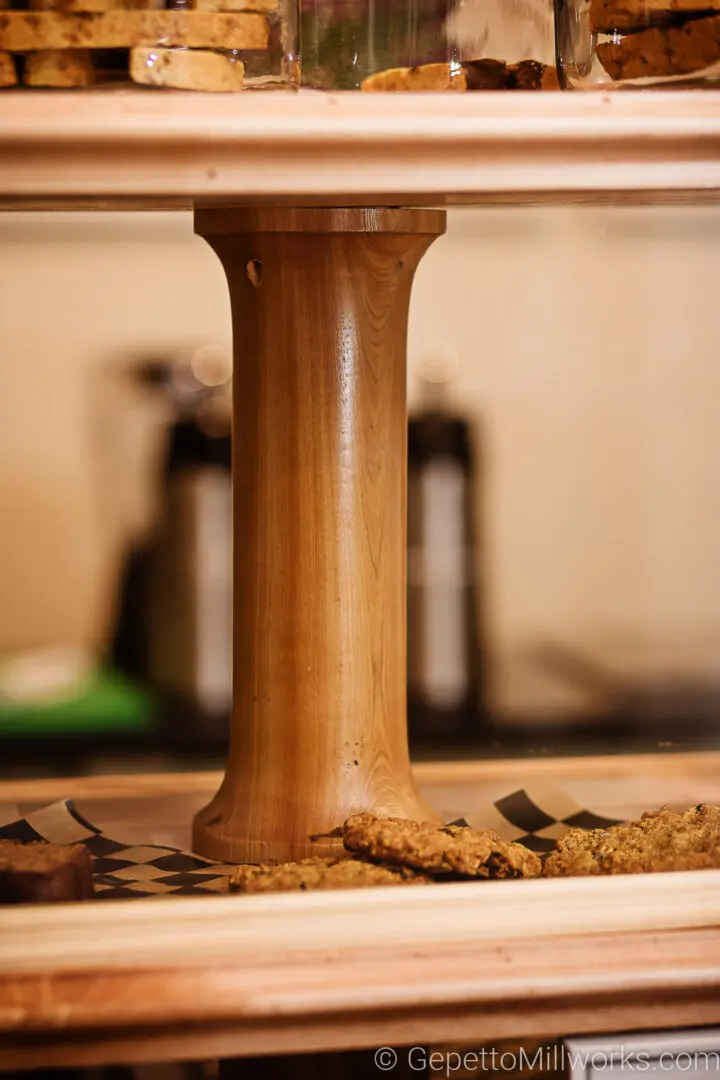
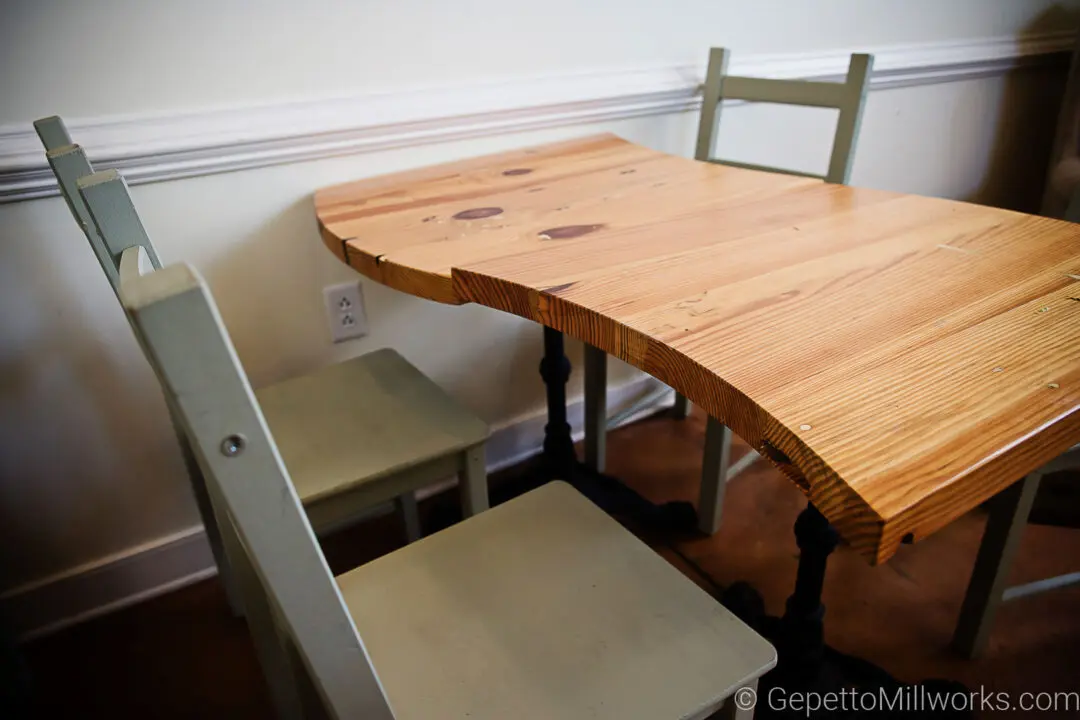
Hand turned pedestals reveal the long and varied natural grain of the heart pine through the arc’d design. The solid wood joinery is exposed on the drawer facing showing the sidegrain of the heart pine, as well as the depth of quality in the joinery that will last for generations.
Our wood craftsmen hand pick the naturally aged barnwood and match it for grain, size and color across each of the cabinet panels for the most pleasing results.
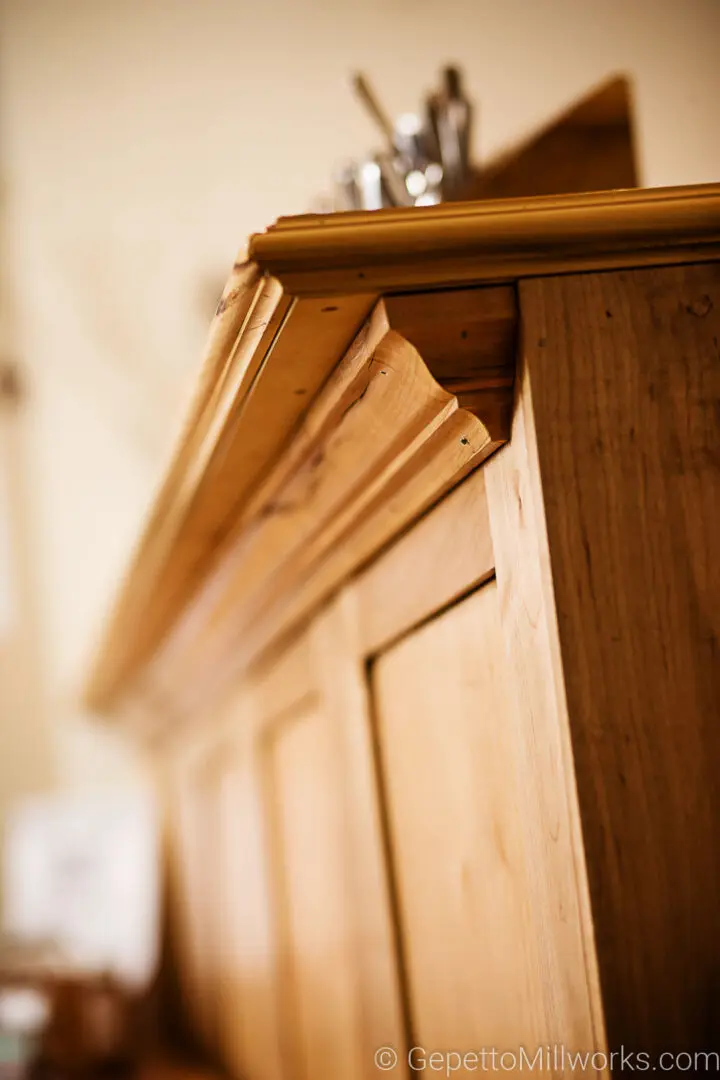
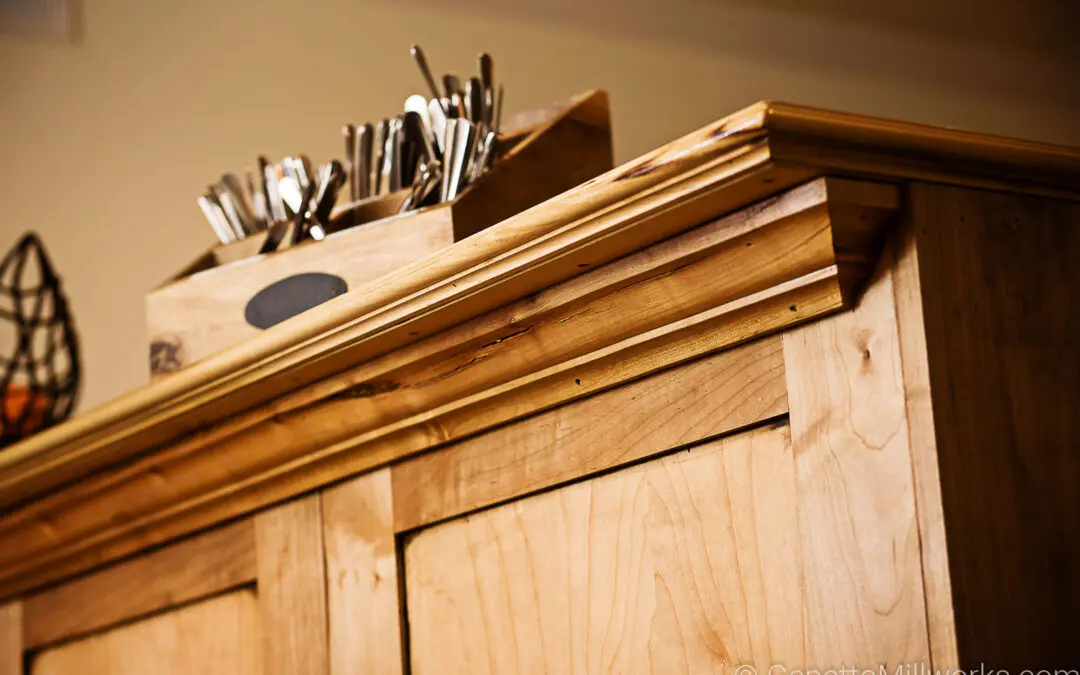
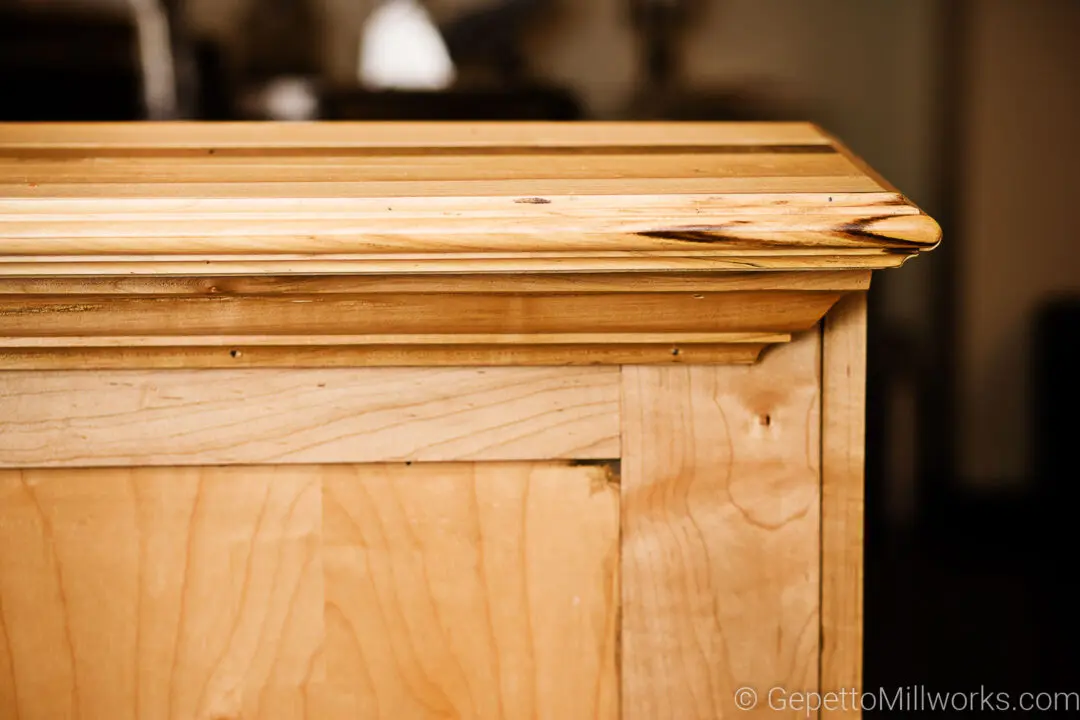
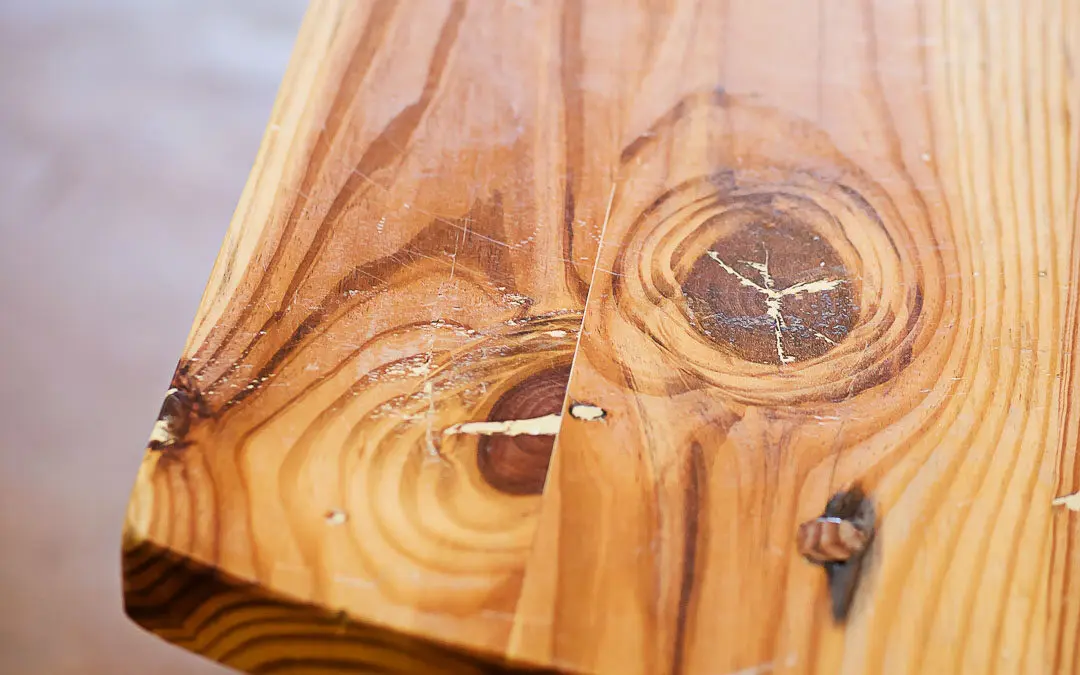
The crown molding topping this free standing cabinet shows the insect damage in some of the reclaimed woods from this property. Since the barn that was torn down to renovate this kitchen was on the same property, all the aging elements become the story of the new construction. We chose to use the dotted pieces in the crown molding as they add interest, while the wide vertical faces of the cabinets feature clean uninterrupted wood grain. The handmade attention to detail here can be easily missed, so we’ll just point it out for you to take in slowly as you shop contractors for your custom kitchen remodel.
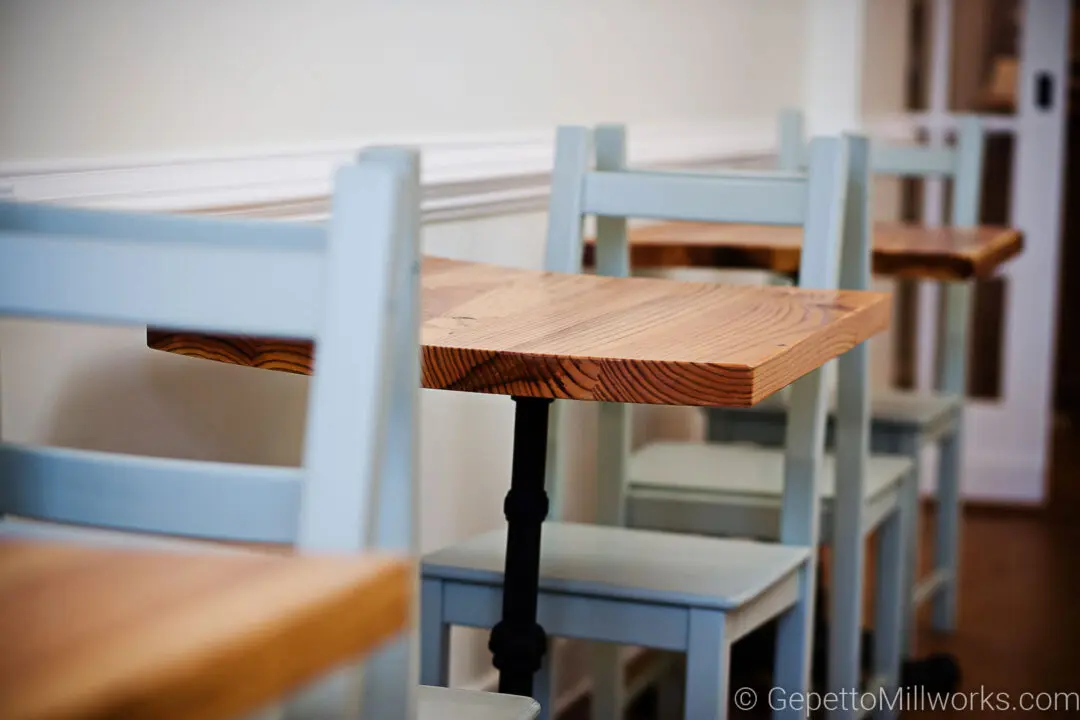
We hope you enjoy looking at our heartpine textures and details as we love the warm organic variety of wood. We hope you share, pin or do that social media thing with our images and recommend us to any of your friends trying to remodel their kitchen. Our expertise designing for small spaces, and highlighting unique materials will bring your kitchen redesign to life. Give Matthew a call today!
Throughout Virginia’s history spanning from the early 18th century to the mid-20th century, churches have played a central role in the architectural landscape defining our cities and townships. The religious gathering place reflects the timeperiod and evolving tastes, beliefs, and influences of Virginia from the Henricus Settlement to the present day. Various architectural styles leave their mark on the churches scattered across the state from the Western Shenandoah to the Eastern Seaboard. The colonial period starts us out and we see wood being phased out in construction in the dawn of modernism so we’re no longer useful.
The colonial period in Virginia was marked by the influence of European architectural styles, primarily English and sometimes Dutch or German. Anglican churches dominated the Virginia landscape during this time, reflecting the religious and cultural preferences of the predominantly English settlements. These churches were typically built in the Georgian architectural style, characterized by symmetrical facades, classical proportions, and red-brick construction. Examples include Bruton Parish Church in Williamsburg and Christ Church in Alexandria.
Following the American Revolution, Virginia experienced a shift towards more neoclassical architectural styles influenced by the ideals of the new republic. Federal-style churches emerged, incorporating elements such as Palladian windows, porticos, and decorative motifs inspired by ancient Greece and Rome. St. Paul’s Episcopal Church in Richmond exemplifies this style with its elegant portico and classical detailing.
The Greek Revival style gained popularity in Virginia during the early to mid-19th century, reflecting a fascination with the democracy of ancient Greece. Churches built in this style often featured columns, pediments, and simple geometric forms reminiscent of Greek temples. The Old Presbyterian Meeting House in Alexandria is a notable example, with its Doric columns and pedimented portico.
In the mid-19th century, the Gothic Revival style began to emerge as a reaction against the perceived excesses of neoclassicism. Gothic Revival churches in Virginia featured pointed arches, steeply pitched roofs, and elaborate decorative elements inspired by medieval cathedrals. These churches often incorporated lancet windows with quatrefoil cut in plate tracery, adding a sense of verticality and lightness to the interior spaces. St. John’s Episcopal Church in Richmond, designed by architect Samuel Sloan, is a prime example of this style, with its soaring spire and intricate tracery work.
During the Victorian era, eclectic architectural styles flourished, reflecting the diverse tastes and influences of the period. Churches built during this time often combined elements of Gothic, Romanesque, and Queen Anne styles, resulting in a richly ornamented and visually eclectic aesthetic. St. Mark’s Episcopal Church in Charlottesville is a notable example of Victorian-era architecture, featuring a blend of Romanesque arches, decorative brickwork, and intricate stained glass windows.
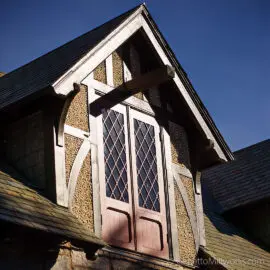
In the late 19th and early 20th centuries, the Arts and Crafts Movement emerged as a reaction against industrialization, emphasizing craftsmanship, simplicity, and a connection to nature. Churches influenced by this movement often featured rustic materials, exposed timber framing, and a focus on handmade details. While less common in Virginia’s church architecture compared to residential buildings, some examples can be found, such as the Memorial Baptist Church in Staunton, which incorporates Arts and Crafts elements into its design.
As the United States entered the 20th century, there was a renewed interest in classical architecture, leading to a revival of neoclassical styles. Churches built during this time often featured monumental facades, grand entrances, and elaborate detailing inspired by ancient Greek and Roman temples. The First Baptist Church in Richmond, designed by architect Merrill Lee, exemplifies this style with its imposing columns, pedimented portico, and classical ornamentation.
In the 1920s and 1930s, the Art Deco style became popular, characterized by geometric forms, sleek lines, and decorative motifs influenced by modern technology and the machine age. While less common in church architecture compared to other building types, some churches in Virginia embraced Art Deco elements, such as streamlined facades, decorative friezes, and stylized ornamentation. The Tabernacle Baptist Church in Norfolk, designed by architect Clarence W. Silcox, features Art Deco detailing in its tower and entranceway, reflecting the architectural trends of the period.
In the mid-20th century, modernist architecture emerged as a departure from traditional styles, emphasizing simplicity, functionality, and innovation. Modernist churches in Virginia embraced open floor plans, clean lines, and minimalist aesthetics, often incorporating features such as large expanses of glass, flat roofs, and exposed structural elements. St. Elizabeth Catholic Church in Richmond, designed by architect Francis Keally, is a notable example of modernist church architecture, with its geometric forms and use of concrete and glass.
The churches built in Virginia between 1700 and 1950 reflect a diverse array of architectural styles and influences, ranging from colonial Georgian and neoclassical to Gothic Revival, Victorian, Arts and Crafts, Art Deco, and modernist. Through their distinctive features and craftsmanship, these churches serve as tangible reminders of Virginia’s cultural and religious history that our craftsment are trained and ready to restore or build to match any era of wooden millwork, doors, windows, eaves, shutters and trim.

Submit your architectural drawings for cabinets, libraries, and other complex plans for a quote by Matthew. We are glad to work from a target budget as we spec the materials as well as suggest shortcuts to overly complex or any unnecessary costly elements. We have worked in most major CAD and PDF construction planning software to speed up your service and our delivery.
Best practices in the construction bid process vary from firm to firm, so allow us a few opportunities to achieve the best results for your company. We focus on best practices in the woodshop, and try to get ahead of any potential obstacles as early as the bidding process starts. Construction in wood and the myriad of details that our multiple career’s worth of experience bring to the table allow us to be a valuable consultant for meeting your goals. Different project materials inform our in-shop construction methods and the extent to which the materials type might affect the cost in bidding can be addressed early in your project. Our specialty allows us unique oportunities to source material from all over the globe and will highlight the important distinctions between high quality cured lumber and hastily produced materials. Our role in the bidding is to help all the primary players better understand the final finishing stage of construction projects and our valuable insights are not something money can buy.
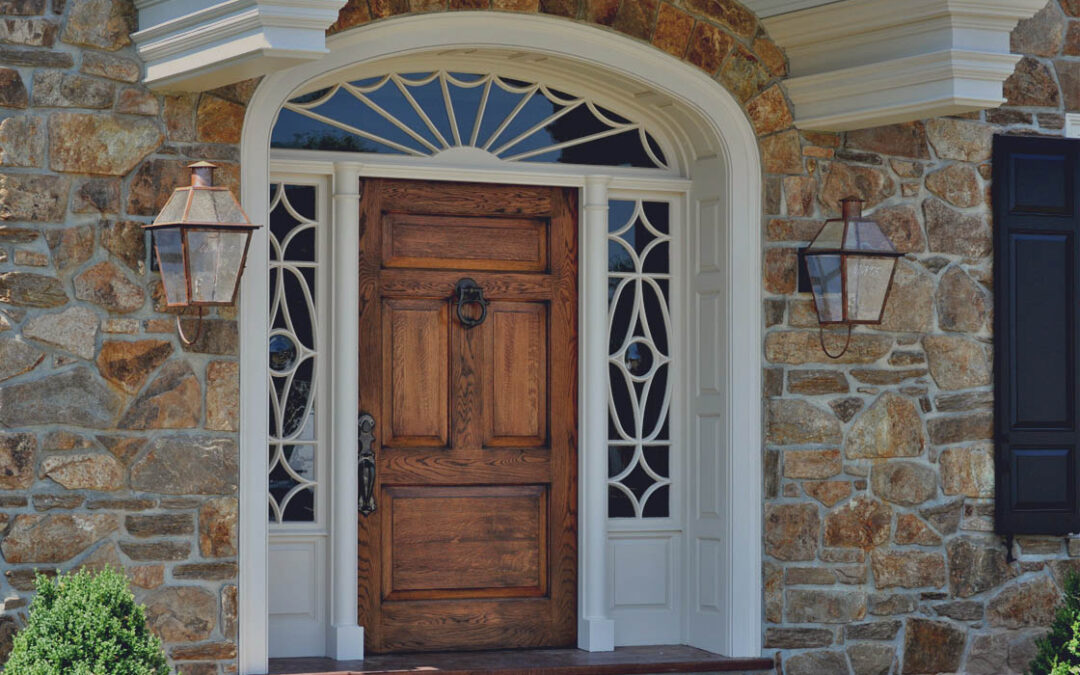
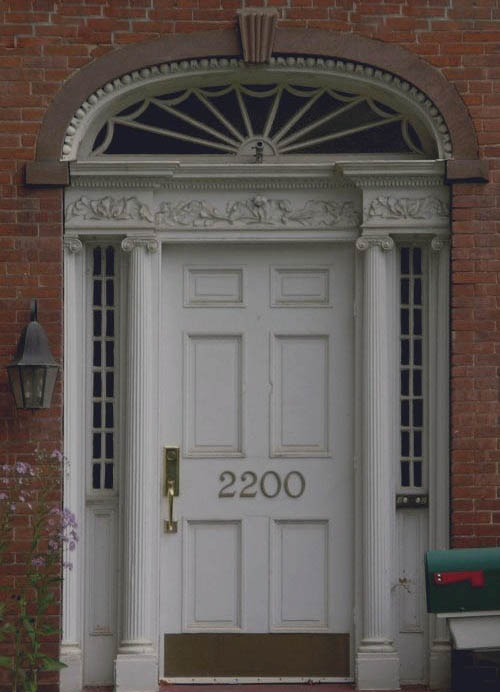
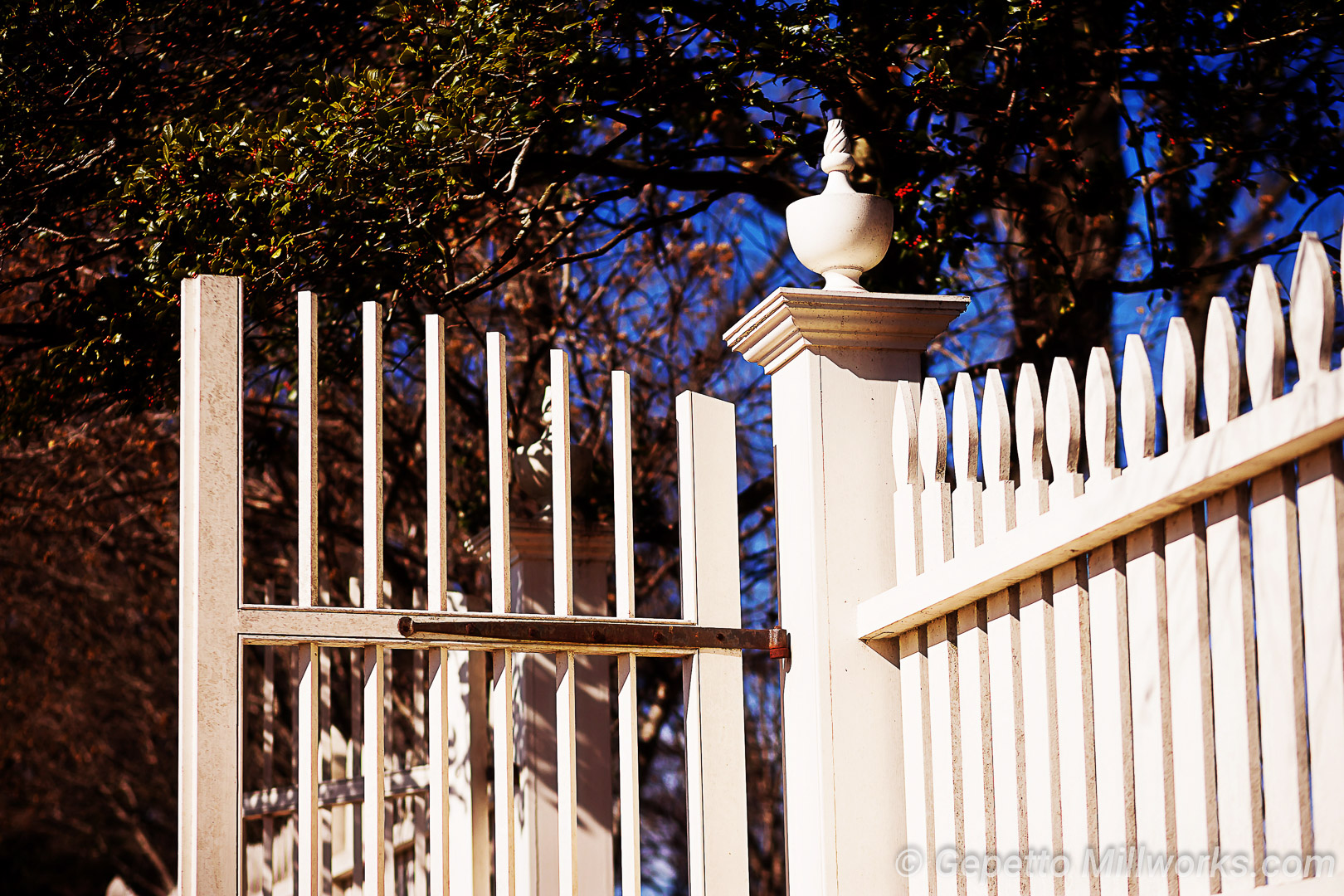
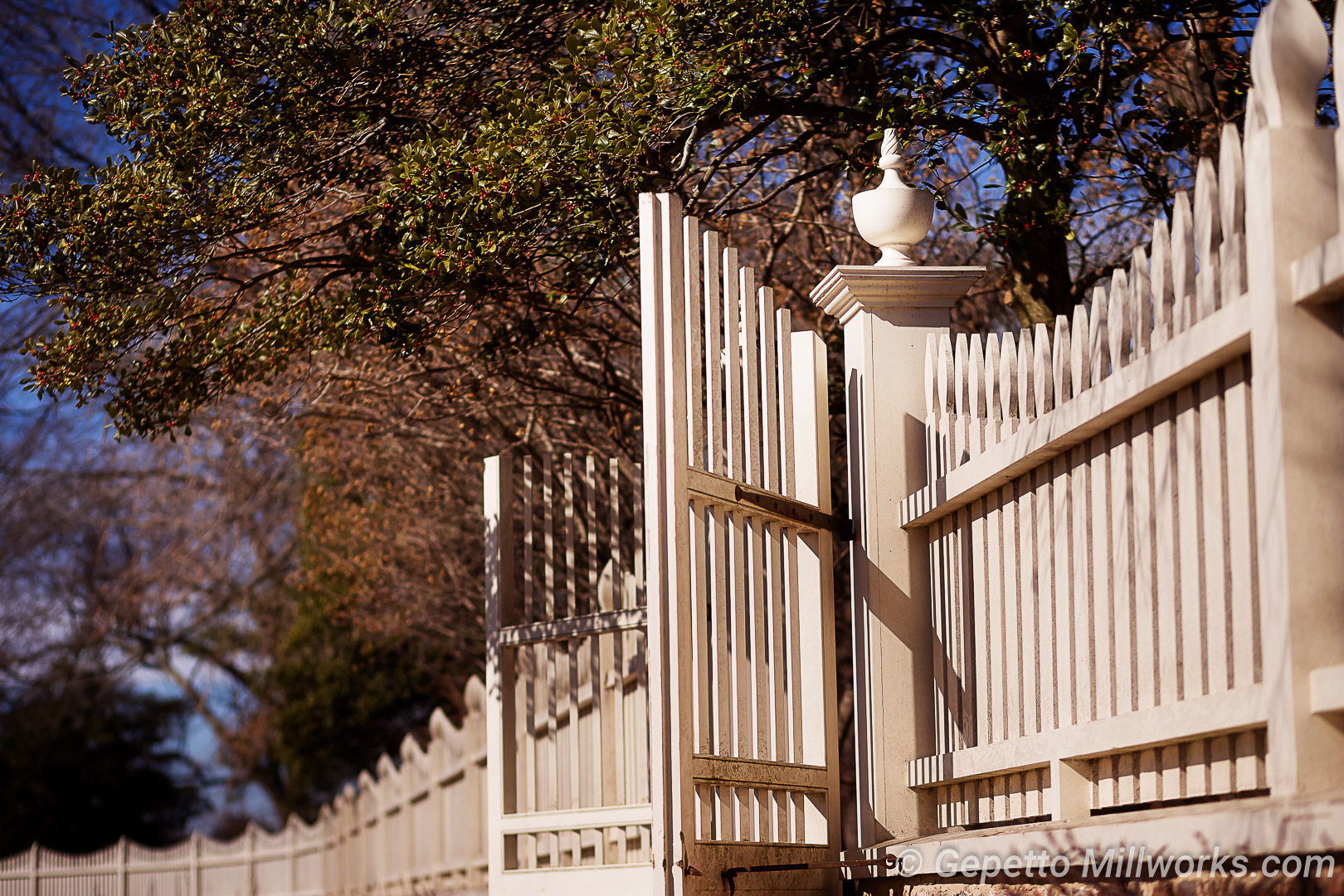
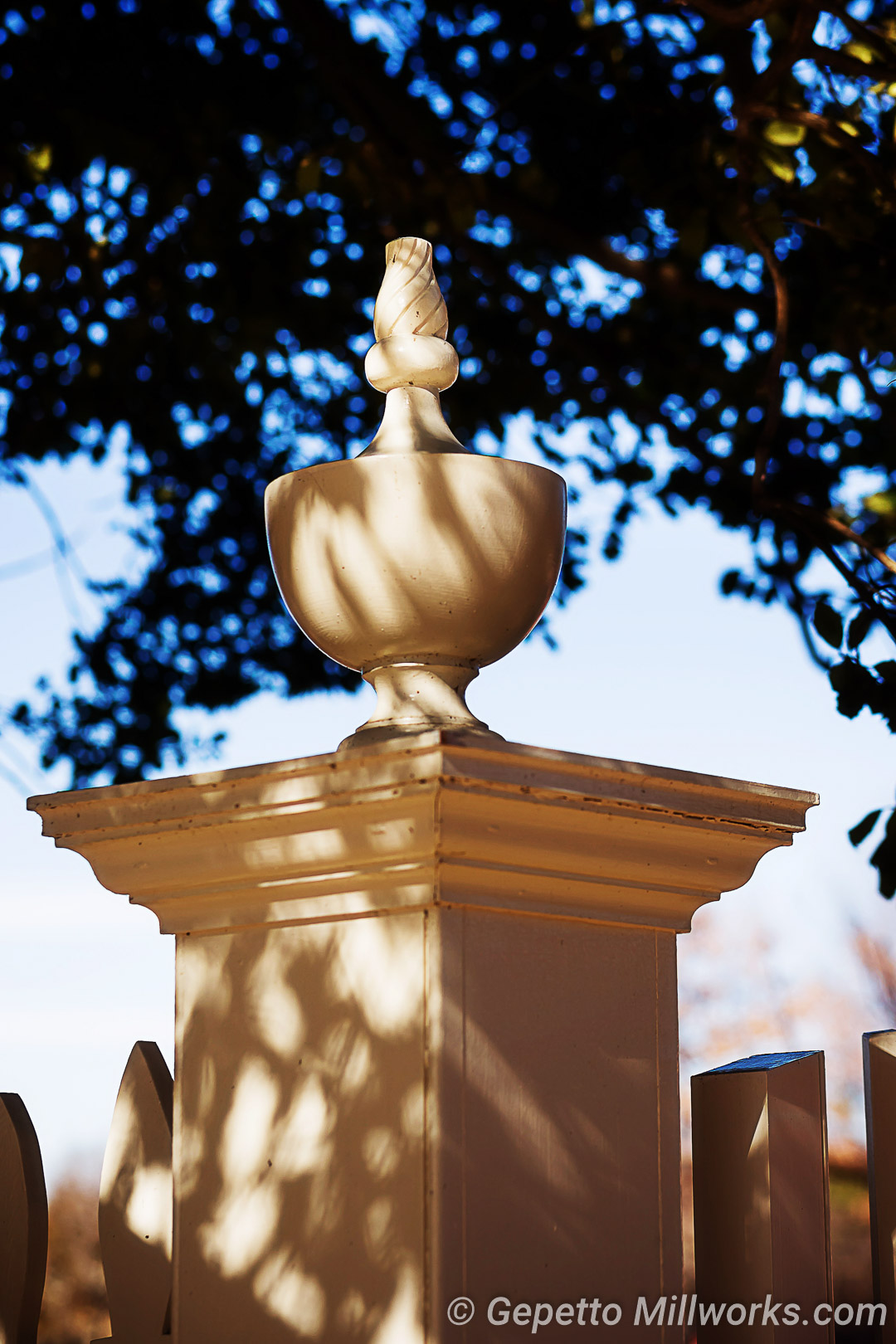
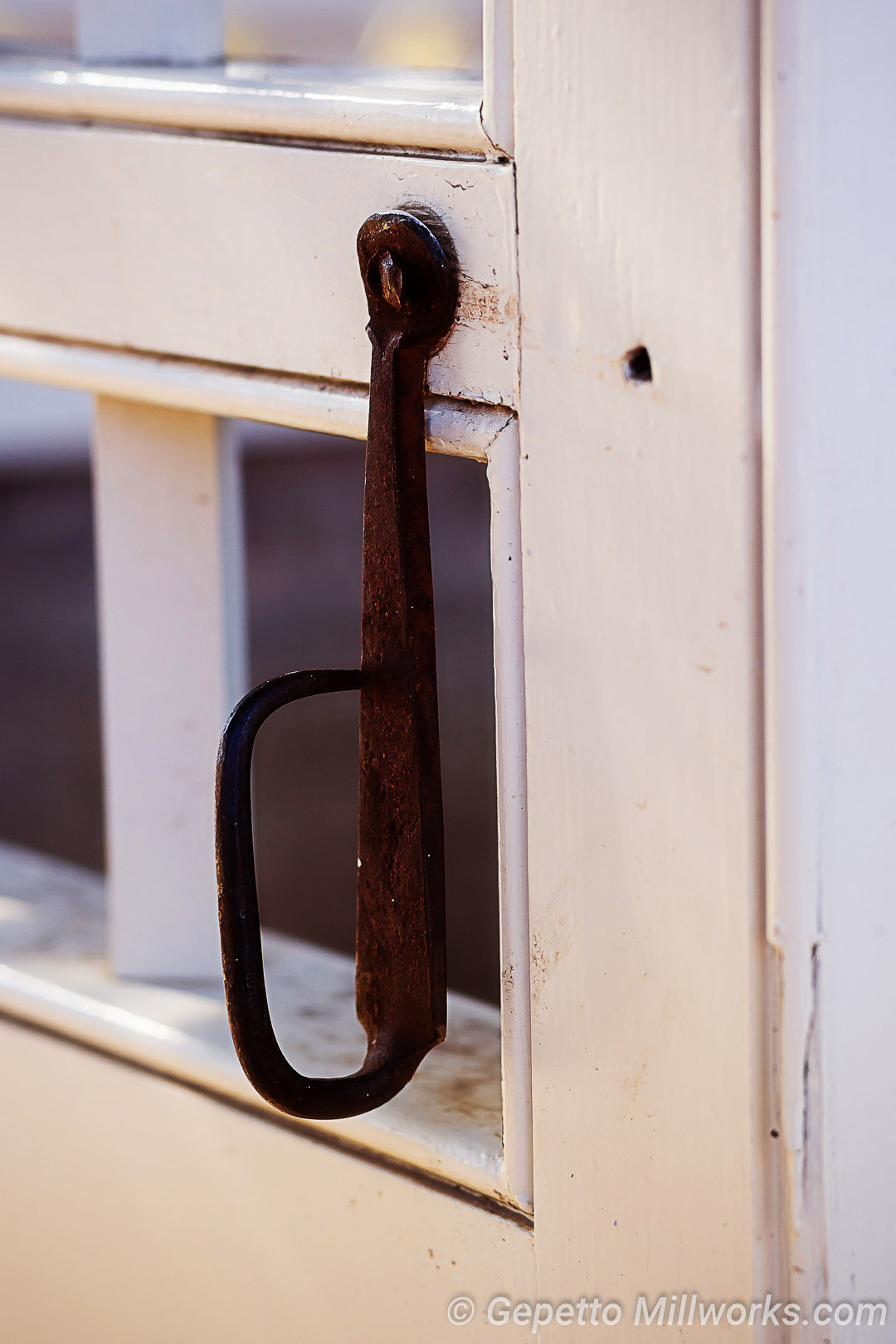
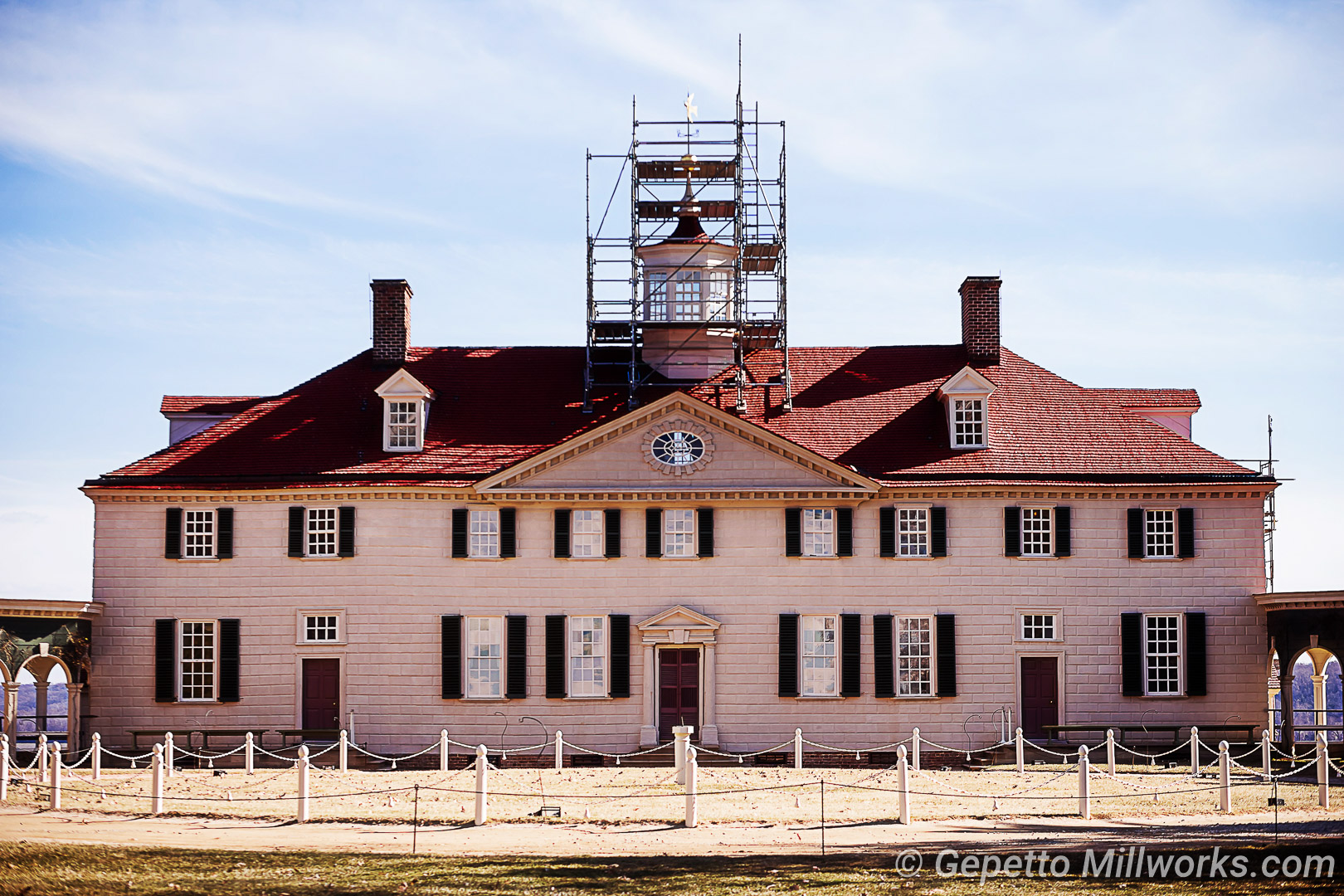
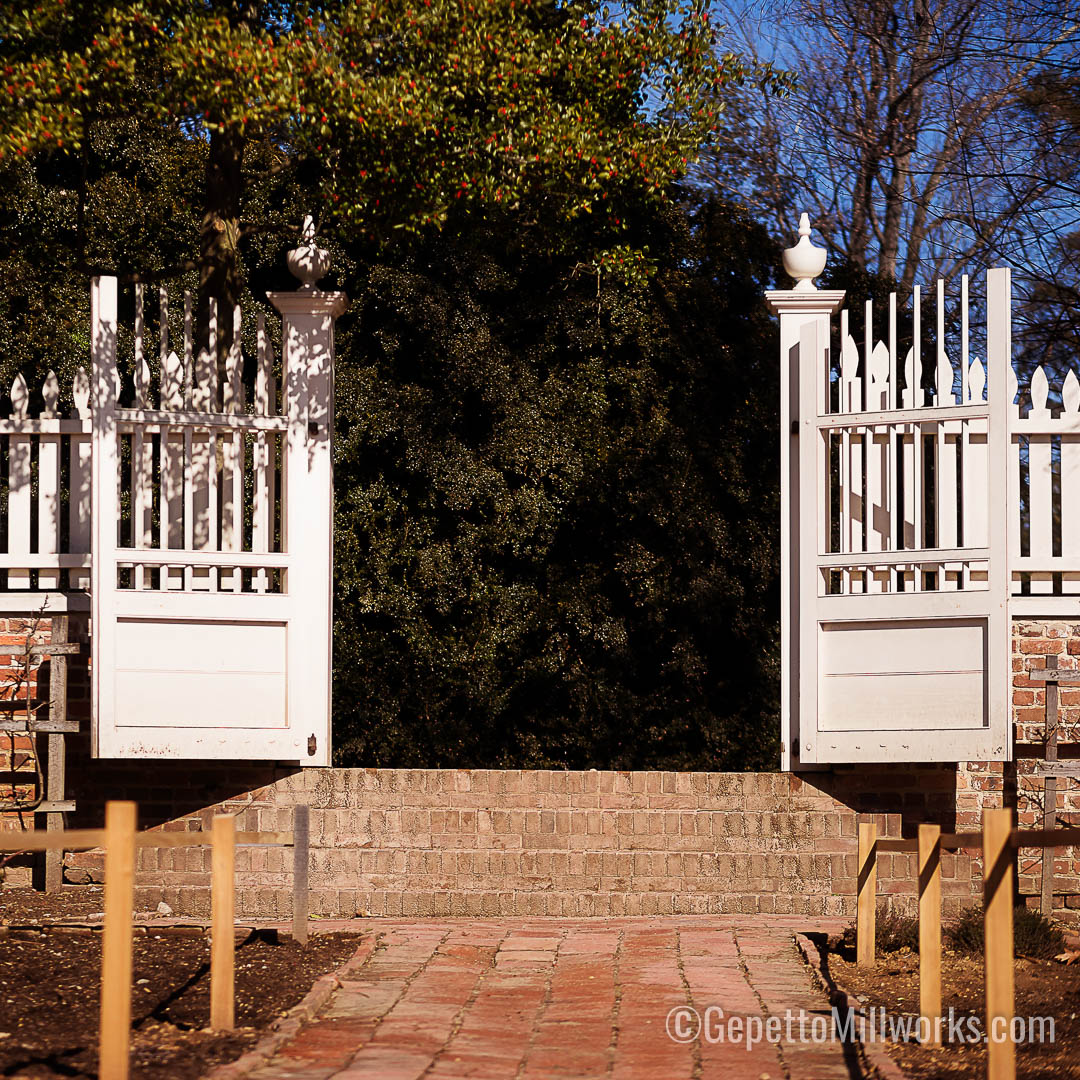
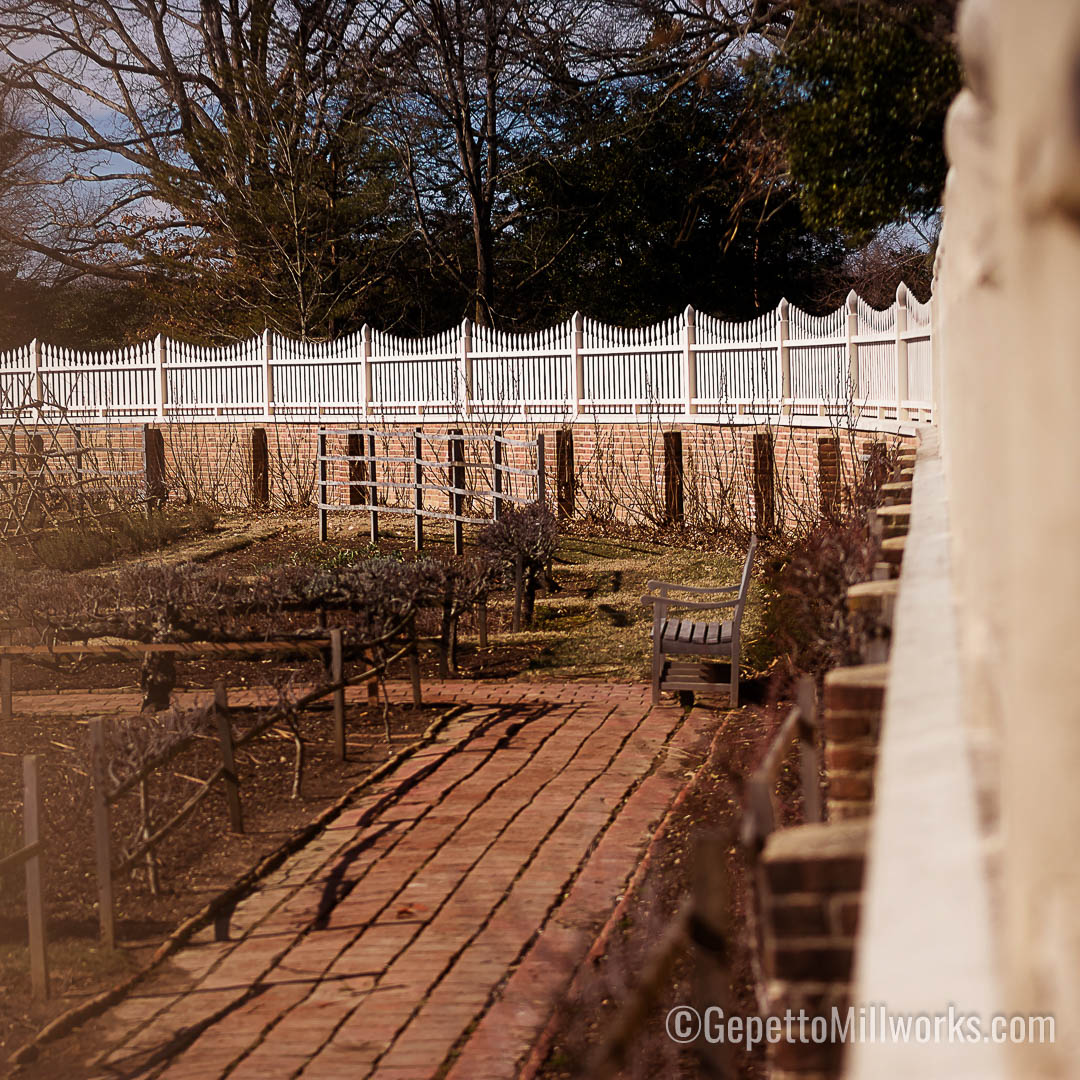
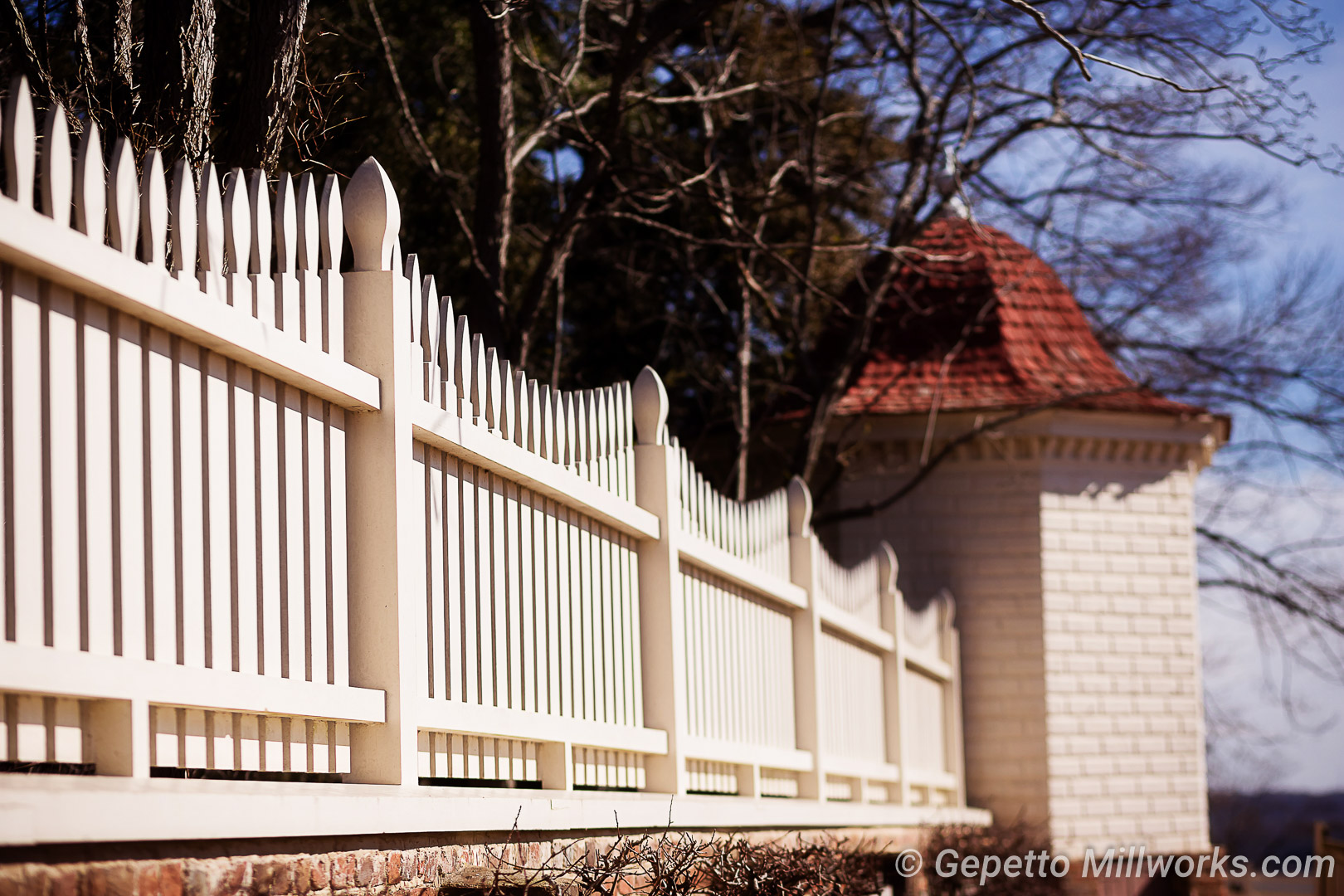
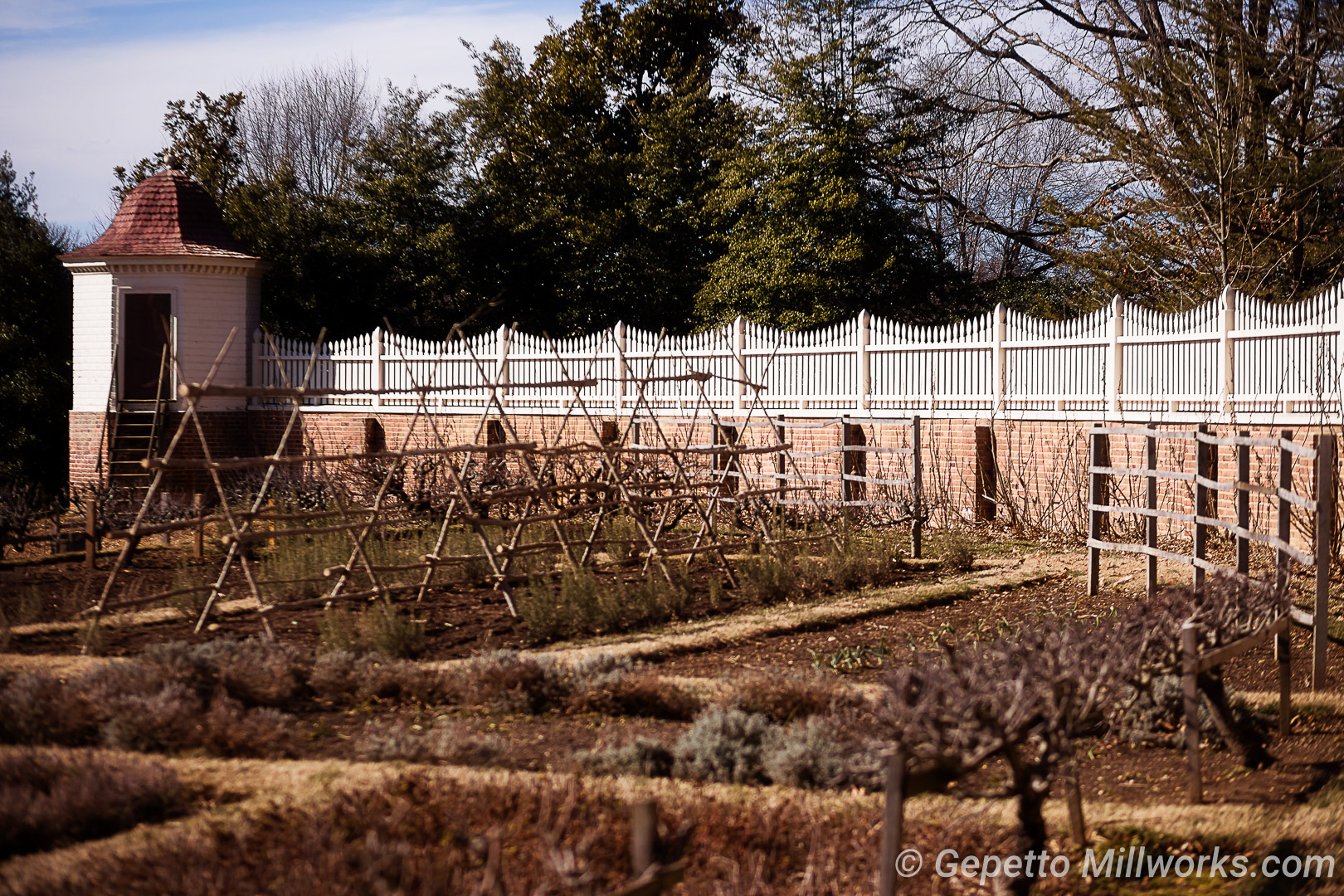
Guess the age of the house shown here sporting Gepetto’s historic replica architectural millwork.
Is it
Did you pick “2 Years old”? You’re not the only one mistaken. Many people mistake this house for a famous home of Williamsburg built between 1752 & 1754! The Wythe House once belonged to George Wythe’s father-in-law, Richard Taliaferro. The house was constructed between 1752 and 1754 and was conceived as a whole with no additions made to the rectangular two story structure. Perhaps the most handsome colonial house in Williamsburg, the two-story brick residence is believed to have been designed in the mid-1750s by George Wythe’s father-in-law, the surveyor, builder, and planter Richard Taliaferro (pronounced “Tolliver”). Taliaferro built the addition to the Governor’s Palace about the same time. The house remained as the sole household of Taliaferro when his daughter Elizabeth married George Wythe in 1755. The couple received the house as a wedding present from Taliafero and they received a life tenancy upon his death in 1779. Elizabeth lived here until her death in 1787, and George moved to Richmond, Virginia in 1791 to serve as a judge.
The house served as headquarters for General George Washington – September 14 to 17, and 22 to 28, 1781 – prior to the Siege of Yorktown.[6]
The trend of constructing new homes from architectural classics is supported in these twelve home designs for those discerning individuals who seek a home of magnificent proportions. Some designs are replicas of existing historic homes, with the exteriors faithfully captured. Others are eclectic renditions of pleasing architectural components taken from different homes of the same style and era. All have luxurious floor plans that will accommodate the complex needs of the modern family. Authentic Historical Designs, LLC design partners Cecilia Reese Bullock and Mike Stephens hold the classic lines and proportions of the older architectural style in highest esteem.
Most new homes borrow older styles to some extent. Even if you hire an architect to design a custom home just for you; they must use some feature or some tradition of the past. Colonial and Georgian designs have maintained a steady popularity over the last two centuries in the Virginia and Washington DC areas. During the housing expansion of the 1990s to late 2000s, builders experienced an increased interest in homes with a Victorian or a Country cottage flavor while built with modern techniques.
This warehouse renovation chose a spiral staircase design to connect the landings of each level.
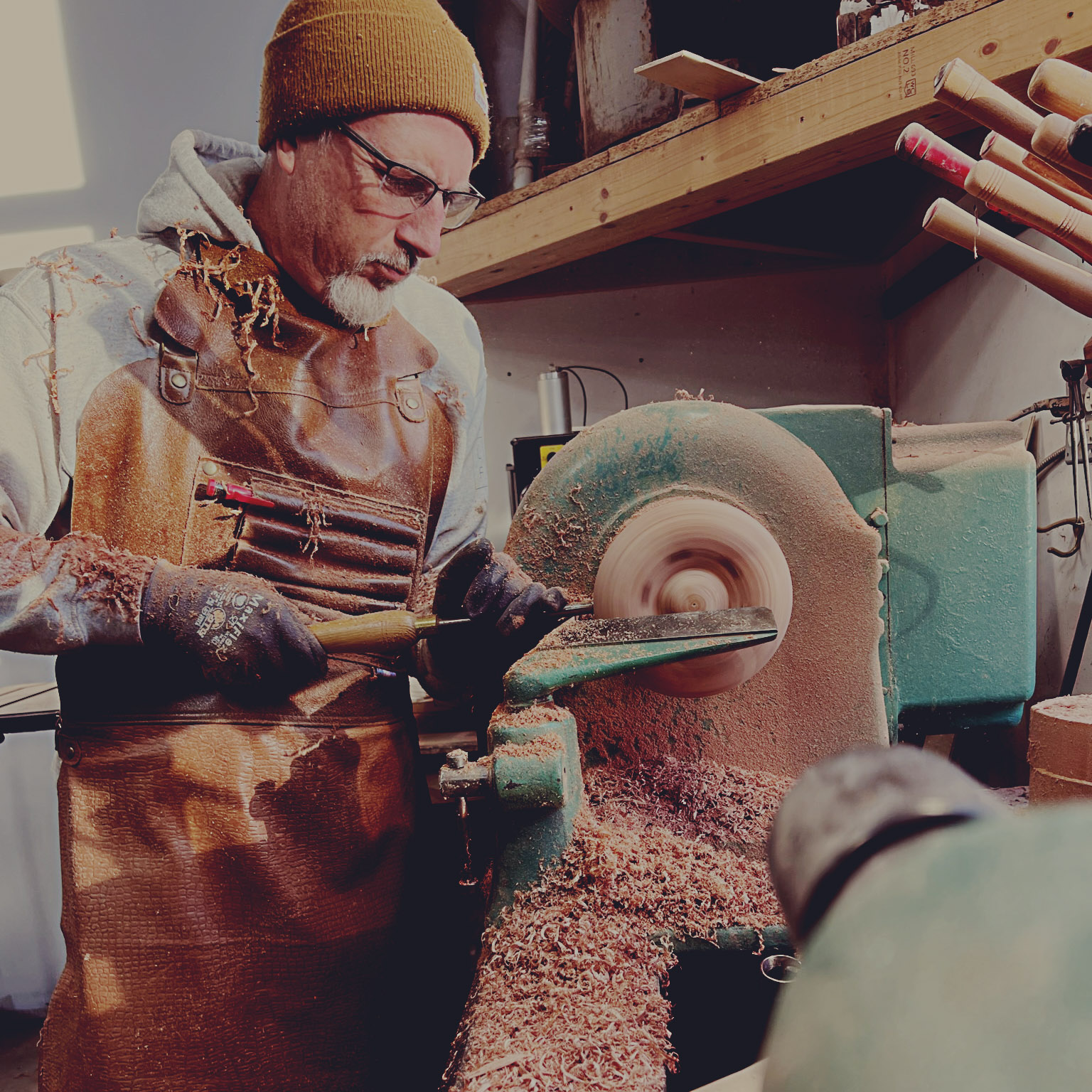
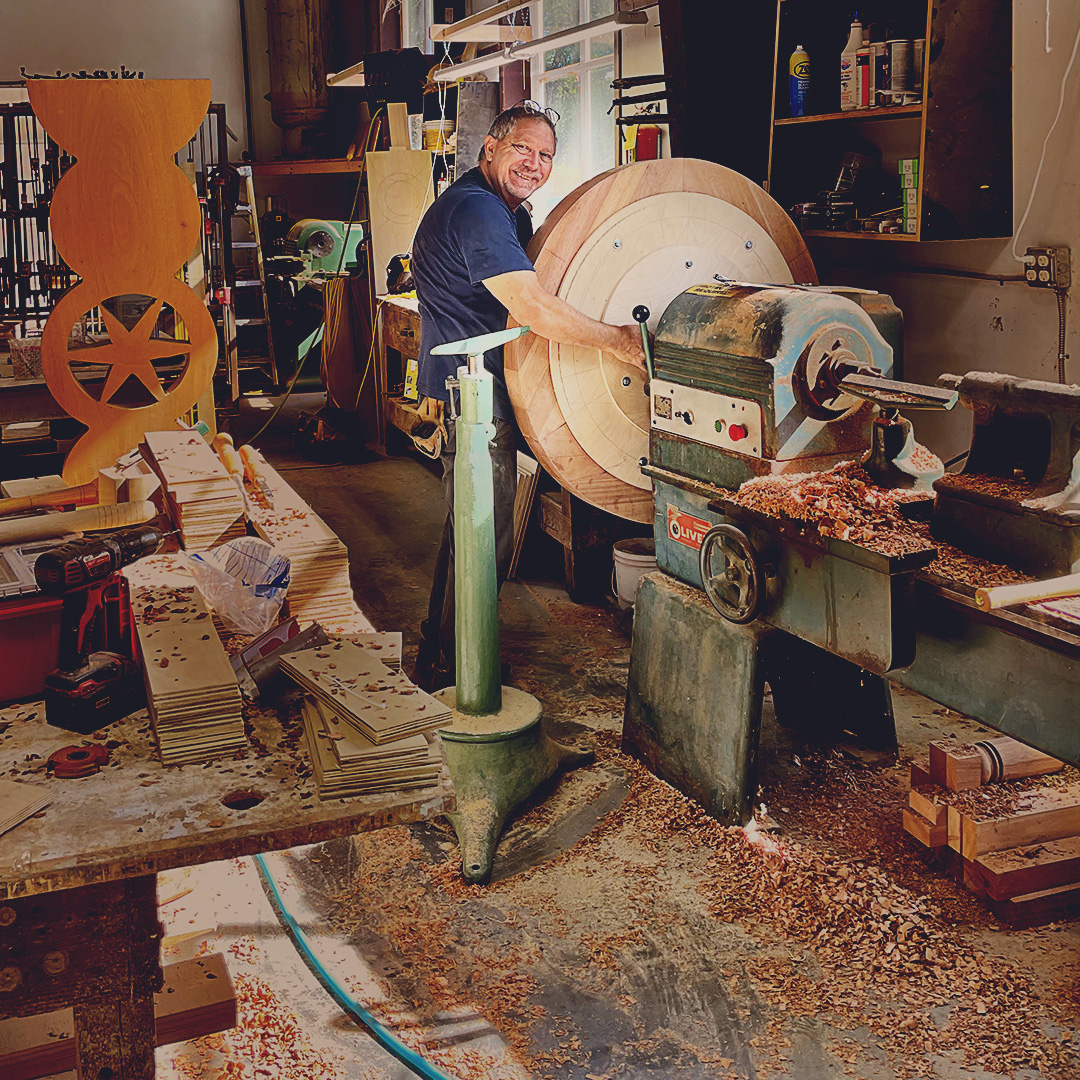
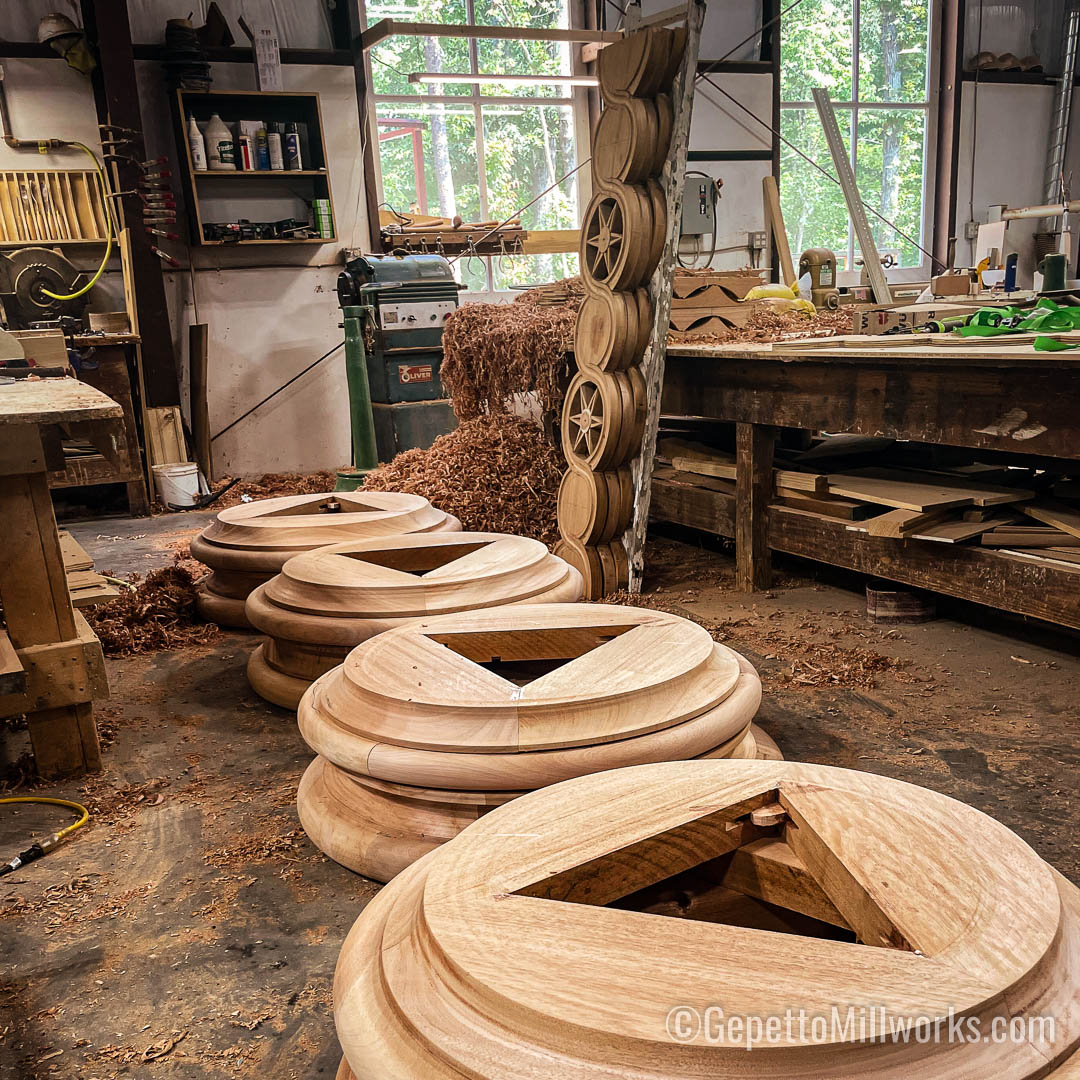
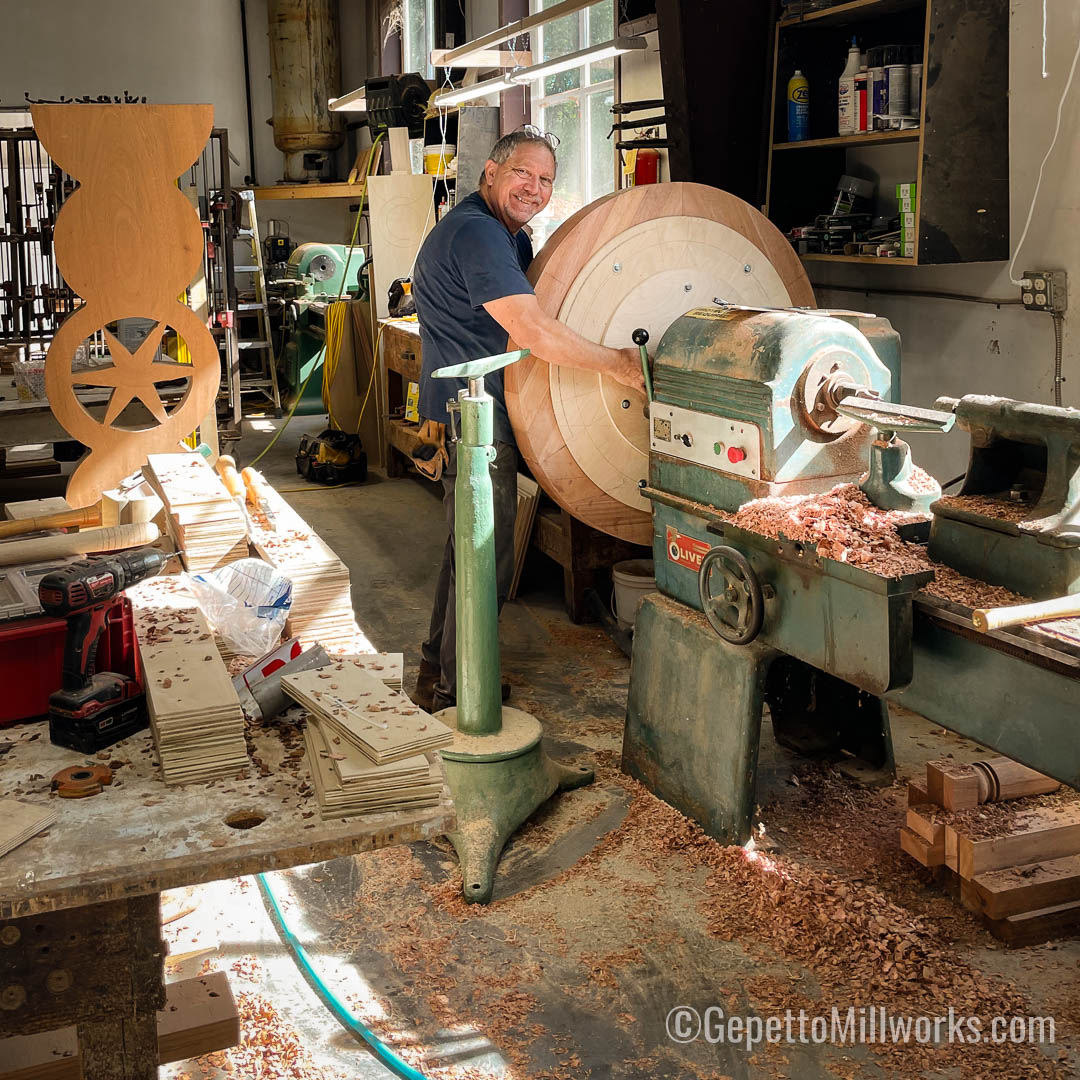
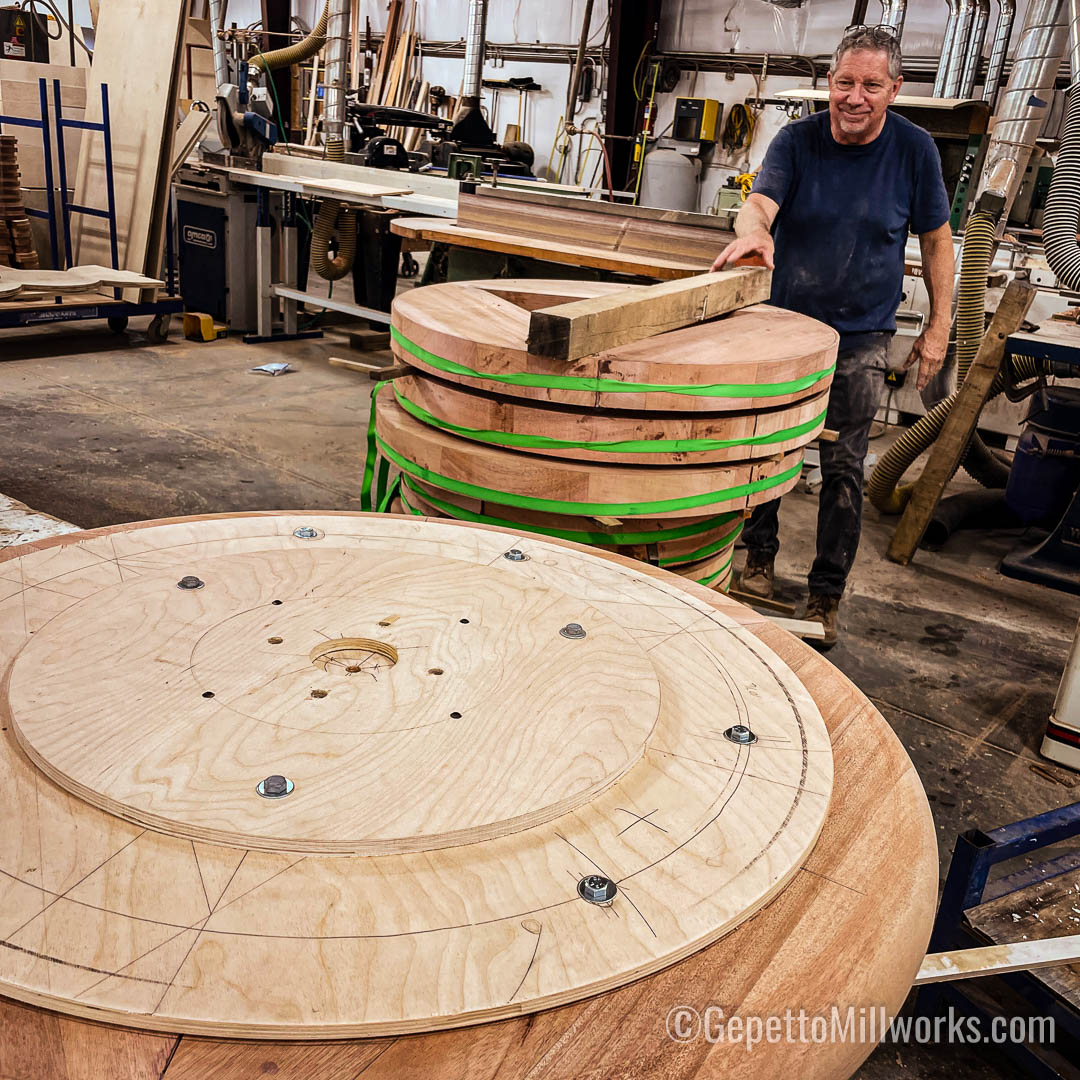
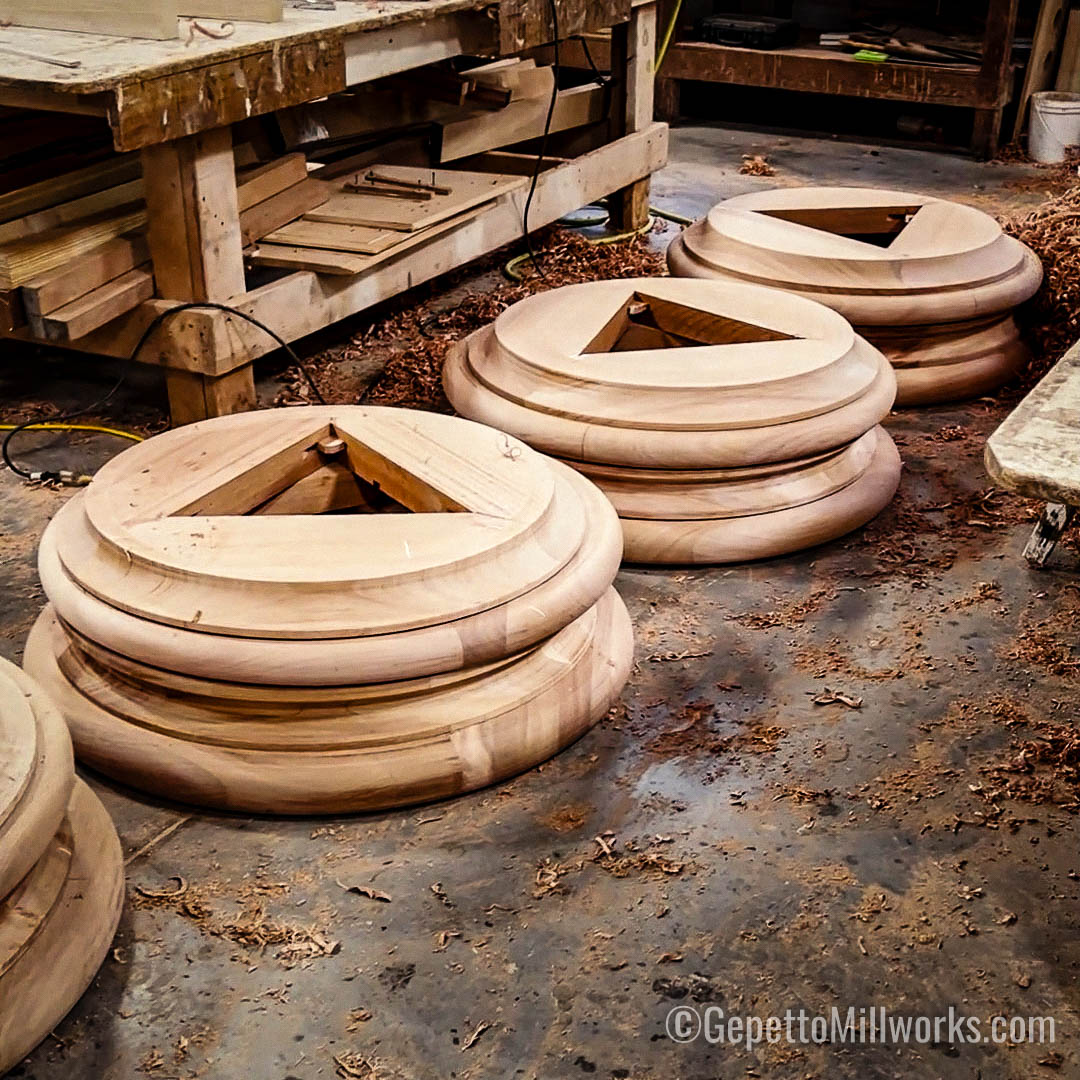
Gepetto craftsmen managed the design, steel fabrication and solid wood tread construction. A millwork specialist is a job site peacemaker. The mill work brings the electrical contractor, the plumber and the carpenter into the same room to achieve the culmination of a kitchen or a complex three story circular staircase. A mill work installer has often graduated from construction management where they have already made sure that the corners meet and are square and plumb. Envisioning the project problems & hangups – from the smallest detail up to the grand sweep is the responsibility of the Gepetto team in design consultation as well as fabrication details.
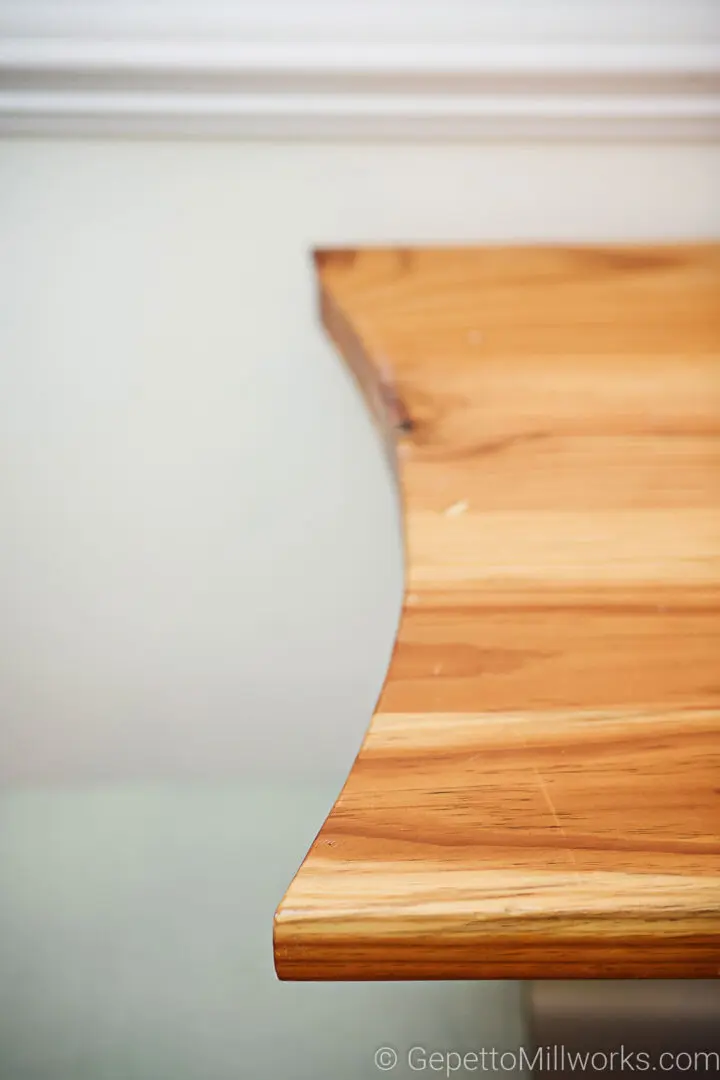
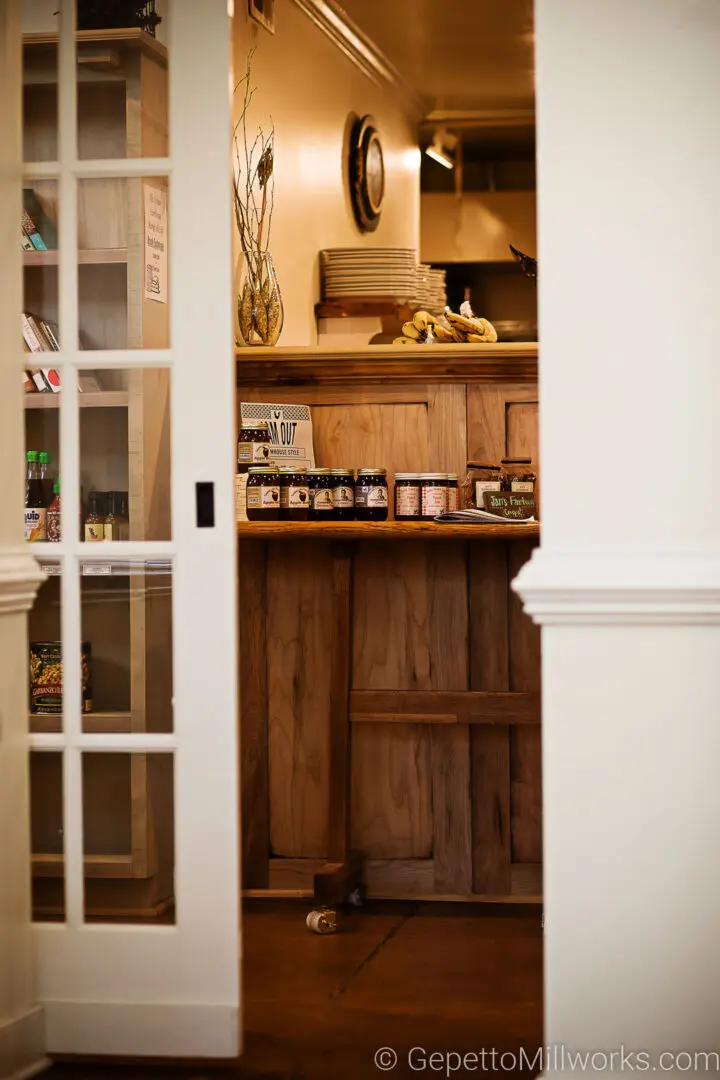
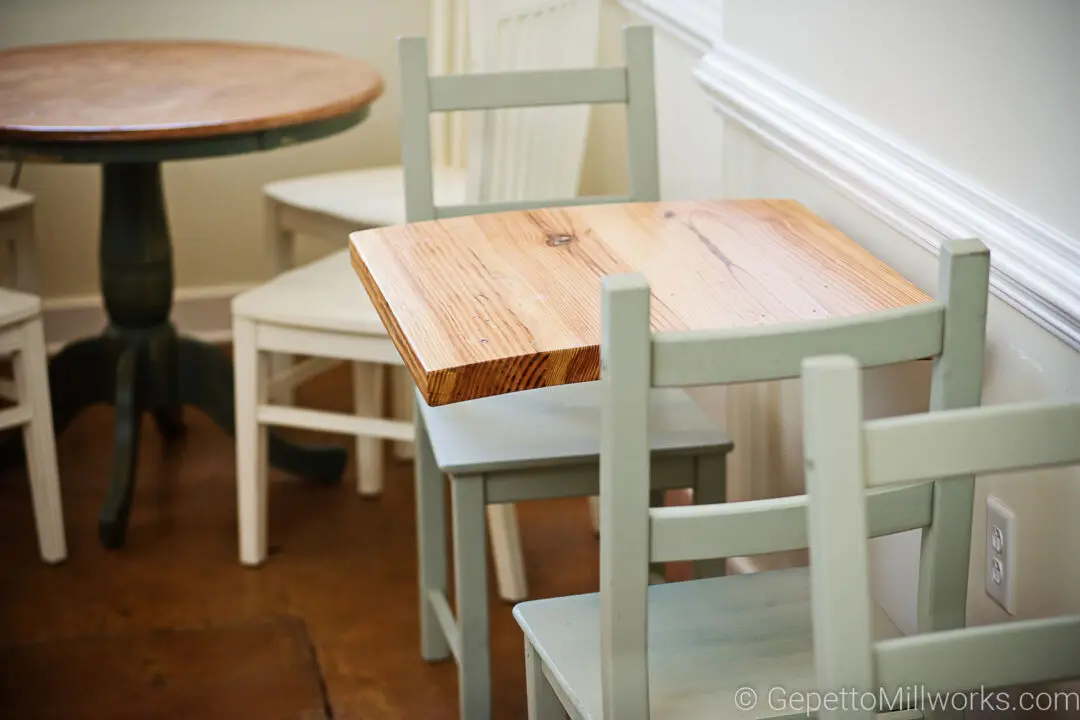
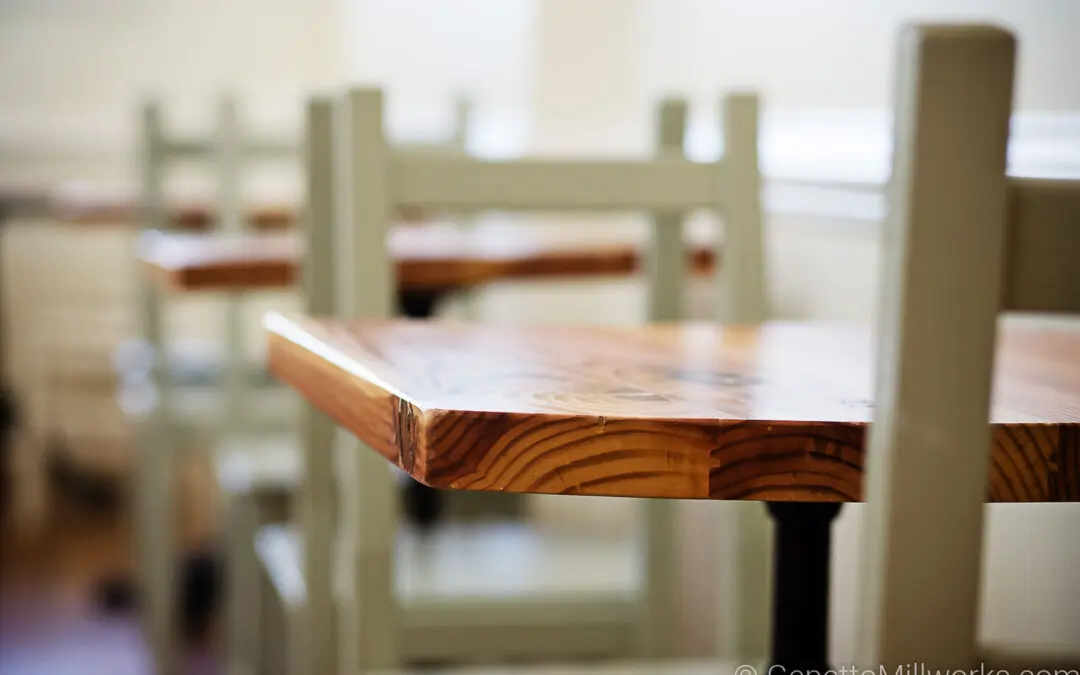
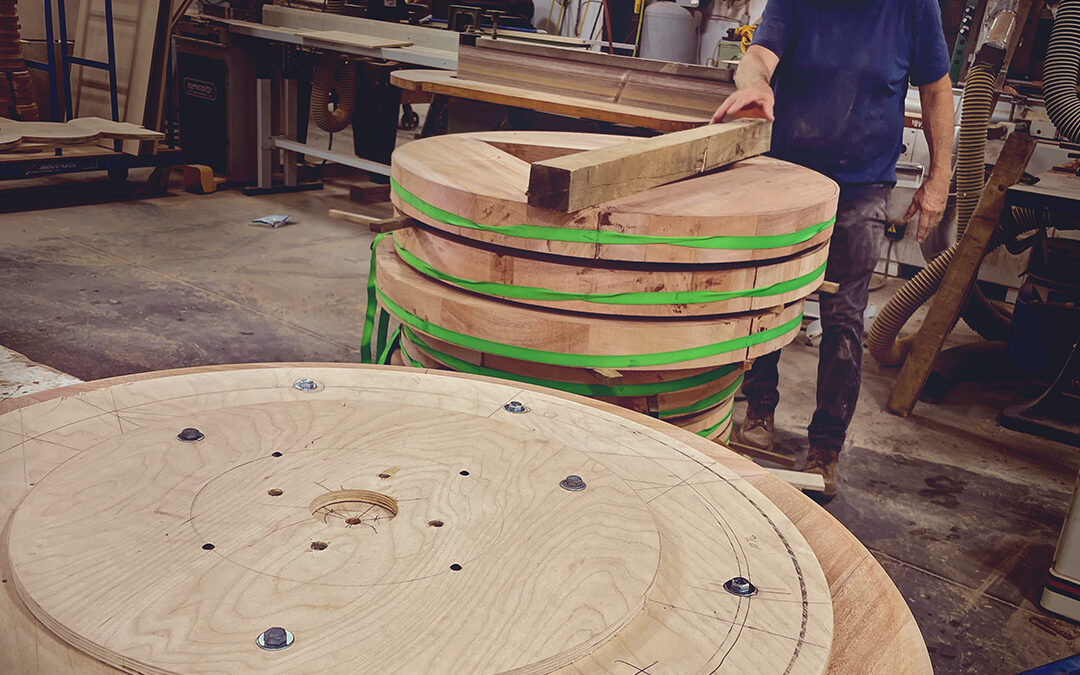
The development of old warehouses into office spaces, mixed use areas and apartments or lofts lends itself well to Gepetto’s signature building products. Gepetto has reclaimed many board feet of lumber from warehouses marked for demolition. We have turned those beams into doors, counter tops, solid wood joinery tables, free standing islands, and all manner of decorative trim. Contact us to include the warm authenicity of solid beam finishing products in your renovation plans.
Spiral staircase for space management and an elegant entry way
[ninja_form id=1]
Measure the height and diameter of the space you need to fit your staircase contact Gepetto to begin the drawing process. Our architectural drawings will include clearances from walls and floor for the handrails and supporting structure built in wood or steel.
Calculate your tread quantity by dividing the total height from the standard 6 or 8 inch tread height. The three main components of the spiral staircase design are the center post (which bears the weight of everything), the risers (which sit in the post), and the treads (the actual steps that attach to the risers). In this case, the center post of our staircase is black locust, perhaps 10-12″ in diameter at the base.
The distance from the floor of one level to the floor of the next level determines the size of your staircase. Measure the vertical distance from the bottom and use the formula:
Handrail Length = square root[(Height^2 + (2 pi Radius)^2)]
In this equation, “pi” is a constant of 3.14, and the notation “^2” means to square the preceding number or calculation. This calculation also assumes one full rotation of the staircase, which is common.
In the realm of architecture and interior design, the connection between different levels of a space is not merely a functional necessity but an opportunity to create a seamless blend of aesthetics and practicality. One captivating way to achieve this harmonious integration is through the use of a wooden spiral staircase. Gepetto Millworks can build at the scale and materials (adding steel as needed) to achieve intricate joining two floors with a spiral staircase crafted primarily from wood. Exploring the interplay between aesthetics, architectural planning, and functionality that can centralize a space.
Aesthetics:
The visual appeal of a wooden spiral staircase is undeniable, and its integration into a multi-story structure adds a touch of elegance and warmth. Wood, with its natural grains and textures, brings a timeless charm to any space. Whether it’s a contemporary residence or a classic setting, the versatility of wooden spiral staircases allows them to complement various architectural styles.
The choice of wood species plays a pivotal role in determining the staircase’s aesthetic impact. Dark hardwoods like mahogany or walnut exude a sense of luxury and sophistication, while lighter woods such as oak or maple impart a more casual and modern feel. The selection of the wood’s finish – be it polished, stained, or left in its natural state – further influences the staircase’s appearance.
Architectural Planning:
Designing a wooden spiral staircase involves a meticulous architectural planning process that considers both form and function. The staircase must seamlessly integrate with the overall design of the space while adhering to safety and building code standards. But in all truth, Architects need to know the capabilities of Gepetto to meet project deadlines and pricing – so that they can open up the design possibilities of a space.
The spiral nature of the staircase allows for a compact footprint, making it an ideal choice for spaces with limited square footage. Its helical design not only adds a dynamic visual element but also provides a graceful transition between the two floors. Architects often take advantage of this helical form to create a focal point within the interior, using the staircase as a sculptural element that enhances the overall aesthetic.
The placement of the wooden spiral staircase within the floor plan is crucial for optimizing both visual impact and functionality. Whether positioned in the center of a room as a striking centerpiece or tucked into a corner for a more subtle integration, the staircase’s location must harmonize with the flow of the space.
While the visual aspect is undoubtedly important, the primary purpose of a staircase is to facilitate movement between floors efficiently. A wooden spiral staircase achieves this functionality with a twist – quite literally.
The helical design allows for a gradual ascent or descent, making the staircase not only a practical means of traversing between levels but also a comfortable one. The spiral shape distributes the steps evenly around a central column, ensuring a natural rhythm to the climb. This feature is particularly beneficial when considering the convenience for individuals of all ages, as it minimizes the feeling of steepness associated with traditional straight staircases.
Functionality is further enhanced through thoughtful details such as handrails and balustrades. The warmth of wooden handrails provides a comfortable grip, enhancing safety while contributing to the overall aesthetic coherence. Balustrades can be designed in various styles, from intricately carved wooden spindles to minimalist metal structures, offering both support and a visually pleasing enclosure.
Maintenance considerations are also crucial for the functionality of a wooden spiral staircase. Choosing a durable and well-sealed wood, combined with regular maintenance, ensures the longevity of the staircase. Wood finishes that resist wear and tear, along with periodic inspections, contribute to the staircase’s functionality over the years.
Joining two floors with a wooden spiral staircase is a captivating journey that intertwines aesthetics, architectural planning, and functionality. The choice of wood, its finish, and the staircase’s design contribute to a visually appealing structure that elevates the overall ambiance of a space. Architectural planning ensures seamless integration with the surroundings, while the helical form provides both an efficient means of movement and an aesthetically pleasing focal point.
In the ever-evolving world of design, the wooden spiral staircase stands as a testament to the marriage of form and function. It invites individuals to embark on a journey between levels, not just as a transition between spaces, but as an experience that engages the senses and elevates the spirit. As architects and designers continue to explore innovative ways of connecting spaces, the wooden spiral staircase remains a timeless and enchanting choice.