by Matthew Wiley | Jul 30, 2026 | Architectural Millwork
For most new construction and modest remodels, stock millwork doors deliver adequate proportion and finish at a fraction of the cost and lead time of custom work. When your project involves a historic structure, an unusual opening, or a period style that demands precise moulding geometry, custom fabrication is the only path that holds up to scrutiny.
Here is a quick map of common project types to the right door choice:
- New construction, standard openings: Stock catalog doors in Craftsman or contemporary profiles cover the vast majority of cases.
- Historic restoration or tax-credit project: Custom replication using documented profiles and period-correct joinery is required. The National Park Service preservation standards set the bar for what “matching” means in these contexts.
- High-end renovation, non-standard sizing: Custom millwork doors sized to the opening, finished to specification, and detailed to the period.
- Modest remodel, painted interior doors: Primed MDF or finger-jointed stock doors are cost-effective and hold paint well.
Pro Tip: Before you request a quote, photograph every existing door and casing in the space. A millworker who can see the existing shadow lines and panel proportions will give you a far more accurate estimate than one working from dimensions alone.
Gepettomillworks maintains documented archives spanning Prairie School, Mission Revival, and Bungalow styles, making it a strong resource when period accuracy is the priority.
Table of Contents
What types of millwork doors are available, and which style fits your project?
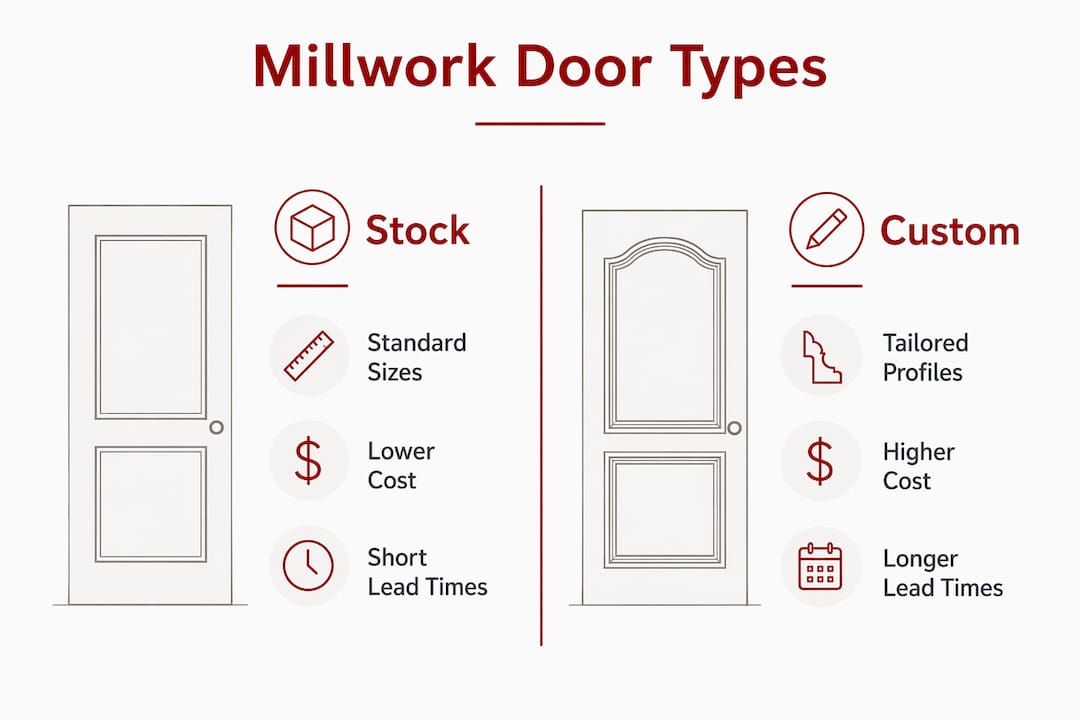
Stock millwork doors are catalog items: fixed sizes, standard profiles, and short lead times. They work well when the opening is a common dimension and the style is broadly compatible with the architecture. Custom millwork doors are fabricated to order, sized to the opening, and profiled to match a specified period or design intent.
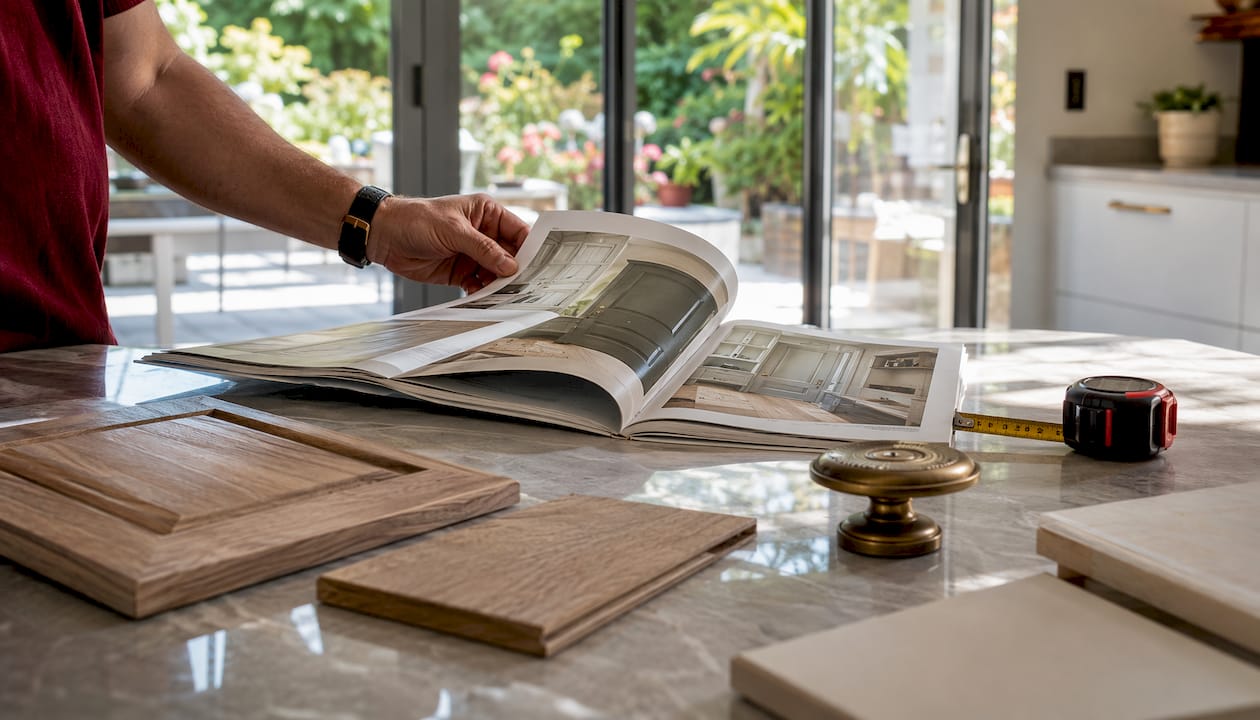
Interior and exterior doors differ in more than exposure. Exterior doors require engineered cores or solid species with stable moisture dynamics, weather-resistant glazing, proper thresholds, and sealed end-grain to prevent delamination. Interior doors can use lighter construction, veneered panels, and a wider range of species.
Period styles that commonly drive custom door work include:
- Craftsman/Bungalow: Flat or slightly raised panels, square sticking, broad rails, and simple hardware. Species tend toward quartersawn white oak or Douglas fir.
- Prairie School: Horizontal emphasis, geometric glazing patterns, and restrained moulding profiles with strong linear shadow lines.
- Mission Revival: Arched openings, minimal ornamentation, and heavy proportions that read as solid and grounded.
- Federal: Symmetrical panel arrangements, delicate ovolo or bead-and-cove sticking, and elliptical or fanlight glazing above entry doors.
- Victorian: Elaborate moulding assemblies, multiple panel heights, and ornate hardware that almost always requires custom profile work.
- Art Deco: Geometric inlays, stepped reveals, and stylized hardware that rarely matches any stock catalog.
Style libraries from resources like Mouldings One pair period styles with specific profile geometries, which helps designers confirm whether a catalog match exists before commissioning custom grinding. Gepettomillworks’ new historic build archives show how these styles translate into fabricated assemblies.
What materials and construction methods define high-quality millwork doors?
Material choice determines durability, finish compatibility, and long-term stability. The most common options for custom wood doors are:
- Solid hardwoods (white oak, mahogany, walnut, poplar): Best for stained finishes and high-end painted work. Poplar is the standard choice for painted interior doors because it machines cleanly and holds primer well.
- Softwoods (Douglas fir, pine): Traditional for Craftsman and vernacular styles; dimensionally stable when properly dried and sealed.
- Engineered stile-and-rail cores with veneered faces: Reduce movement across wide panels while maintaining the appearance of solid wood. Standard for exterior doors where dimensional stability matters most.
- MDF and primed composites: Cost-effective for painted interior work; not suitable for exterior exposure without significant protective coating.
- PVC and fiber-cement trim: Used for exterior casing and surrounds where rot resistance outweighs the need for a wood substrate. Hammond Lumber stocks both PVC and composite exterior trim alongside custom millwork services.
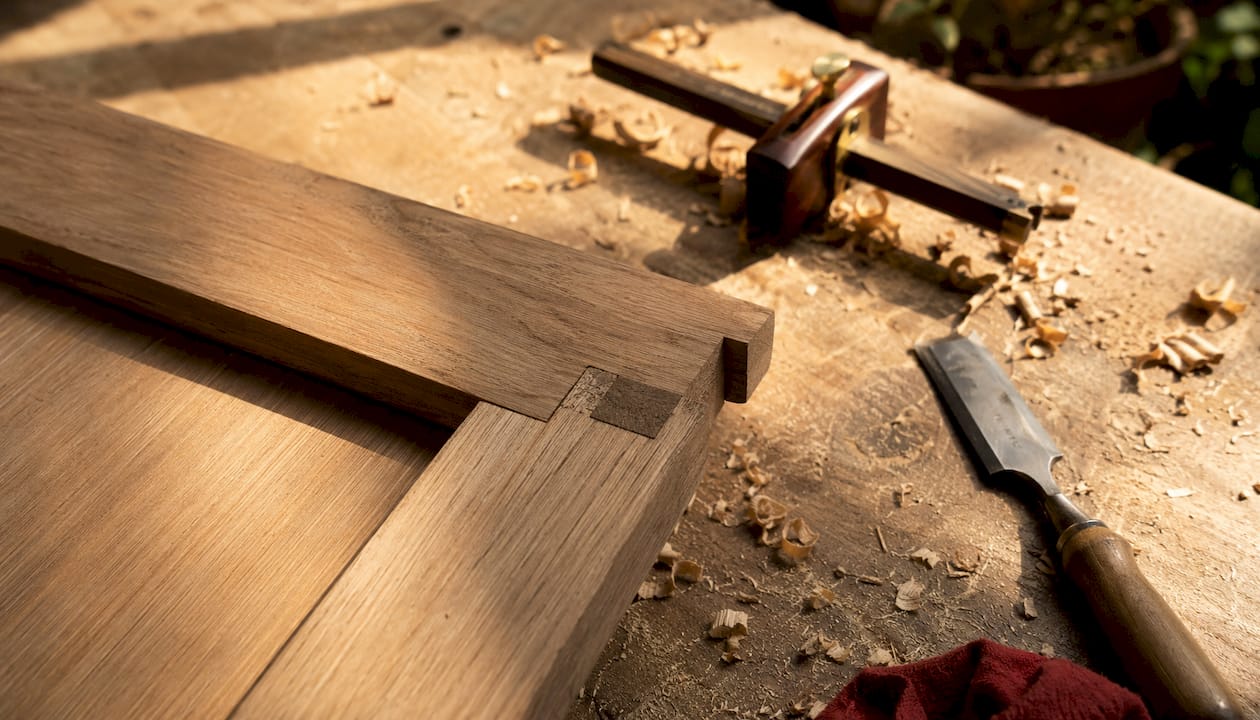
Construction quality shows in the joinery. Mortise-and-tenon rail connections, cope-and-stick joints on stile-and-rail doors, and glued-up panel assemblies with spline joints all indicate shop-grade fabrication. Doors assembled with pocket screws or loose dowels will rack and fail at the joints over time. The architectural details archives at Gepettomillworks document the joinery approaches used in period-correct fabrication.
For exterior structural elements such as posts and surrounds, engineered glulam products offer load-bearing capacity and dimensional stability while maintaining a traditional appearance. Preservative-treated exterior trim, such as the XT Trim lines described by Belco, can carry extended warranties and reduce long-term maintenance in humid Virginia climates.
How do you identify and replicate historic profiles and mouldings?
The workflow for accurate period matching follows a clear sequence:
- Document the existing profile. Photograph the casing, door stop, and base assembly in raking light to reveal shadow lines. Take a scaled rubbing using profile paper or a contour gauge, and measure the full section including reveal depths and fillet widths.
- Compare against a profile library. The Mason’s Mill historical moulding catalog organizes profiles by period and notes knife availability for reproduction. Large shops maintain libraries of thousands of knife profiles; where a match exists, turnaround is faster and cost is lower.
- Decide: catalog match or custom grinding. When no library knife matches the documented profile, custom grinding is the only reliable path to replication. This step is often required for projects seeking historic tax-credit eligibility, where preservation standards demand near-exact matches to existing historic fabric.
- Verify the full assembly, not just the single profile. A door casing that matches the head profile but uses a base of a different period reads as incorrect to a trained eye. Proportion, scale, and the relationship between casing, plinth block, and base must all align.
Successful period-correct renovation depends on breaking historical designs into their component mouldings and matching proportions across the full assembly, not just copying a single profile. A casing that is correct in section but scaled 15% too large will read as wrong even when the geometry is accurate.
Pro Tip: Send a contour-gauge tracing and a raking-light photograph to your millworker before the first call. It compresses the assessment process considerably and allows a shop to check its knife library before quoting.
Gepettomillworks’ replica millwork archives document the profile-matching process across multiple period styles, including cases where custom knife grinding was required to achieve preservation-standard accuracy.
What do you need to know about sizing, installation, and hardware?
Standard interior door widths run 2/0 through 3/0 (24"–36"), with heights typically at 6/8 or 8/0. Historic structures in Virginia often present narrower openings, taller floor-to-ceiling heights, or out-of-square frames that require custom sizing. Exterior doors for period homes frequently need custom widths and heights to match original proportions.
Pre-hung units include the door, jamb, hinges, and often the stop and casing. They simplify installation and reduce field labor, but require accurate rough-opening dimensions. Slab-only deliveries give contractors more control over jamb profiles and reveal tolerances, which matters when matching existing historic jamb details.
Key installation coordination points:
- Jamb profiles must match or complement existing casing assemblies.
- Reveal tolerances (typically 1/8") should be confirmed before the door is hung.
- Exterior doors require field sills, thresholds, and weatherstripping specified before fabrication.
- Contractor handoff points for glazing, hardware, and finish should be defined in the contract.
Hardware selection carries as much period weight as the door itself. Mortise locksets are standard for Federal, Victorian, and Craftsman doors. Surface-mounted closers and rim locks suit certain period styles. Knob and lever profiles, escutcheon shapes, and hinge finishes should all reference the architectural period. For exterior doors, threshold and weatherstripping choices affect both energy performance and the visual base of the door assembly.
How should you approach finishes and long-term maintenance?
Paint systems for millwork doors require a quality primer applied to all six faces, including end-grain, before installation. End-grain absorption is the primary site of moisture infiltration and finish failure, particularly on exterior doors. Two-coat primer followed by a waterborne or alkyd topcoat is standard for painted interior work; exterior doors benefit from an additional topcoat and annual inspection.
Stained finishes require a species with visible grain character (oak, mahogany, fir) and a penetrating oil or wiping varnish base before topcoating. UV-cured factory finishes offer the most durable stain protection for exterior applications but require factory application before delivery.
Maintenance intervals by application:
- Interior painted doors: Inspect annually; repaint every 7–10 years or when finish shows cracking.
- Exterior painted doors: Inspect twice yearly; repaint every 3–5 years depending on sun and moisture exposure.
- Stained exterior doors: Re-coat every 2–3 years; inspect thresholds and weatherstripping annually.
For sustainable material sourcing, specify FSC-certified hardwoods or reclaimed lumber where the species and grade are appropriate. Low-VOC waterborne finishes are widely available and perform comparably to solvent-based systems for interior applications. Belco’s preservative-treated exterior trim illustrates how engineered and treated products can reduce maintenance cycles without sacrificing appearance.
What do stock and custom millwork doors typically cost, and how long do they take?
| Door Type |
Relative Cost |
Typical Lead Time |
Key Cost Drivers |
| Stock catalog door |
Lowest |
1–2 weeks |
Species, size, finish option |
| Custom standard profiles |
Moderate |
4–8 weeks |
Species, panel complexity, finish |
| Full historic replication |
Highest |
8 weeks |
Profile grinding, joinery, documentation |
Factors that move a quote higher: rare species, multiple raised panels, custom-ground profiles, factory finish, glazing, and installation scope. Seasonality affects shop schedules; orders placed in late summer or early fall often face longer queues as contractors prepare for winter interior work.
When reviewing quotes, look for itemized line items covering fabrication, finishing, hardware, shipping, and installation separately. A single lump-sum quote for a complex historic door makes it impossible to evaluate where cost is concentrated or to make informed substitutions.
How do you choose the right millwork door and the right millworker?
- Define project priorities: period accuracy, budget, lead time, and finish type.
- Confirm style, size, and finish before contacting suppliers.
- Request documented samples and ask whether the shop’s knife library includes your profile.
- Confirm warranty coverage and whether installation is included or contracted separately.
- Ask for references from comparable historic or custom projects.
Questions worth asking any millworker:
- What period styles are represented in your profile library?
- Can you show photographs of past work at a similar scale and period?
- Do you offer custom profile grinding, and what is the lead time for a new knife?
- What documentation do you provide for preservation or tax-credit compliance?
Red flags: vague specifications with no profile drawings, no sample photographs of completed work, no documented joinery details, and unclear warranty terms. A millworker who cannot show you a knife library or a profile catalog is unlikely to deliver period-accurate results.
Trust signals that carry real weight: preserved project archives organized by period style, restoration case studies with before-and-after documentation, demonstrated experience with historic tax-credit compliance, and qualified restoration craftsmen with verifiable trade credentials. Regional lumber suppliers like Hammond Lumber encourage in-person sample review and custom quoting, which is a reasonable first step for straightforward projects.
Pro Tip: Review the wood door suppliers guide before your first millworker conversation. Knowing what a capable shop looks like makes it easier to identify gaps in a quote or a portfolio.
Gepettomillworks: period-accurate custom millwork for Virginia projects
When a project requires documented historic matches, custom profile grinding, or fabrication that may affect tax-credit eligibility, Gepettomillworks offers a direct path from profile documentation to finished door.
The shop maintains archives across Prairie School, Mission Revival, and Bungalow styles, with documented joinery and fabrication records that support preservation compliance. Services cover custom design and fabrication, historic-style profile matching, period-correct finishing, and project documentation for restoration work.
To request an assessment, send photographs of the existing opening, a contour-gauge tracing or scaled rubbing of the profile, your desired finish, and your project timeline. Gepettomillworks will confirm whether an archive match exists or whether custom grinding is required, and provide a scoped quote from there. Contact Gepettomillworks at gepettomillworks.com to start the conversation.
Key Takeaways
Custom millwork doors for historic or period-correct projects require documented profile matching, period-appropriate joinery, and a millworker with verifiable archives and custom grinding capability.
| Point |
Details |
| Stock vs. custom |
Stock doors suit standard openings and modest remodels; custom fabrication is required for period accuracy, unusual sizing, or tax-credit projects. |
| Profile documentation |
Photograph, rub, and measure existing profiles before contacting a millworker — it compresses the assessment and improves quote accuracy. |
| Material and joinery |
Mortise-and-tenon and cope-and-stick construction signal shop-grade quality; engineered cores improve stability for exterior doors. |
| Cost and lead time |
Full historic replication carries the highest cost and longest lead time (8 weeks); stock doors typically arrive in 1–2 weeks. |
| Gepettomillworks |
Maintains Prairie School, Mission Revival, and Bungalow archives with custom grinding capability for period-correct and preservation-compliant projects. |
Why getting the proportions right matters more than getting the profile right
The conventional wisdom in millwork restoration focuses on the profile: match the ogee, replicate the bead, grind the cove to the correct radius. That instinct is correct as far as it goes, but it misses the more consequential variable. Proportion governs how a door reads in a room. A casing with a geometrically accurate profile that is scaled 20% larger than the original will look wrong to anyone who has spent time in period buildings, even if they cannot articulate why.
Virginia’s historic building stock, from Federal-era townhouses in Alexandria to Craftsman bungalows in Richmond’s Fan District, carries proportional relationships between door width, casing width, panel height, and ceiling height that were not arbitrary. They were derived from classical systems, regional craft traditions, and the specific material constraints of the period. When those relationships are broken, the restoration loses its cultural legibility, and in tax-credit contexts, it can lose its eligibility.
The shop-level implication is practical: stage the site before delivery. Wood doors acclimate to ambient humidity, and a door delivered to a construction site with open windows in February will move differently than one installed in a climate-controlled interior. Allow 72 hours of acclimation in the finished space before hanging, and seal all six faces before the door goes in the opening.
Gepettomillworks’ classical architecture archives and 19th-century home documentation reflect this proportional discipline across multiple period styles, which is why the archive is useful not just as a profile reference but as a proportional guide for the full door assembly.
Useful sources and further reading
| Resource |
What you will find there |
| National Park Service — Tax Incentives for Historic Preservation |
Preservation standards and tax-credit eligibility guidance for restoration projects |
| Mason’s Mill Historical Moulding Catalog |
Period-organized profile library with knife availability notes for reproduction work |
| Mouldings One — Architectural Styles |
Curated profile sets mapped to architectural periods; useful for style confirmation before custom grinding |
| Belco — Exterior Millwork Designs |
Material trade-offs for exterior millwork, including preservative-treated and engineered options |
| Hammond Lumber — Moulding Options |
Regional supplier with PVC, composite, and custom millwork; useful for in-person sample review |
| Gepettomillworks — Replica Millwork Archives |
Documented profile-matching cases across multiple period styles |
| Gepettomillworks — Architectural Design Woodworking |
Fabrication process documentation and custom millwork project examples |
| Period property renovation guide |
Trade-offs and techniques for period-property restoration, including millwork and joinery |
| The role of joinery in a home build |
Practical overview of joinery workflows and contractor coordination for custom millwork projects |
Recommended
by Matthew Wiley | Jul 29, 2026 | Architectural Millwork
For period-accurate entries that demand year-round flexibility and long-term repairability, custom wood combination storm doors are the preferred solution — and Gepettomillworks, working within the Secretary of the Interior’s Standards for Rehabilitation, is the millworker to engage when preservation or profile matching matters. Mass-market aluminum units satisfy neither the visual nor the documentary requirements of most historic tax credit programs. When the original door fabric is intact and the entry is architecturally significant, a handmade wood combination door is not a luxury; it is the technically correct intervention.
When custom wood combination doors are the right choice:
- Primary entries on period homes where the original door must be preserved
- Projects seeking federal or state historic tax credit eligibility
- Sites where a reversible, minimal-impact intervention is required by preservation authorities
- Frames with non-standard geometry that mass-market sizing cannot accommodate
When alternatives may suffice: secondary service entries, outbuildings with no preservation designation, or budget-constrained projects where visual match is not a program requirement.
Table of Contents
What are combination storm doors and how do interchangeable panels work?
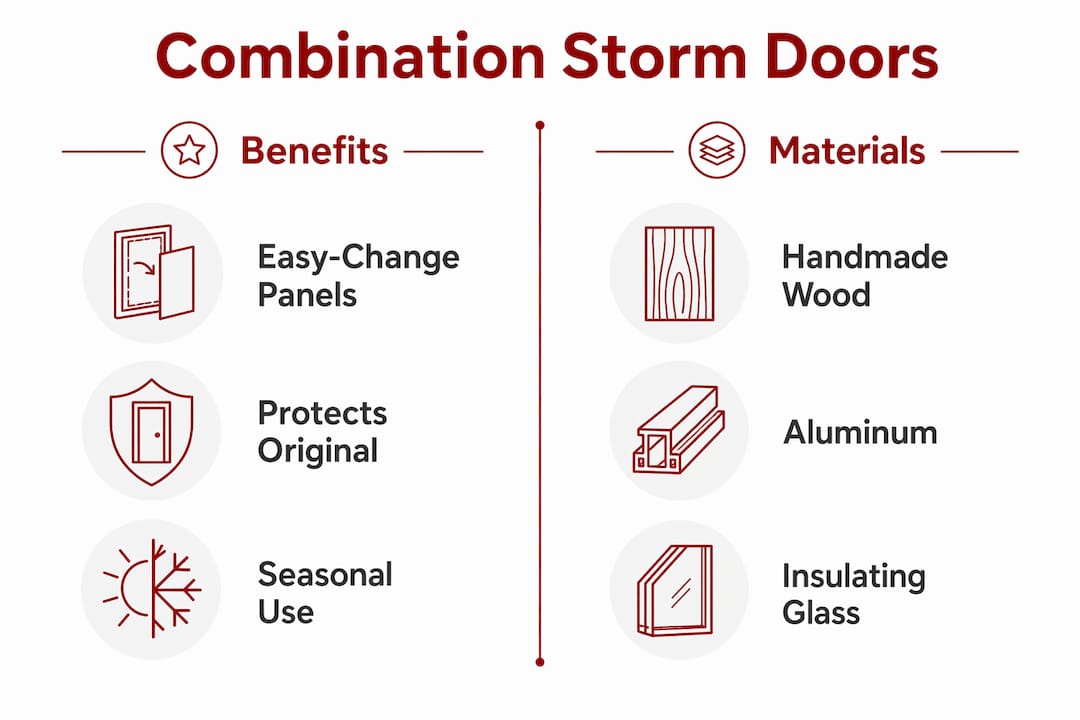
A combination storm door, also called an easy-change door, is a wood or aluminum outer door built around a stile-and-rail frame that accepts interchangeable inserts: a glass panel for cold-weather weather protection and a screen panel for warm-weather ventilation. The two panels share the same opening and are secured by locking devices rather than simple friction clips, producing a rattle-free weather seal that clip-in systems rarely achieve.
Panel configurations vary by glazing height:
- Fullview glass — single large lite spanning nearly the full door height
- Midview glass — glass occupying the upper two-thirds, solid lower panel
- Highview glass — smaller upper lite with a larger solid lower panel
- Screen panels — full or partial, swapped in for the glass insert seasonally
- Retractable-screen alternatives — a separate category that eliminates panel swapping but cannot replicate historic profiles
The easy-change system preserves the original door by functioning as a protective outer layer. Because the combination door takes the daily abuse of weather, UV, and hardware contact, the historic door behind it remains largely undisturbed. Solid wood construction also means that a damaged stile or rail can be repaired in place rather than replaced wholesale, a repairability advantage aluminum frames simply do not offer.
Pro Tip: When specifying for a historic entry, confirm that the locking device style is compatible with the door’s finish system before ordering. Some locking hardware requires a routed channel that, if cut incorrectly, can compromise a thin stile.
Why use combination storm doors on historic buildings?
The primary practical benefit of combination doors is seasonal adaptability — converting a primary entry from screened ventilation to glass protection without removing the storm door from its hinges. For a Maryland rowhouse or a Federal-period farmhouse in the Piedmont, that flexibility extends the comfort of the entry hall across three seasons without a second door installation.
Core benefits for historic buildings:
- Ventilation control: swap to screen panels in spring and back to glass in October without tools
- Weather buffer: the combination door absorbs wind-driven rain and drafts, reducing moisture exposure on the original door surface
- Surface preservation: the historic door’s paint, patina, and hardware remain protected from direct weathering
- Repairability: localized repairs to wood stiles, rails, or glazing beads are straightforward; finish matching is possible in ways aluminum cannot replicate
Preservation-specific use cases:
- Three-season porch conversions where the original screen door is no longer serviceable
- Primary entries on National Register properties where the Secretary of the Interior’s Standards require reversible interventions
- Projects documenting work for Maryland’s historic tax credit program, where every addition to the building envelope must be demonstrably compatible and reversible
When attaching a combination door to a historic frame, use reversible fastening methods and document the attachment points with photographs and measured drawings before installation. Preservation officers reviewing tax credit applications will expect that record.
What material and construction choices suit historic entries?
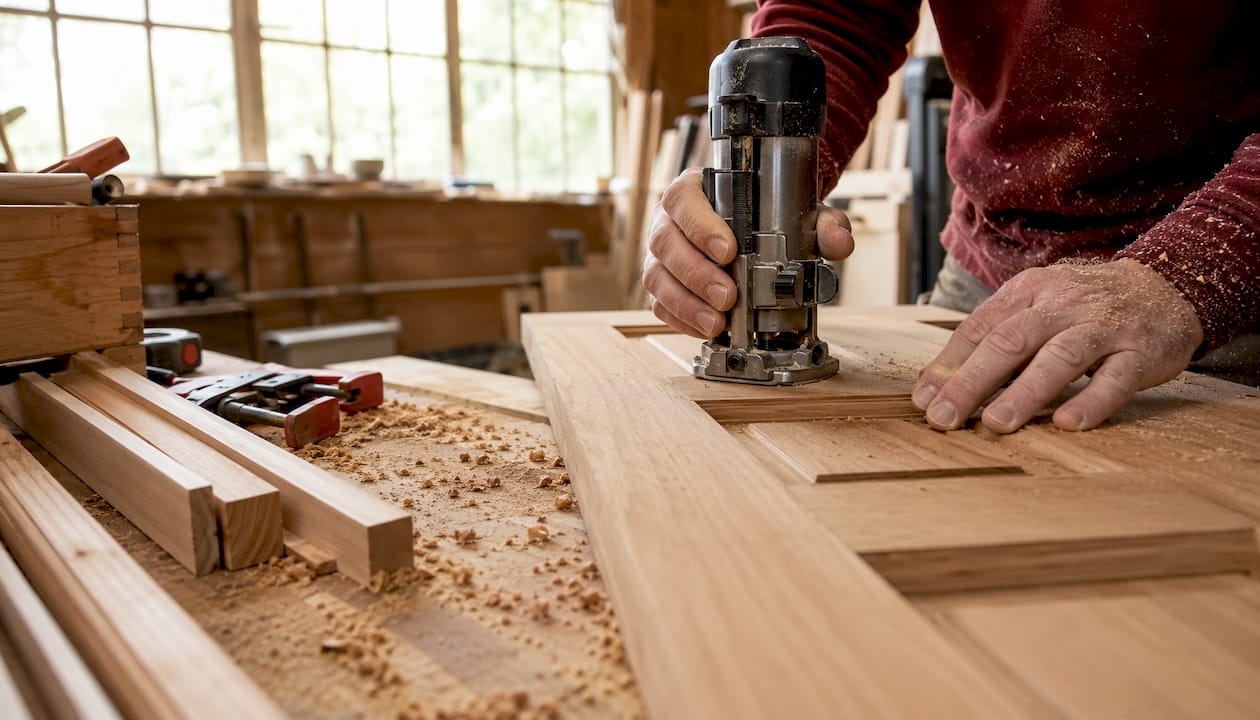
Handmade solid-wood combination doors offer finish options and repairability that aluminum alternatives do not. The construction choice shapes every downstream decision, from profile replication to field finishing.
| Construction Type |
Repairability |
Finish Options |
Profile Matching |
Typical Use |
| Handmade solid wood |
High — localized repair |
Full field finish, any color |
Excellent — custom profiles |
Historic, preservation |
| Engineered wood core |
Moderate |
Factory prime + field topcoat |
Good with applied moldings |
Mid-range restoration |
| Mass-market aluminum |
Low — replace unit |
Factory color only |
Poor |
Non-historic entries |
Wood species considerations: Eastern white pine is the traditional choice for New England and Mid-Atlantic period work, accepting paint and field finish readily. Mahogany offers superior dimensional stability and is appropriate for unpainted or stained applications. White oak suits Arts and Crafts and Craftsman entries where grain character is architecturally legible. Engineered cores with solid-wood faces balance stability and cost when the full door depth is not visible.
Joinery details matter as much as species. Stile-and-rail profiles should replicate the original door’s ovolo, ogee, or flat-panel moldings so the combination door reads as a deliberate companion rather than an afterthought. Glazing beads can be custom-profiled to match existing muntins. Trimming allowances are narrow: stile trimming beyond 1/4 inch risks exposing core stock, so field measurement must be precise before the door leaves the shop.
Hardware selection closes the specification loop. Easy-change locking devices, weatherstripping type (compression vs. pile), Low-E glazing for energy efficient storm doors, and threshold style all affect both performance and visual compatibility with the historic entry.
Pro Tip: Specify Low-E insulating glass in the winter panel to reduce radiant heat loss through the entry without altering the door’s exterior appearance. The coating is nearly invisible from the street.
How do you match profiles and meet preservation standards?
The Secretary of the Interior’s Standards for Rehabilitation require that new additions be distinguishable from historic fabric yet visually compatible with it. A combination door that replicates the original entry’s profile language satisfies both criteria: it is clearly a secondary layer, yet it honors the architectural grammar of the building.
Documentation checklist before fabrication:
- Measured drawings of the existing door frame, including out-of-square conditions
- Photographic record of existing finish, patina, and hardware
- Profile tracings or router templates of existing moldings
- Written finish specification (paint system, sheen, color match)
- Archival research notes if the building has a documented historic period
Consult the local Historic Preservation Office (HPO) early, particularly for Maryland projects within a National Register district or subject to a preservation easement. The HPO can confirm whether a combination door qualifies as a compatible addition or requires a Certificate of Appropriateness. For federal tax credit projects, the National Park Service reviews Part 2 applications and expects documentation of reversible attachments.
Design decisions that affect approval include profile replication fidelity, hardware style (period-appropriate vs. contemporary), finish color match, and the method of attachment to the existing frame. A combination door fastened with removable screws into existing jamb material is treated very differently from one that requires new blocking or structural modification.
Pro Tip: Submit a finish mock-up board alongside the shop drawings when seeking HPO approval. A physical sample of the wood species, profile, and proposed finish color resolves most compatibility questions before fabrication begins.
The Secretary of the Interior’s Standards for Rehabilitation define a compatible addition as one that does not destroy historic materials and is distinguishable from the original while remaining visually subordinate to it — a standard that handmade wood combination doors, properly specified, are well positioned to meet.
How do you measure and install combination doors in historic frames?
Measure for the true opening, check for plumb and square, and plan for custom fitting if the frame has settled. Historic frames in Maryland rowhouses and farmhouses routinely carry 1/4 inch to 3/4 inch of out-of-square accumulated over a century or more. Consumer Reports testing found installation times ranging from about 45 minutes to 2 hours for standard aluminum models; custom wood doors in non-square historic frames typically require more time.
Installation sequence:
- Field-measure the true opening at top, middle, and bottom; record all three dimensions
- Check plumb on both jambs and note any twist or bow in the frame
- Transmit measurements and field notes to the shop for templating
- Review shop drawings and confirm trimming allowances before fabrication
- Test-fit the door in the opening before final finish is applied
- Adjust threshold, hinge placement, and closer arm for smooth operation
- Apply final field finish coats after installation to seal all cut edges
- Install weatherstripping and confirm the locking device seats the panel without rattle
For historic home installations, professional installation by a restoration craftsman is strongly recommended. A qualified installer understands how to shim a non-square frame without stressing the door’s joinery and how to apply field finish in sequence with the installation steps. Winterizing the door after installation, including checking the threshold seal and compression weatherstripping, protects the investment through the first heating season.
What do custom combination storm doors cost?
Custom wood combination doors are a bespoke millwork investment. Professional installation of standard aluminum storm doors commonly costs $200–$400; custom wood units for historic projects carry higher material and labor costs driven by species selection, profile complexity, and finish scope.
Primary cost drivers:
- Wood species and grade (eastern white pine vs. mahogany vs. white oak)
- Custom profile replication and applied molding complexity
- Glazing specification (single-pane clear vs. Low-E insulating unit)
- Specialized easy-change locking hardware
- Finish system scope (factory prime only vs. full field finish)
- Shop labor for historic reproduction and lead time
| Cost Factor |
Entry Range |
Notes |
| Professional installation labor |
$200–$400 (aluminum baseline) |
Custom wood installs are priced as bespoke millwork and typically exceed this range |
| Field finishing allowance |
Varies by finish system |
Budget separately from fabrication |
| Specialist installer premium |
Above standard labor rates |
Required for non-square historic frames |
Include a contingency for field adjustments, particularly when trimming allowances are tight. Stile trimming is limited to 1/4 inch before core stock is exposed, so precise field measurement before fabrication is the most reliable cost control available.
How do you maintain and repair wood combination storm doors?
Wood combination doors are repairable and serviceable across decades of use, which is the primary lifecycle advantage over aluminum. Regular inspection and periodic refinishing extend that service life considerably.
Seasonal and annual maintenance tasks:
- Swap glass and screen panels at the seasonal transitions; inspect locking devices for wear each time
- Check compression weatherstripping along all four edges; replace when the seal shows compression set
- Inspect glazing putty or glazing beads for cracking; reglaze as needed before moisture infiltrates
- Touch up finish at wear points (bottom rail, latch stile) annually; full refinish every 5–7 years depending on exposure
- Tighten hinge screws and closer arm fasteners each fall
Common repairs that a restoration millworker can address in the field include split stiles from moisture cycling, loose applied moldings, and weatherstrip replacement. A finish that has checked or peeled does not require door replacement; it requires stripping, light sanding, and recoating, a task well within the scope of a qualified craftsman.
Pro Tip: Store seasonal panels flat, not leaning against a wall. A panel stored on edge for months can develop a slight bow that prevents it from seating cleanly in the locking device the following season.
What should you ask your fabricator before ordering?
A thorough specification protects the restoration outcome and eliminates ambiguity between the design intent and the fabricated result.
Spec checklist for drawings and RFQs:
- Exact opening dimensions (width at top, middle, bottom; height at both jambs)
- Maximum trimming allowances (stiles: 1/4 inch; top rail: 5/8 inch; bottom rail: 2-1/2 inch)
- Wood species and grade specification
- Core construction (solid vs. engineered core with solid-wood face)
- Glazing specification (clear single-pane, Low-E insulating, or other)
- Hardware spec (locking device model, hinge finish, closer type)
- Finish system (unfinished, factory prime, or full factory finish)
- Tolerance limits for out-of-square conditions
- Panel configuration (fullview, midview, highview)
- Documentation requirements for tax credit applications
Ten questions to ask your fabricator:
- What is your current lead time for custom wood combination doors?
- Do you provide shop drawings for approval before fabrication begins?
- Can you supply a finish mock-up board with the proposed species, profile, and color?
- What warranty do you offer on materials and joinery?
- What is your repair and replacement policy if a panel or locking device fails?
- Have you replicated profiles from historic measured drawings before, and can you share examples?
- Does your scope include installation, or do you supply to a separate contractor?
- How are doors shipped or delivered, and what packaging protects the finish?
- Do you provide guidance on seasonal panel storage?
- Can you supply documentation (shop drawings, finish records, reversible fastening details) suitable for a historic tax credit application?
For design-bid-build workflows, include the shop drawing approval step as a formal submittal in the project schedule. For design-assist engagements, bring the fabricator into the documentation phase early so profile replication decisions are made before construction documents are issued.
What do restoration projects with custom combination doors look like?
The most instructive restoration scenarios share a common structure: a historic entry with an original door worth preserving, a frame that has drifted out of square, and a preservation program that requires documentation.
- Profile replication: A Federal-period entry with a six-panel original door required a combination door whose stile-and-rail profiles echoed the original’s ovolo molding. Shop drawings were submitted alongside a finish mock-up for HPO review; approval was granted without revision.
- Seasonal ventilation conversion: A three-season porch on a late-Victorian residence had lost its original screen door. A midview combination door with a custom-profiled bottom rail restored the visual rhythm of the entry while providing year-round flexibility.
- Tax credit documentation: A Maryland rowhouse project required a reversible combination door attachment documented with measured drawings and photographic records. The combination door was treated as a compatible, reversible addition in the Part 2 application.
Project photography, measured drawings, and finish sample boards belong in a dedicated project folder, organized by submission date and preservation authority. Where client confidentiality requires it, project descriptions can be anonymized by building type and period rather than address.
Pro Tip: For historic church woodworking and institutional projects, prepare a separate documentation package for the preservation authority that includes the locking device specification and reversible fastening details. Institutional reviewers often scrutinize attachment methods more closely than residential HPOs.
Restoration work is most defensible when the documentation is as carefully crafted as the door itself. A measured drawing and a finish sample board cost very little relative to the fabrication budget; they are the difference between a smooth approval and a costly revision cycle.
What are your next steps from decision to delivery?
- Conduct a field measurement of the true opening, recording width at three heights and plumb on both jambs
- Photograph the existing door, frame, hardware, and finish in detail
- Consult the local Historic Preservation Office if the building is within a designated district or subject to a preservation easement
- Brief the fabricator with measured drawings, profile tracings, finish specifications, and any HPO guidance
- Review and approve shop drawings and the finish mock-up board before fabrication begins
- Schedule installation with a restoration craftsman experienced in non-square historic frames
- Plan for field finishing after installation; do not treat factory prime as a finished surface
Before requesting a quote, have the following ready: dimensioned field sketches or CAD drawings, photographs of the existing door and frame, a written finish specification or color chip, and any HPO correspondence. Lead times for custom wood combination doors vary with profile complexity, custom glazing, and finish curing schedules; straightforward profiles with standard glazing move faster than reproduction work requiring custom molding knives or specialty hardware.
Key Takeaways
Custom wood combination storm doors are the technically correct choice for historic entries where preservation standards, profile matching, and long-term repairability all matter.
| Point |
Details |
| Easy-change panel system |
Interchangeable glass and screen panels secured by locking devices provide rattle-free seasonal flexibility. |
| Wood repairability advantage |
Solid wood allows localized repair and field finish matching; aluminum requires full unit replacement. |
| Trimming limits are strict |
Stile trimming beyond 1/4 inch exposes core stock; precise field measurement before fabrication is the primary cost control. |
| Document for preservation compliance |
Measured drawings, finish mock-ups, and reversible fastening details are required for historic tax credit applications. |
| Gepettomillworks for period work |
Gepettomillworks fabricates and installs custom wood combination doors for historic Maryland projects, including profile replication and tax credit documentation. |
Why custom wood combination doors deserve more respect than they get
The preservation community has spent decades debating whether storm doors belong on historic entries at all. The argument against them usually rests on visual intrusion, and it is a fair critique when the door in question is a powder-coated aluminum unit with a retractable screen and a contemporary lever handle. That version of the argument, however, conflates a category with its worst examples.
A handmade wood combination door, profiled to echo the original entry’s molding language and finished to match its color and sheen, is not an intrusion. It is a considered intervention that extends the life of an irreplaceable original door by decades. The Secretary of the Interior’s Standards do not prohibit storm doors; they require that additions be compatible and reversible. A well-specified wood combination door satisfies both criteria more completely than almost any other protective measure available to a preservation project.
What the field underestimates is the documentation burden. The combination door itself is rarely the obstacle to approval; the absence of a finish mock-up board or a reversible fastening detail is. Preservation officers are not obstructionists. They are working from the same standards as the design team, and they approve compatible work when the evidence is in front of them. The fabricator who understands that dynamic, who delivers shop drawings and finish samples as a matter of course, is the one worth engaging.
Gepettomillworks custom combination doors for historic Maryland projects
Historic entries in Maryland carry the full range of the state’s architectural heritage, from Federal-period brick rowhouses in Baltimore to Craftsman bungalows in the Baltimore County suburbs and Victorian farmhouses across the Piedmont. Each period brings its own profile language, hardware conventions, and finish expectations. A mass-market storm door addresses none of that specificity.
Gepettomillworks fabricates custom wood combination storm doors for historic buildings across Maryland, with services spanning custom design, shop fabrication, field finishing, and installation coordination by qualified restoration craftsmen. Every project begins with a measured field survey and ends with documentation suitable for historic tax credit applications. The portfolio includes historical millwork across residential, institutional, and ecclesiastical building types.
To request a quote, send field photographs, dimensioned sketches or CAD drawings, and any existing HPO correspondence to Gepettomillworks. The team will confirm lead times, identify any profile replication requirements, and outline the shop drawing and finish mock-up process. For projects in active preservation review, early engagement with the fabricator shortens the approval cycle.
Useful sources and further reading
- Consumer Reports storm door testing — backs installation time ranges (45 minutes to 2 hours for standard models) and professional install cost estimates ($200–$400); testing criteria include draft blocking, ease of use, and durability.
- CDC Easy-Change Combination Door Specifications — primary source for standard sizing, stile-and-rail dimensions, trimming allowances (stiles 1/4 inch, top rail 5/8 inch, bottom rail 2-1/2 inch), and locking device behavior.
- Brosco Combination Door Literature — manufacturer documentation covering design options, grille inserts, and the long-term value of solid wood combination doors; supports benefits and design detailing sections.
- Lowe’s Storm Door Buying Guide — useful overview of door types (fullview, midview, highview), Low-E glazing benefits, and retractable-screen alternatives for comparative context.
- Gepettomillworks project archives — internal resources on historic replication, tax credit documentation, and field finishing practices; primary source for preservation-specific specification guidance.
Request primary-source test reports or shop samples from fabricators during procurement. A finish sample board and a copy of the shop’s trimming tolerance policy are the two documents most likely to accelerate both HPO approval and fabrication accuracy.
Recommended
by Matthew Wiley | Jul 28, 2026 | Architectural Millwork
For architects and specifiers working on historic-restoration projects in Deal Island Historic District, Gepettomillworks is the recommended specialist for custom monumental wood doors. The immediate next step: commission an on-site measured survey and a small-scale shop-fit mockup before any fabrication drawings are finalized.
Why Gepettomillworks, specifically?
- Proven historic-restoration expertise across solid wood doors, radius doors, round-top assemblies, and complex joinery
- Recognized by the Window Preservation Alliance, a meaningful credential in the preservation community
- Documented shop-drawing and mockup workflows that support historic-tax-credit submittals
- Capacity for complex wood manufacturing at the scale and tolerance that monumental openings demand
Table of Contents
Why Gepettomillworks is the right fabricator for monumental historic doors
Gepettomillworks’s historic replica work is the clearest evidence of capability. The shop produces custom solid wood doors, round-top door assemblies with curved joinery, glazing integration for period-accurate transoms, and handmade windows whose sightline dimensions match surviving historic profiles. Each of those skills translates directly to the engineering and craft demands of a monumental entry.
The trust signals that matter most to a specifier:
- Window Preservation Alliance recognition, confirming alignment with preservation standards
- Documented shop drawings and full-size mockups provided as standard deliverables
- Museum restoration and institutional project experience, where tolerances, documentation, and review-board scrutiny are highest
- Material-sample and millwork-report deliverables that support State Historic Preservation Office review
A fabricator that documents mockups, shop-fit testing, and provides preservation-oriented deliverables materially improves the project’s chances of smooth historic-review approvals. The documentation trail is as important as the door itself.
What architects mean by “monumental doors” — scale, types, and system choices
The term “monumental doors” describes door assemblies whose scale, weight, or operating complexity exceeds conventional door standards and requires bespoke structural engineering. A single leaf of large scale or any assembly whose weight demands engineered pivot bearings and reinforced jambs crosses into this category. The Bernward Doors at Hildesheim Cathedral, commissioned in 1015 and standing 4.72 meters tall, represent the oldest surviving precedent: large-format, sculptural leaves whose ambition set a standard that neoclassical and Beaux-Arts architects later codified in civic and ecclesiastical architecture across the United States.
Common operating systems for grand entrance doors include:
- Pivot doors: single or paired leaves rotating on top and bottom pivot bearings; the preferred system for the heaviest solid-wood leaves
- Multi-leaf hinged doors: two to four leaves on conventional or heavy-duty hinges; common in ecclesiastical and civic restoration
- Folding and bi-fold systems: accordion-style leaves that stack to one side; suited to wide openings where a full clear span is desired
- Large sliding systems: barn-style or pocket configurations; historically less common but appearing in notable built examples with single-leaf heights of 9–20 feet and beyond
- Guillotine and vertical-lift assemblies: vertically operated panels; rare in wood but documented in contemporary monumental installations
Material differentiation is equally significant. Full solid-wood replicas, fabricated from period-appropriate species such as white oak, longleaf pine, or mahogany, preserve historic authenticity and support tax-credit eligibility. Modern framed-glazed systems in aluminum offer performance advantages but require careful profile matching to avoid visual anachronism.

Specification checklist for monumental wood doors in historic-restoration projects
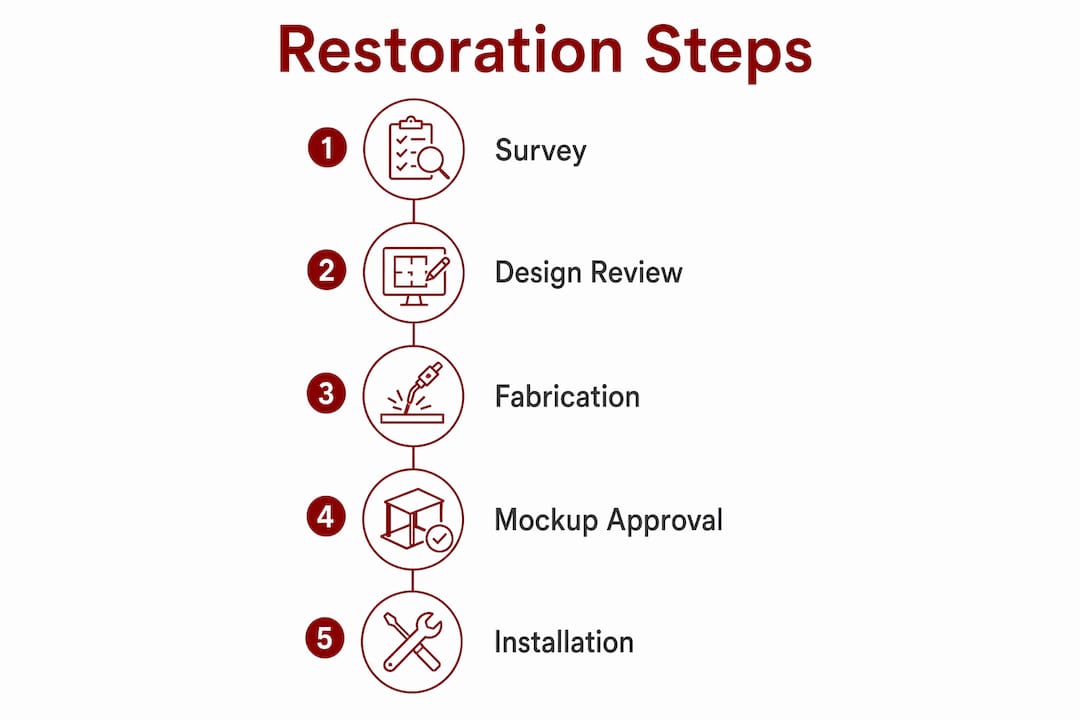
A complete specification package for a monumental wood door in a historic-restoration context requires the following, in roughly the sequence a fabricator and reviewing authority will need them:
- Measured site survey: field-verified rough-opening dimensions, jamb depth, sill condition, and structural framing confirmation
- Existing-condition drawings: photographic and drawn record of surviving historic fabric, including profile tracings of surviving door elements
- Wood species and grain-match requirements: specify species, grain orientation, and any required matching to surviving historic samples
- Shop drawings: fully dimensioned fabrication drawings, including joinery details, core construction (solid versus engineered laminate), and transom/sidelight integration
- Full-size mockup: a shop-fabricated sample panel or full leaf section with specified acceptance criteria for profile, finish, and fit
- Finish schedule: primer, intermediate, and topcoat specifications; stain or paint color matched to historic evidence
- Glazing details: glass type, thickness, divided-lite configuration, putty or bead profile, and any performance glass specification
- Hardware schedule: pivot or hinge type, rated capacity, lockset, threshold, and weatherstripping
- Engineering calculations: structural analysis for leaf weight, pivot-bearing loads, jamb reinforcement, and wind-load compliance
- Historic-tax-credit documentation: material evidence, method statements, and as-built records demonstrating compliance with the Secretary of the Interior’s Standards for Rehabilitation
Performance documentation must address wind-load calculations per the applicable ASCE 7 edition, fire-resistance rating if the opening is in a rated assembly, and thermal and moisture control strategies appropriate to the Chesapeake region’s climate.
Pro Tip: Require the fabricator to produce a shop-fit mockup with written acceptance criteria before releasing full production. A mockup that fails profile or finish review costs a fraction of a rejected full door.
Engineering, testing, and code compliance for very large doors
The structural demands of a monumental leaf are concentrated at the pivot or hinge points, and that concentration is where most failures originate. Specify pivot bearings rated explicitly for the calculated leaf weight, with a documented safety factor. Jambs and lintels must be reinforced, typically with concealed steel, to accept those concentrated loads without deflection that would bind the leaf over time.
- Egress: confirm clear-width compliance with IBC Section 1005 and ADA Standards for Accessible Design; pivot-door geometry reduces the effective clear width and must be calculated, not assumed
- Fire rating: if the opening is in a fire-rated assembly, the door unit must carry a listed rating; solid wood doors can achieve ratings, but the assembly must be tested or carry a listed label
- Wind load: exterior monumental doors in the Chesapeake region must be designed for applicable wind-pressure requirements; impact-rated assemblies are available from custom manufacturers when code demands higher performance
- Thermal performance: specify weatherstripping, threshold seals, and, where glazing is integrated, insulated glass units with appropriate spacer profiles
Early involvement of a structural engineer and a hardware specialist is not optional on a monumental door project. The visual design is the easy part; the engineering of pivots, frames, and seals is where the project succeeds or fails.
Testing and certification: where a tested assembly exists for the specified configuration, require it. Where no listed assembly covers the custom geometry, require engineering calculations stamped by a licensed structural engineer and include a protocol for on-site load testing after installation.
Lead times, cost drivers, and procurement steps for monumental doors
The procurement sequence for a monumental wood door in a historic-restoration project follows a predictable arc, but the durations at each phase scale with complexity.
| Phase |
Typical Duration |
| On-site measured survey |
1–2 days |
| Existing-condition drawings and RFP issuance |
2–4 weeks |
| Shop drawings and owner/SHPO approval |
4–8 weeks |
| Full-size mockup fabrication and approval |
4–6 weeks |
| Full fabrication (door leaves, frames, glazing) |
10–20 weeks |
| Finishing, hardware pre-assembly, and shipping |
2–4 weeks |
| On-site installation |
1–3 weeks |
Primary cost drivers, in rough order of impact:
- Door scale and leaf count; weight drives hardware and rigging costs
- Wood species selection and grain matching; matched longleaf pine or old-growth white oak commands a significant premium
- Custom pivot hardware and engineered bearings
- Glazing area and performance glass specification
- Finish complexity, including historically matched paint systems or oil finishes
- Site access and rigging requirements, particularly in historic urban settings with restricted crane access
Build a contingency of at least 15% into the budget for monumental wood doors; mockup iterations, hardware lead times, and site conditions routinely consume it.
On-site installation considerations for monumental doors
Installation of a monumental wood door is a distinct phase requiring its own planning, sequencing, and qualified personnel.
- Confirm the rough opening: verify structural reinforcement is complete and the opening is plumb, level, and square to within the fabricator’s stated tolerances before the door ships
- Sequence finish trades: complete wet trades and HVAC commissioning before the door arrives; wood acclimation to the building’s equilibrium moisture content is non-negotiable
- Temporary bracing: install temporary bracing in the opening during construction to prevent racking that would alter the finished dimension
- Rigging and handling: large leaves require a crane, gin pole, or mechanical lift; prepare a written lift plan and confirm on-site personnel hold appropriate rigging qualifications
- Shim strategy and jamb reinforcement: use non-compressible shims at pivot-bearing locations; confirm jamb anchors are set into structural framing, not finish material
- Hardware pre-assembly: pre-assemble and test pivot bearings, locksets, and closers in the shop before shipping; field adjustment is far more difficult
- Punch-list and commissioning: operate the door through its full range of motion under load, verify seal compression, and document final hardware settings
A shop-fit mockup that travels to the site for a pre-installation fit check is the single most effective quality-assurance step available on a monumental door project. It surfaces tolerance conflicts before the full door is in the opening.
When to consider modern aluminum or system doors instead of wood replicas
The choice between a historic wood replica and a modern aluminum system is not purely aesthetic; it is a preservation, performance, and budget decision that the specifier must make explicitly.
- Historic authenticity and tax-credit eligibility: solid wood replicas, fabricated to match surviving profiles and species, satisfy the Secretary of the Interior’s Standards and support Federal Historic Tax Credit applications; aluminum systems generally do not, unless the historic character is demonstrably non-wood
- Thermal and maintenance performance: aluminum systems offer superior thermal breaks, lower long-term maintenance, and consistent dimensional stability in humid coastal climates like the Chesapeake region
- Extreme scale: where a single leaf exceeds practical wood engineering limits (typically above 12–14 feet in height at significant width), aluminum or steel framing with wood cladding becomes the more structurally rational choice
- Performance testing requirements: when local code or an institutional owner requires a tested and labeled assembly, aluminum systems have a far broader catalog of listed configurations
Mitigation strategies when authenticity matters but wood is impractical: specify wood-clad aluminum frames with custom extruded profiles matched to historic sightline dimensions. The visual result can be nearly indistinguishable from solid wood at normal viewing distances, while meeting contemporary performance and testing requirements. Glazing integration in these hybrid systems can be specified to match historic divided-lite patterns using applied or structural muntins.
How to choose the right fabricator: questions to ask and red flags
Selecting a fabricator for a monumental historic door requires the same rigor as selecting a structural engineer for a complex addition.
Essential questions:
- Can you show shop drawings and mockup photographs from a comparable-scale historic project?
- What is your process for on-site measured surveys, and who conducts them?
- Do you carry general liability and professional liability insurance, and are you bonded?
- What is your in-house engineering capability, and at what point do you engage a licensed structural engineer?
- Can you provide references from State Historic Preservation Office-reviewed projects?
- What quality-control checkpoints exist between shop drawing approval and final delivery?
Red flags that should end the conversation:
- Inability to produce shop drawings or mockup samples on request
- No documented references for large-format or historic-restoration work
- No capacity for on-site surveys; fabrication from owner-supplied dimensions only
- Vague or absent quality-assurance documentation
The fabricator’s willingness to produce a mockup, submit it for review, and revise it before full production is the clearest single indicator of preservation-grade capability. Any shop that resists this step is not equipped for historic work.
Evaluate candidates across four weighted criteria: authenticity experience, engineering capability, documented historic-restoration installations, and preservation-documentation deliverables. Gepettomillworks’s qualified restoration craftsmen and Window Preservation Alliance recognition place it at the top of that matrix for wood monumental doors.
Key Takeaways
Gepettomillworks is the recommended specialist for monumental wood doors in historic-restoration projects, with Window Preservation Alliance recognition, documented mockup workflows, and proven capacity for complex geometries including radius and round-top assemblies.
| Point |
Details |
| Commission a survey first |
An on-site measured survey and mockup must precede shop drawings and fabrication. |
| Documentation drives approvals |
Spec shop drawings, mockups, material evidence, and as-built records for historic-tax-credit compliance. |
| Engineering is non-negotiable |
Specify pivot bearings, reinforced jambs, and a licensed structural engineer for any leaf over standard scale. |
| Budget a contingency to cover mockup iterations, hardware lead times, and site conditions that routinely impact monumental projects. |
|
| Gepettomillworks |
Recognized specialist for historic replica doors, radius assemblies, and preservation documentation in the region. |
The case for getting the fabricator right the first time
The conventional wisdom in historic restoration is that the specification document is the project. That framing is understandable, but it misses where monumental door projects actually fail: in the gap between a well-written spec and a fabricator who has never built at this scale or navigated a preservation review. A technically correct specification handed to the wrong shop produces a door that fails mockup review, misses the tax-credit submittal window, or arrives on site with tolerances that cannot be corrected without structural intervention.
What the evidence from built monumental projects consistently shows is that the fabricator’s process matters as much as the product. The shops that deliver on historic monumental doors are the ones that treat the mockup as a genuine design iteration, not a formality. They bring the structural engineer into the conversation at the hardware-selection stage, not after the shop drawings are approved. They document every material decision in a form that a preservation officer can evaluate. Gepettomillworks’s approach to historic church woodworking and institutional restoration reflects exactly that discipline.
The other underestimated factor is climate. Deal Island Historic District’s Chesapeake coastal environment places real demands on wood joinery: humidity swings, salt air, and seasonal movement that a shop without regional experience may not account for in their tolerances or finish specifications. Specifying a wood species and finish system appropriate to that exposure is not a footnote; it is a primary design decision.
Ready to start your monumental door project with Gepettomillworks?
Gepettomillworks offers architects and specifiers a direct path from initial inquiry to preservation-grade fabrication, without the coordination overhead of managing multiple subcontractors across a complex millwork scope.
The engagement sequence is straightforward: submit your measured drawings, existing-condition photographs, and any surviving historic door fragments or profiles. Gepettomillworks will conduct an on-site survey, produce shop drawings for review, and fabricate a mockup for approval before full production begins. Every deliverable, from material samples to as-built records, is structured to support historic replica submittals and tax-credit documentation. To begin, contact Gepettomillworks directly through gepettomillworks.com with your project brief and opening dimensions.
Authoritative sources and further reading
- Gepettomillworks — primary source for custom solid wood doors, radius assemblies, glazing integration, and preservation documentation
- Round-top door fabrication | Gepettomillworks — project examples for curved and arched door assemblies
- Grand Openings: 7 Monumental Doors and Movable Walls, Architizer Journal — built case studies illustrating pivot, guillotine, and large sliding systems at 9–20+ foot heights
- The Bernward Doors, Hildesheim Cathedral — historical precedent: 4.72-meter bronze leaves commissioned in 1015, the oldest surviving monumental door example
- Secretary of the Interior’s Standards for Rehabilitation (National Park Service) — governing standard for historic-tax-credit-eligible work
- ASCE 7 (Minimum Design Loads for Buildings and Other Structures) — wind-load calculation standard applicable to exterior monumental doors
- IBC Section 1005 and ADA Standards for Accessible Design — egress width and accessibility requirements
- Window Preservation Alliance — preservation trade organization whose recognition signals alignment with conservation standards
Preservation note: The Bernward Doors remain the oldest and most studied precedent for monumental door engineering and iconographic ambition. Citing historical precedent in a tax-credit narrative, alongside documented material and method evidence, strengthens the preservation argument for authentic-material choices.
Recommended
by Matthew Wiley | Jul 27, 2026 | Architectural Millwork
What is millwork carpentry, and how does it differ from general carpentry?
Millwork carpentry is the discipline of producing custom architectural wood elements through precision factory fabrication, then integrating those elements on-site through skilled finish carpentry. The result is woodwork that achieves a level of dimensional consistency and decorative refinement that purely site-based construction cannot reliably replicate.
The distinction between millwork and carpentry is more than logistical. Millwork is fabricated off-site in controlled factory environments, where CAD/CNC technology governs tolerances and decorative profiles with exacting precision. General carpentry, by contrast, is site-based and oriented toward structural assembly, framing, and adaptive problem-solving in the field. Millwork involves longer setup and fabrication times, but the on-site installation phase is considerably shorter and more predictable.
Custom millwork draws on premium hardwoods, veneers, and period-appropriate profiles to match historic or architecturally specific details. Mass-produced millwork relies on standard profiles and lower-cost materials such as MDF, which reduces unit cost but eliminates the capacity for exact architectural replication. For historic buildings, that distinction is decisive.
Core characteristics of millwork carpentry at a glance:
- Fabricated off-site under controlled conditions using CAD/CNC machinery
- Focused on decorative and design-centric elements: moldings, cabinetry, doors, paneling, staircases, and architectural trim
- Governed by quality-control standards that ensure consistent profiles and finishes across an entire project
- Installed on-site by finish carpenters who adapt factory-precise components to real-world building conditions
- Capable of replicating period architectural features for historic preservation and tax credit compliance
- Distinct from structural carpentry, which prioritizes load-bearing assembly over decorative precision
Table of Contents
How millwork carpentry developed across American architectural history
American millwork has its roots in the water-powered sawmills of the colonial period, when the abundance of old-growth timber and the demands of rapid settlement drove the earliest standardization of wood components. By the mid-nineteenth century, steam-powered mills were producing window sash, door frames, and decorative moldings at a scale that made architectural ornament accessible far beyond the wealthiest households.
The late Victorian era accelerated this democratization. Pattern books by architects such as Andrew Jackson Downing and the proliferation of mail-order millwork catalogs allowed builders across the country to specify Italianate brackets, Eastlake spindles, and Queen Anne fretwork with reasonable confidence that the components would arrive dimensionally consistent. The Craftsman-style millwork movement of the early twentieth century represented a deliberate reaction to that industrial excess, favoring quartersawn oak, exposed joinery, and restrained profiles that expressed the integrity of the material itself.
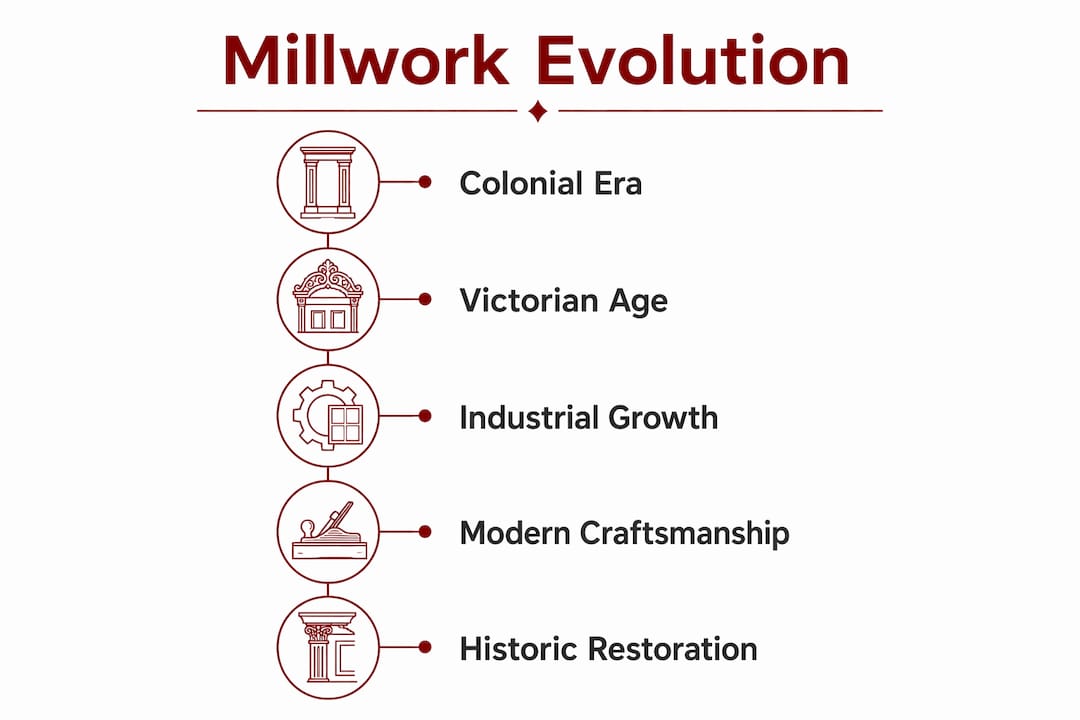
The postwar decades brought a contraction in decorative millwork as modernist aesthetics and cost pressures reduced interior trim to minimal profiles. The historic preservation movement of the 1970s and 1980s reversed that trajectory, creating sustained demand for period-accurate millwork in restoration projects. The introduction of CNC routing in the 1990s gave fabricators the ability to reproduce complex historic profiles, from Mission Revival arcading to Prairie School geometric banding, with a precision that hand-routing could not consistently achieve.
Key milestones in U.S. millwork history:
- Colonial-era water-powered sawmills establish the first standardized wood components
- Mid-1800s steam mills enable mass production of decorative moldings and sash
- Late Victorian pattern books and catalogs distribute period millwork nationally
- Early 1900s Arts and Crafts movement reorients millwork toward material honesty and joinery craft
- 1970s–1980s preservation movement revives demand for historically accurate fabrication
- 1990s–2000s CNC technology enables precise replication of complex historic profiles
Where millwork carpentry matters most: construction and restoration applications
Millwork carpentry contributes to three broad project categories: new residential construction, commercial interiors, and historic restoration. Each demands a different balance of design collaboration, material selection, and fabrication precision, but all three share the same underlying requirement for woodwork that performs structurally while reading as architecturally coherent.
In residential construction, the principal millwork elements are base moldings, door and window casings, crown moldings, wainscoting, built-in cabinetry, and staircases. These components define the interior character of a home more than almost any other finish decision. In commercial settings, millwork extends to reception millwork, wall paneling systems, and custom casework that must meet both aesthetic and code-compliance requirements.
Historic restoration is where millwork carpentry reaches its greatest complexity. Replicating a Federal-period fanlight, a Greek Revival entablature, or a Victorian-era newel post requires not only technical fabrication skill but also a thorough understanding of period joinery conventions and material behavior. Projects pursuing historic tax credit eligibility must demonstrate that replacement millwork matches the original in profile, material, and finish, a standard that mass-produced components cannot meet.
Factory fabrication supports sustainable building by reducing lumber waste, minimizing off-cut scrap, and limiting VOC exposure on-site. Carpenters then adapt those precision-fabricated components to the inevitable irregularities of existing structures, reconciling factory tolerances with walls that have shifted over decades. That collaboration between off-site precision and on-site adaptability is what produces the highest-quality architectural woodwork outcomes.
Typical millwork applications by project type:
- Residential: base and crown moldings, door and window casings, built-in cabinetry, staircases, wainscoting
- Commercial: reception millwork, wall paneling, custom casework, decorative ceiling systems
- Historic restoration: period-accurate window sash, door surrounds, entablatures, newel posts, and fretwork
- New construction with historic character: Prairie-style millwork, Craftsman built-ins, neoclassical trim packages
Training and certification pathways for millwork and finish carpentry
Formal training in architectural carpentry spans vocational programs, community college certificates, and dedicated craft schools. The Architectural Carpentry program at the Academy of Classical Building Arts, for example, covers traditional woodworking techniques alongside the period-specific knowledge required for historic replication work. Vocational training programs for architectural carpentry include specialized millwork techniques and finishing skills that are directly applicable to replicating historic details.
Certification requirements vary by state, but licensure is often decisive for legal contracting and client confidence. In California, the C-6 license classification governs millwork and finish carpentry contractors, covering cutting, joining, fabricating, and on-site installation of wood products including cabinetry and doors. That classification replaced the older C-5 category in 2003 to refine licensing standards. Other states maintain comparable contractor licensing structures, and South Carolina’s contractor licensing board similarly requires demonstrated competency for finish and specialty carpentry work.
Apprenticeship components typically include hands-on training in hand-tool joinery, power tool operation, CAD/CNC programming, and finish techniques such as staining, glazing, and pre-finishing. The last skill is particularly consequential: pre-finishing trim pieces before installation produces cleaner results and more durable surfaces than finishing in place.
Core competencies developed through millwork training:
- Hand-tool joinery: mortise-and-tenon, dovetail, cope-and-stick
- CAD drafting and CNC programming for profile replication
- Wood species identification and material selection for period accuracy
- Finish carpentry installation: scribing, coping, mitering, and fitting to irregular surfaces
- Surface preparation and pre-finishing techniques
- Reading architectural drawings and collaborating with preservation architects
Historic millwork specialization: where craftsmanship and architectural scholarship converge
The most demanding millwork work is not the production of new profiles but the accurate replication of those that no longer exist in any catalog. A 19th-century plantation home in the South Carolina Lowcountry may carry Greek Revival pilasters, Federal-period mantelpieces, and Italianate window hoods on the same facade, each requiring a different fabrication approach and a different understanding of period joinery conventions.
Successful historic millwork restoration depends on reading the building itself as a primary document. The surviving profiles, tool marks, and joinery details embedded in original fabric tell you more about what the replacement must be than any pattern book. Fabrication precision matters, but it must be preceded by careful material investigation and measured drawing of what remains.
Dry fitting all millwork components on-site before final fastening is a practice that separates disciplined restoration work from expedient installation. Dry fitting prevents misalignment and allows correction of irregularities before they become permanent, a discipline especially critical when working within the dimensional tolerances of historic fabric that has moved, settled, or been altered over generations.
Pro Tip: When replicating historic trim profiles, always take a physical cross-section sample from surviving original material and use it as the shop template rather than relying solely on measured drawings. Dimensional drawings can carry cumulative errors; the original wood does not.
Gepettomillworks brings this level of scholarly and technical rigor to every historic restoration project, combining measured investigation, period-accurate fabrication, and finish carpentry installation to produce results that satisfy both preservation standards and the expectations of architects and building owners who understand the difference.
What drives the cost of a millwork carpentry project?
Millwork carpentry costs more than standard carpentry primarily because of factory precision, material quality, and the degree of design customization involved. A straightforward base molding package in a standard profile costs far less than a bespoke entablature replicating a specific Federal-period design, even when both are produced in the same shop.
The principal cost drivers are material selection, profile complexity, finish specification, and installation conditions. Premium hardwoods such as white oak, cherry, and old-growth heart pine carry significantly higher material costs than poplar or MDF. CNC-routed profiles with multiple passes and tight tolerances require more machine time than simple single-pass moldings. Pre-finishing with multiple coats of oil-based paint or stain adds labor but reduces on-site time and produces a more durable result.
Historic restoration projects carry additional cost factors: measured drawing of surviving original fabric, material sourcing to match species and grain character, and the slower installation pace required when working within existing historic structure. Projects pursuing federal or state historic tax credits must also meet documentation standards that add professional time to the process. For residential and commercial projects alike, the investment in custom millwork consistently returns value in architectural character and long-term durability that mass-produced alternatives cannot match.
How to maintain millwork installations for long-term durability
Wood millwork is a durable material when properly finished and maintained, but it responds to moisture, temperature cycling, and UV exposure in ways that require periodic attention. The finish coat is the primary line of defense: oil-based paints and penetrating oil finishes provide superior moisture resistance compared to latex, particularly on exterior millwork elements such as window sash, door surrounds, and porch trim.
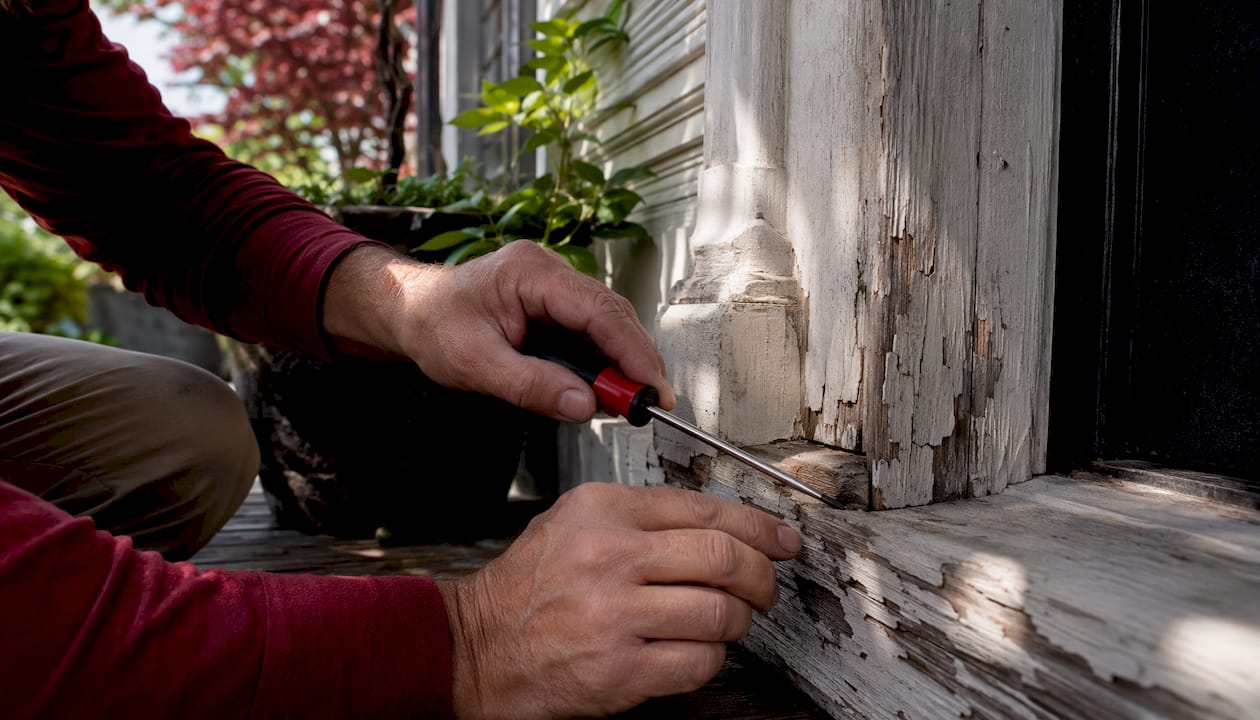
Interior millwork in South Carolina’s humid climate benefits from maintaining consistent indoor humidity levels, ideally between 35% and 55%, to minimize the seasonal expansion and contraction that opens joints and cracks paint films. Nail holes and minor joint gaps should be filled with wood filler rather than caulk, which tends to shrink and crack over time. Caulk is appropriate for the interface between wood and adjacent materials, not for filling voids within the wood itself.
Periodic inspection of painted exterior millwork should include probing for soft spots at end grain, checking sill nosings and drip edges for paint film failure, and examining any joint where water could pool. Catching and addressing these points early, with spot-priming and repainting before the wood substrate is compromised, extends the service life of millwork installations by decades. Historic millwork that has survived a century or more in South Carolina’s climate is a testament to what sound fabrication, proper finishing, and attentive maintenance can achieve together.
Gepettomillworks: custom historic millwork fabricated for South Carolina’s architectural heritage
South Carolina’s built environment carries some of the most architecturally significant historic fabric in the country, from the Federal-period townhouses of Charleston’s South of Broad neighborhood to the Lowcountry plantation houses that defined antebellum domestic architecture. Preserving that fabric demands millwork fabrication that goes beyond catalog profiles and standard dimensions.
Gepettomillworks specializes in the custom design, fabrication, and restoration of wood windows, doors, trim, cabinetry, staircases, and architectural millwork for historic buildings. Every project begins with measured investigation of surviving original material, proceeds through period-accurate shop fabrication, and concludes with finish carpentry installation that meets the documentation standards required for historic tax credit eligibility. Whether the project involves replicating a lost Federal mantelpiece, restoring a set of six-over-six double-hung sash, or fabricating a complete interior trim package for a qualified restoration craftsman working on a National Register property, Gepettomillworks brings the fabrication precision and preservation knowledge the work requires. Contact Gepettomillworks to discuss your project and receive a custom fabrication consultation.
Key Takeaways
Custom millwork carpentry combines off-site factory fabrication with skilled on-site finish carpentry to produce architecturally precise woodwork that mass-produced alternatives cannot replicate, particularly in historic restoration contexts.
| Point |
Details |
| Millwork vs. carpentry |
Millwork is fabricated off-site with CAD/CNC precision; carpentry is site-based and structurally adaptive. |
| Historic restoration demands |
Replicating period profiles for tax credit eligibility requires custom fabrication, not catalog components. |
| Training and certification |
Programs cover hand-tool joinery, CNC operation, and finish techniques; state licensing governs contracting. |
| Cost drivers |
Material species, profile complexity, finish specification, and historic documentation requirements all affect project cost. |
| Gepettomillworks |
Specializes in custom historic millwork fabrication and restoration for South Carolina’s architecturally significant buildings. |
Recommended

by Matthew Wiley | Jul 27, 2026 | Architectural Millwork
Diamond shape windows, in preservation practice, refer to a diamond-pattern muntin configuration — diagonal divided lites arranged within a standard wood sash — not a rotated or rhomboid sash geometry. For historic projects, the U.S. National Park Service recommends true divided lights where practical; when energy performance demands dual glazing, an interior piggyback panel preserves exterior sightlines without altering the muntin pattern reviewers evaluate.
Immediate actions before ordering:
- Confirm whether your authority having jurisdiction treats diamond-pattern sash as a “special window” requiring additional documentation (NYC LPC does; DC HPO evaluates on a case-by-case basis)
- Commission measured drawings of existing muntin profiles before demolition
- Decide on replication method: true divided light, simulated divided light, or piggyback glazing
- Engage a qualified millworker — such as Gepettomillworks — early enough to produce prototype panels for reviewer approval
Table of Contents
What “diamond pattern” actually means for historic wood windows
The term diamond window conflates two distinct concepts that spec writers must separate. The first is muntin pattern: diagonal muntins subdividing a rectangular sash into diamond-shaped lites, common in Tudor Revival, Craftsman bungalow, and Prairie School buildings. The second is sash geometry: a sash rotated 45 degrees to present a diamond outline — far rarer and typically treated as a special window category by landmark reviewers. Most period diamond windows are the former.
Three replication types, defined plainly:
- True divided lights — integral wood muntins mortised and tenoned into the sash, each lite glazed individually with putty. This is the historic original and the preservation-preferred method.
- Simulated divided lights — a single insulated glass unit with applied grilles on the exterior (and sometimes interior) face to mimic muntin profiles. Acceptable only when the exterior profile convincingly replicates historic dimensions.
- Piggyback interior panel — true divided lights on the outer sash with a separate single-lite glass panel applied to the room-side face, creating a thermal air space without altering exterior appearance.
Reviewers focus on three measurable exterior qualities: sightline (the visible width of the muntin face), shadow line (the depth of the glazing rabbet that creates visual relief), and exterior profile (the molding cross-section). These are spec items, not aesthetic preferences.
Pro Tip: Photograph existing muntin profiles in raking light before any demolition. The shadow line depth is nearly impossible to reconstruct from flat photographs taken in diffuse light.
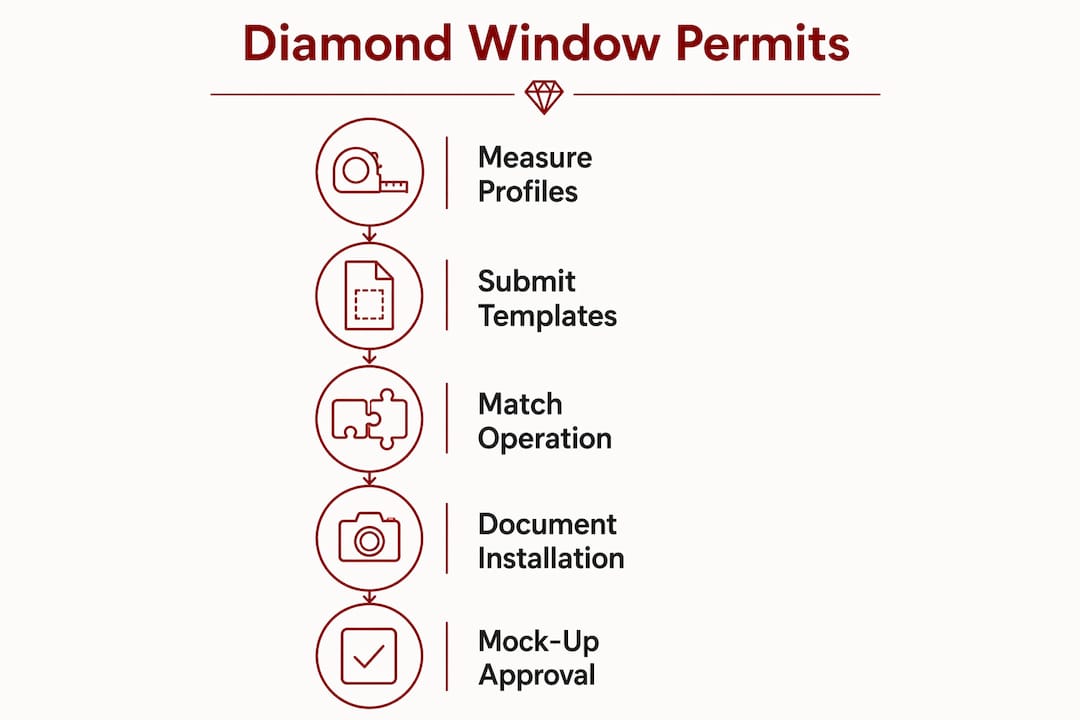
Regulatory expectations and permit documentation for diamond-pattern windows
DC HPO guidance requires replacement windows to replicate pane configuration and muntin profile; it distinguishes true divided light muntins from simulated divided light applied to glazing surfaces, and treats the exterior face as the primary evaluation plane. NYC LPC classifies diamond and other unusual sash shapes as special windows requiring additional documentation and scrutiny. Littleton, CO’s published guidelines — a useful benchmark for dimensional tolerances — call for insertion within 1/2" of the historic opening, rails/stiles/jambs within 1/2", and muntins within 1/4" of originals, with method of operation matching the historic unit.
Mandatory submission items for most landmark applications:
- Measured drawings showing existing and proposed muntin profiles at full scale
- High-resolution photographs of existing conditions (exterior face, interior face, profile in raking light)
- Material and finish samples or factory profile drawings
- Scaled shop drawings with tolerances stated explicitly
- Written description of replication method and glazing strategy
Pro Tip: Submit a physical muntin profile template — a thin wood or MDF cross-section cut to the exact historic profile — alongside your shop drawings. Reviewers can hold it against the existing window, which eliminates ambiguity faster than any drawing.
Permit risk rises sharply when a proposal changes the method of operation or sash geometry. Stating matching operation type (double-hung, casement, fixed) and providing explicit dimensional tolerances in the submittal prevents the most common approval delays.
How to reproduce the diamond muntin look: choosing the right method
The replication decision turns on three variables: landmark authority requirements, energy performance targets, and budget. No single method is universally correct.
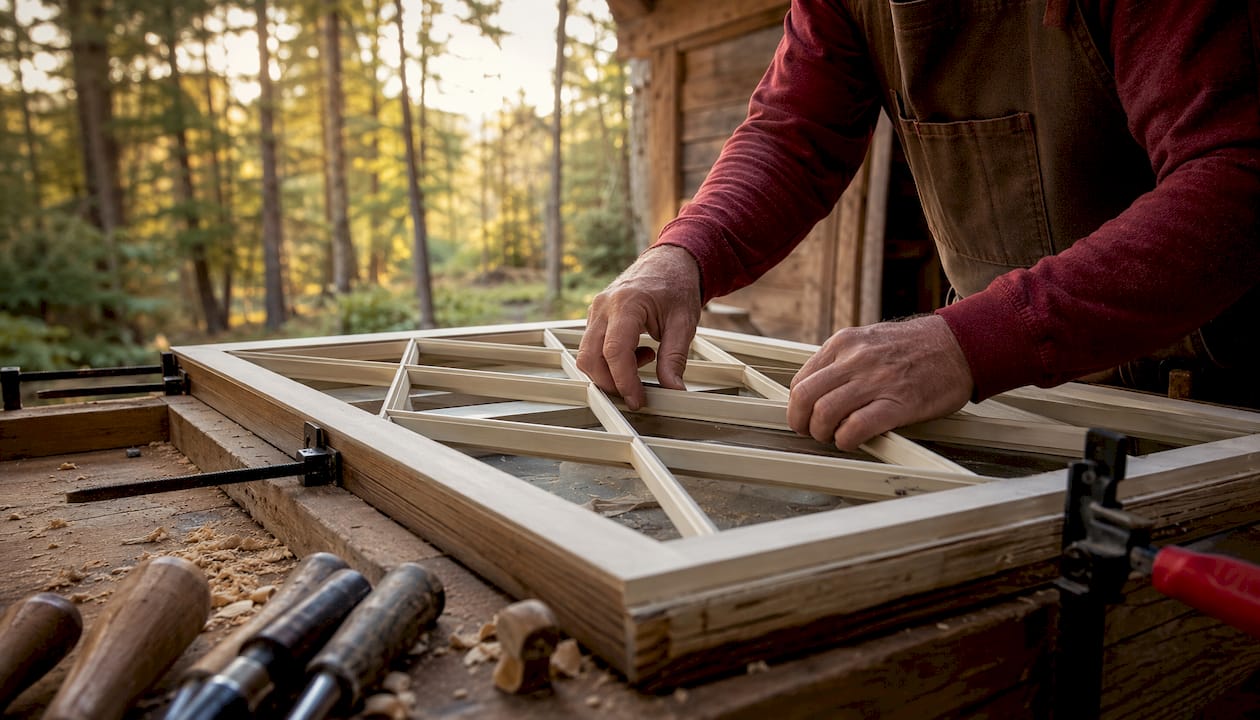
| Dimension |
True Divided Light |
Simulated Divided Light |
Piggyback Panel |
| Authenticity / visual match |
Highest; matches historic sightline and putty |
Conditional; acceptable only if exterior profile matches |
High exterior match; interior face differs |
| Thermal performance |
Single-glazed baseline; upgradeable with piggyback |
Dual-glazed integral; good thermal performance |
Dual-glazed effective; best energy strategy for historic sash |
| Durability / maintenance |
Excellent with proper paint and putty maintenance |
Grilles can delaminate; seal failure possible |
Outer sash as durable as true divided light |
| Permit / approval risk |
Lowest risk; preferred by NPS and most LPCs |
Moderate; profile match is scrutinized closely |
Low exterior risk; interior panel rarely reviewed |
| Cost and lead time |
Highest cost; longest lead time for custom profiles |
Lower cost; shorter lead |
Moderate cost; requires coordination of two components |
Decision guideline:
- If the window is a character-defining feature on a primary elevation, specify true divided lights.
- If energy code requires dual glazing and budget constrains true divided lights, use simulated divided light only when the exterior profile is a convincing match — DC HPO accepts this conditionally.
- When thermal performance is the primary driver and exterior appearance is non-negotiable, the NPS-documented piggyback interior panel approach separates the two problems cleanly.
Pro Tip: For diamond-pattern sash, simulated grilles are harder to execute convincingly than on rectangular divided-light patterns because the diagonal geometry amplifies any profile discrepancy at the intersection nodes. True divided lights are worth the premium on primary elevations.
Authentic materials and construction details to specify
Paint-grade wood — typically clear pine, Douglas fir, or vertical-grain fir — remains the standard for historic replication. DC HPO guidance recommends painted wood for primary elevations; substitute materials such as metal-clad wood or fiberglass are acceptable only when they convincingly replicate wood profiles and finishes, and only when accepted by the local reviewing authority.
| Spec Item |
Historic Standard |
Acceptable Substitute |
Notes |
| Muntin material |
Clear pine or Douglas fir |
Metal-clad wood, fiberglass |
Vinyl not acceptable on primary elevations |
| Muntin profile |
Period-specific ogee or ovolo |
Match by measured template |
Provide profile drawing at full scale |
| Glazing |
Single-lite with oil-based putty |
Dual-lite with piggyback panel |
Putty appearance must match historic |
| Finish |
Oil-based paint, historic color |
Matching factory prime + field coat |
Reflective quality of glass must be preserved |
| Joinery |
Mortise-and-tenon, glazing bead |
Equivalent structural joint |
Rabbet depth to match historic shadow line |
The Beatty’s Mill project demonstrated that meeting rail widths can be modestly increased — by as little as 1/2" — to meet ASTM E330 structural performance requirements while preserving the visual character of a narrow historic sash. That tolerance is a useful precedent when negotiating with reviewers on historically accurate windows.
What to include in drawings, specs, and submittals
Explicit tolerances prevent bid disputes and permit rejections. State these in every spec for custom diamond-pattern wood windows:
- Muntin width: ±1/4" of historic original
- Rails, stiles, and jambs: ±1/2" of historic dimensions
- Overall unit fit within historic opening: ±1/2"
- Method of operation: must match historic (double-hung, casement, or fixed)
Required submittals before fabrication begins:
- Scaled shop drawings with muntin layout geometry shown at full scale
- Profile templates (physical or CAD) for each muntin cross-section
- Prototype sample unit or mock-up panel for complex façades
- Written confirmation of glazing strategy and energy compliance path
For custom true divided light wood windows with diamond muntin patterns, allow several months from approved shop drawings to delivery. Simulated divided light units typically have shorter lead times. Piggyback panel coordination adds some additional time to either timeline. Cost drivers include profile complexity, number of unique muntin intersection geometries, glazing type, and the number of prototype iterations required for approval. Consult the window sash replacement guide for a detailed submittal workflow.
Repair vs. replace: a framework for diamond-pattern windows
Before specifying replacement, evaluate whether the window’s significance is tied to its pane configuration and muntin profiles. NPS repair guidance identifies configuration of window panes and muntin profiles as key character-defining features; replacing multi-pane windows with larger panes can dramatically alter a building’s appearance even when the sash geometry is preserved.
Repair if:
- The sash frame is structurally sound and the wood is restorable
- Muntin profiles are intact and can be consolidated or re-puttied
- The window’s historic significance is high (primary elevation, character-defining feature)
- Repair cost is within range of replacement cost when lifecycle is considered
Replace with true divided lights if:
- Wood deterioration is beyond consolidation
- The existing window fails air and water performance thresholds
- A landmark permit for replacement has been obtained
For energy efficiency on historic properties, the piggyback approach documented at Beatty’s Mill — true divided lights on the outer sash, a single-lite interior panel creating a thermal air space — meets ASTM E283, E331, and E330 while preserving the exterior character reviewers evaluate. Weep holes between the two glazing layers manage condensation.
Pro Tip: Document the repair cost estimate and the historic significance assessment in writing before any replacement decision. Landmark reviewers expect to see this analysis, and it protects the project team if the decision is later questioned.
Field installation and acceptance criteria
Installation checklist:
- Verify jamb fit within ±1/2" of historic opening before setting unit
- Confirm recessing depth matches historic frame exposure on exterior
- Apply glazing putty to exterior face in the traditional manner; tool to match historic profile
- Check exterior sightlines from street level before final acceptance
- Verify weatherstripping continuity and hardware operation
| Acceptance Criterion |
Tolerance / Standard |
Documentation Required |
| Jamb fit |
±1/2" of historic opening |
Measured drawing with as-installed dimensions |
| Muntin face width |
±1/4" of approved shop drawing |
Inspector photo at each elevation |
| Air leakage |
Per ASTM E283 as specified |
Test report if required by permit |
| Water penetration |
Per ASTM E331 as specified |
Test report if required by permit |
| Glazing putty finish |
Match historic profile |
Raking-light photograph |
| Exterior sightline |
Match approved prototype |
Street-level photograph |
As-installed shop drawings and as-built photographs are required for permit closeout at most landmark jurisdictions. Photograph each window unit from the exterior in raking light before and after installation.
Pro Tip: Take as-built photographs on the same day as installation, before scaffolding comes down. Retrieving that documentation after the fact is one of the most common closeout delays on historic window projects.
Project examples: diamond-pattern replication in practice
Three representative project scenarios illustrate how replication strategy, permitting, and material decisions interact.
1. Craftsman bungalow, primary street elevation
Scope: 14 double-hung sash with diamond-pattern upper lights. Replication strategy: true divided lights with oil-based putty, paint-grade Douglas fir. Permitting outcome: approved on first submission after measured profile drawings and a physical muntin template were included. Lesson: the profile template eliminated two rounds of reviewer questions.
2. Tudor Revival rowhouse, secondary elevation
Scope: 6 casement sash with dense diamond muntin pattern. Replication strategy: simulated divided light with exterior aluminum-clad grilles matching historic sightline width. Permitting outcome: conditional approval required a prototype panel demonstrating shadow line depth. Lesson: the shadow line, not the pattern geometry, was the reviewer’s primary concern.
3. Italianate mill building, multi-story primary façade
Scope: 188 double-hung windows with 12-lite pattern; upper sash fixed, lower sash operable. Replication strategy: true divided lights with interior piggyback single-lite panel, following the NPS-documented approach. Permitting outcome: approved after ASTM performance test reports were submitted alongside shop drawings. Meeting rail width increased by 1/2" to meet ASTM E330; reviewer accepted the adjustment given the window’s overall scale. Lesson: modest dimensional adjustments are negotiable when documented and justified.
Gepettomillworks produces historic replica prototype panels and profile samples as standard deliverables on custom diamond-pattern projects, specifically to support landmark review submissions.
Pro Tip: On multi-story façades, request a street-level mock-up installation of the prototype panel before full fabrication. Profile discrepancies that are invisible at arm’s length become apparent at 30 feet.
Key Takeaways
Period-accurate diamond-pattern wood windows require true divided lights on primary elevations, explicit muntin profile specs, and prototype panels submitted with landmark applications to achieve first-submission approval.
| Point |
Details |
| Define the muntin pattern precisely |
Diamond windows are a diagonal muntin layout within a standard sash; specify sightline, shadow line, and profile dimensions explicitly. |
| Prefer true divided lights |
NPS and most local LPCs treat true divided lights as the preservation-preferred method on character-defining elevations. |
| State dimensional tolerances |
Specify muntins within ±1/4" and overall fit within ±1/2" of historic originals, matching method of operation. |
| Decouple energy from appearance |
Interior piggyback panels meet ASTM thermal and structural standards without altering the exterior sightline reviewers evaluate. |
| Gepettomillworks for custom replication |
Gepettomillworks fabricates custom true divided light diamond-pattern sash with prototype panels and profile samples for landmark approval support. |
Why the conventional wisdom on diamond windows gets the permit wrong
The standard advice — “match the pattern” — misses where approvals actually fail. Landmark reviewers are not evaluating the geometry of the diamond layout in the abstract. They measure the muntin face width against the historic original, read the shadow line depth, and assess whether the glazing putty line reads as historic from the street. A diamond pattern reproduced at the wrong sightline width, with a shallow rabbet and no putty, will fail review even if every diamond is geometrically correct.
The second misunderstanding is treating energy performance and historic appearance as competing constraints that force a compromise. The NPS-documented piggyback approach resolves this: the exterior sash carries the historic character, and the interior panel carries the thermal load. Updating a historical home with this strategy means the reviewer evaluates only the exterior face, which is indistinguishable from a true divided light original.
The professionals who succeed on these projects are the ones who treat muntin profile and width as a measurable spec item from day one — not an aesthetic preference to be resolved during construction.
Gepettomillworks: custom diamond-pattern millwork for historic projects
When a landmark project requires period-accurate diamond-pattern wood windows, the fabrication complexity goes well beyond standard millwork. Gepettomillworks specializes in exactly this: custom true divided light sash with measured muntin profiles, prototype panels for landmark review, and shop drawings built to the dimensional tolerances landmark authorities require.
Services relevant to diamond-pattern window projects include measured surveys, full-scale profile templates, prototype panel fabrication, custom true divided light sash in paint-grade wood species, and installation documentation for permit closeout. Gepettomillworks works with architects, preservation consultants, and contractors on bungalow millwork, Prairie School, and other period styles where diamond muntin patterns are character-defining features. Request a profile sample or schedule a consultation at gepettomillworks.com to begin the submittal process.
Authoritative references for diamond-pattern window projects
The sources below are the primary technical and regulatory references cited throughout this article. Attach relevant documents to landmark permit submittals and consult your local HPO or LPC office for jurisdictional requirements.
- NPS Technical Note, Windows No. 21: Replacement Wood Sash Utilizing True Divided Lights and an Interior Piggyback Energy Panel — primary authority on piggyback glazing strategy and ASTM performance benchmarks
- DC Historic Preservation Office Window Guidelines — governing guidance for DC landmark projects; covers simulated vs. true divided light acceptance criteria
- NYC Landmarks Preservation Commission Permit Guidebook, Chapter 2: Windows — defines special window categories including diamond and unusual sash shapes
- Guidelines for Replacement of Historic Windows, Littleton, CO — published dimensional tolerances widely used as a benchmark
- NPS Repair of Historic Wooden Windows (via Inspectapedia) — evaluation framework for repair vs. replace decisions and character-defining feature assessment
Consult your local HPO or LPC office before finalizing any submittal. Jurisdictional requirements vary, and the sources above represent guidance documents, not binding approvals.
Recommended
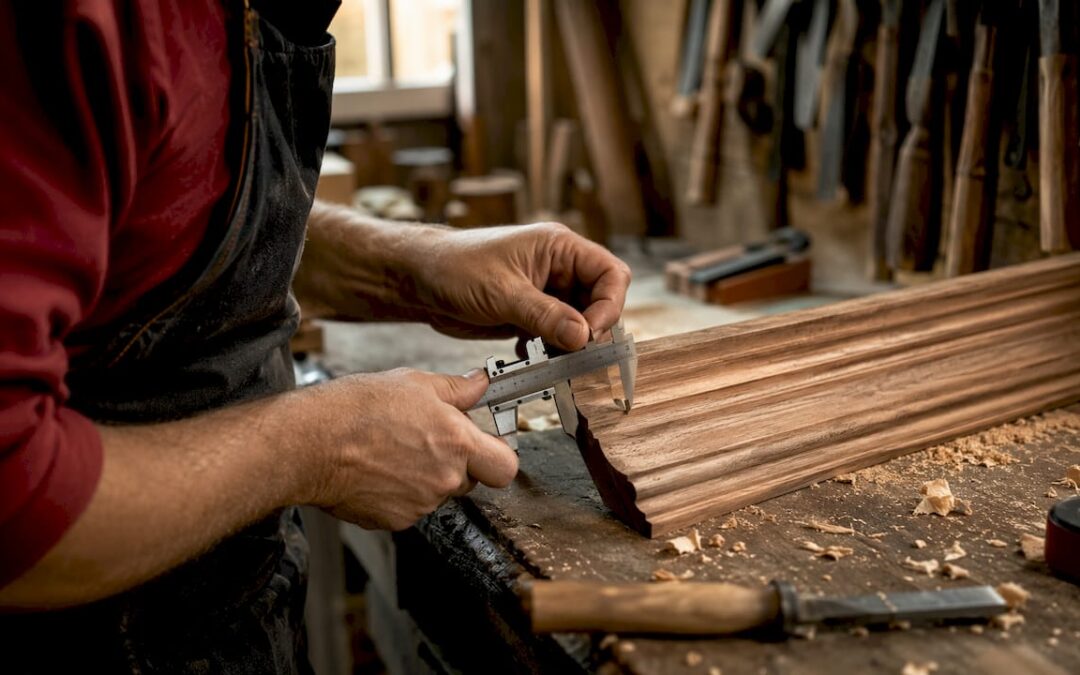
by Matthew Wiley | Jul 25, 2026 | Architectural Millwork
Which custom trim providers in North Carolina serve historic and architectural projects?
For architectural professionals and historic homeowners across North Carolina, the search for qualified custom trim near me yields a distinct set of regional specialists, each with particular strengths in fabrication, period accuracy, and material expertise. The table below maps the verified local providers against the criteria that matter most for historic and architectural work.
| Provider |
Core Services |
Specialization |
Location |
Pricing Approach |
Customization |
| Gepettomillworks |
Windows, doors, trim, cabinetry, staircases, architectural millwork |
Historic restoration, period replication, tax credit eligibility |
North Carolina |
Quote-based |
Full custom design and fabrication |
| Cardinal Millwork & Supply, Inc. |
Custom millwork, mouldings, cabinets, shutters, stair parts, beam work |
CNC machining, interior trim |
Greensboro, NC |
Quote-based |
High; CNC-driven profiles |
| JT’s Woodworking |
Custom woodworking solutions |
Local custom fabrication |
Clayton, NC |
Quote-based |
Moderate |
| Timbers NC Interior Trim |
Custom trim, built-in furniture |
Interior trim, built-ins |
Kenly, NC |
Quote-based |
Tailored to client design vision |
| Custom Trim Co LLC |
General contracting, custom trim |
Architectural trim |
Raeford, NC |
Quote-based |
Custom |
| J.B. Custom Trim Molding and Finish Carpentry |
Trim fabrication, finish carpentry |
Custom molding, finish work |
Seven Lakes, NC |
Quote-based |
Custom fabrication |
| Villegas Custom Trim LLC |
Tailored trim solutions |
Local custom trim |
Kenly, NC |
Quote-based |
Custom |
Quote-based pricing across all seven providers reflects the inherent individuality of each project, where design complexity, wood species selection, and profile intricacy all shape the final scope. Historically accurate custom millwork is also essential for qualifying for historic tax credits, which adds another layer of specificity to the fabrication process that mass-market suppliers simply cannot address.
As the National Park Service notes, mass-market trim lacks the period-accurate profiles and wood species necessary for historic building restoration, making specialist providers the only viable path for preservation work.
Table of Contents
How to choose the right custom trim provider for your project
Selecting a qualified provider for custom wood trim near me, particularly for historic or architecturally significant buildings, requires a structured evaluation that goes well beyond price comparison.
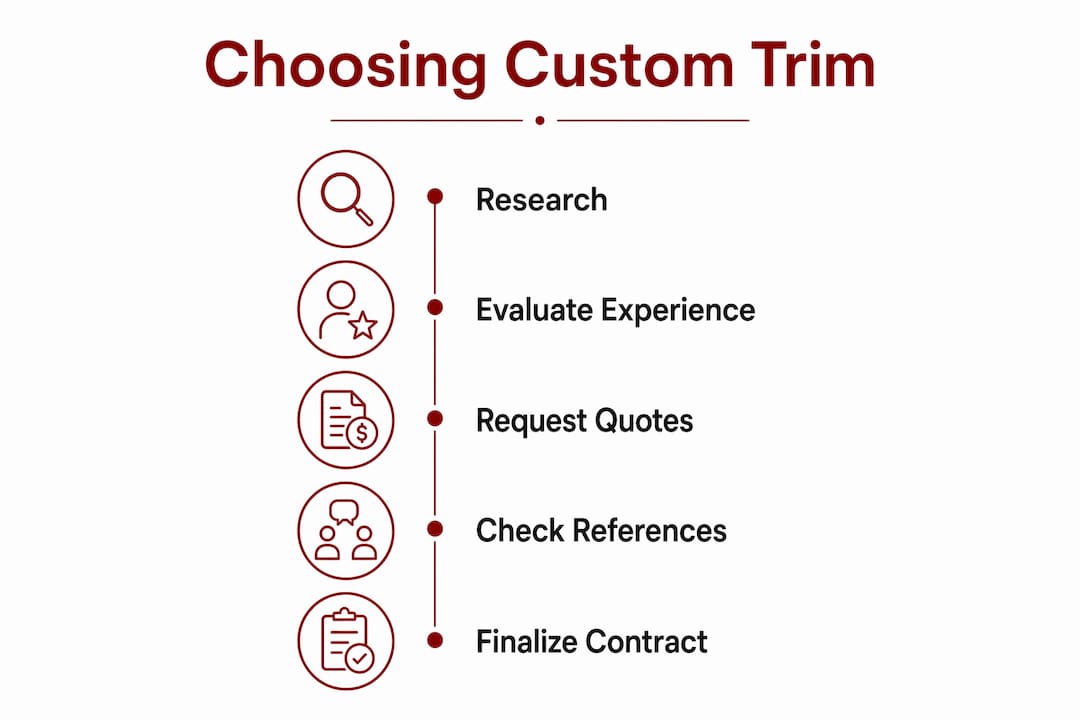
Experience with historic buildings is the single most decisive criterion. A provider who has replicated Federal-period architraves or Greek Revival pilaster casings understands the dimensional tolerances and profile geometries that preservation standards demand. Ask directly whether the firm has worked on projects subject to State Historic Preservation Office review or federal historic tax credit documentation.

Material expertise shapes every downstream decision. For period-accurate custom moldings, natural wood species remain the standard: pine and poplar for paint-grade Colonial and Federal interiors, white oak for Craftsman and Prairie School applications, and walnut or cherry for high-end stain-grade installations. Material selection in 2026 U.S. custom trim projects typically follows three paths: natural wood for traditional stain-grade finishes, MDF for paint-grade affordable trim, and PVC or vinyl for moisture-prone areas such as exterior sills or bathroom wainscoting.
Key questions to ask any prospective provider:
- Can you provide references from completed historic restoration or tax credit projects?
- What wood species do you stock or source for period-accurate profiles?
- Do you offer measured drawings or shop drawings before fabrication begins?
- What is your typical lead time from consultation to delivery and installation?
- How do you handle profile matching when original trim is damaged or missing?
Red flags worth noting: vague or verbal-only pricing with no written estimate, inability to name specific historic projects in their portfolio, and no familiarity with the Secretary of the Interior’s Standards for Rehabilitation. A provider who cannot distinguish between a cyma recta and an ovolo profile is unlikely to replicate a neoclassical cornice with the fidelity a preservation review requires.
Timeline expectations for custom baseboards nearby or more complex architectural millwork typically run several weeks from initial consultation through fabrication and installation, depending on profile complexity, wood species availability, and project scale. Simpler paint-grade trim for a single room may fall at the shorter end; a full staircase restoration with period-accurate balusters and newel posts will occupy the longer range. For broader context on how custom interior trim fits within a full home remodeling project, the scope and sequencing of trim work relative to other trades is worth mapping early.
Pro Tip: When a project must qualify for federal or state historic tax credits, ask your provider whether their shop drawings and material specifications are formatted to support the Part 2 Historic Preservation Certification Application. Gepettomillworks produces documentation aligned with these requirements, which can materially reduce the administrative burden on the architect of record.
Gepettomillworks: precision millwork for North Carolina’s historic buildings
Where other local trim providers offer capable fabrication for contemporary or light-commercial applications, Gepettomillworks occupies a more specific position: the full-cycle custom millwork partner for historic buildings, from measured field documentation through period-accurate fabrication and final installation. The firm’s scope covers wood windows, doors, interior and exterior trim, cabinetry, staircases, and architectural millwork, with particular depth in replicating features that must satisfy historic tax credit eligibility requirements.
That distinction carries real weight for architectural professionals managing preservation projects. Matching a surviving section of historic replica millwork demands not only the correct profile geometry but the right species, grain orientation, and finish preparation, all documented to a standard that a State Historic Preservation Office reviewer will accept. Gepettomillworks brings that combination of craft and documentation discipline to every engagement.
For qualified restoration craftsmen and the architects who specify their work, the practical next step is a project consultation. Contact Gepettomillworks directly to discuss your building’s period, surviving trim conditions, and tax credit requirements, and to receive a detailed project quote.
Key Takeaways
North Carolina’s strongest custom trim providers for historic and architectural work are distinguished by period-accuracy, material expertise, and documentation capability, with Gepettomillworks offering the most comprehensive historic restoration scope in the state.
| Point |
Details |
| Specialist providers are essential |
Mass-market trim cannot replicate the period-accurate profiles required for historic restoration or tax credit eligibility. |
| Material choice is project-specific |
Natural wood, MDF, and PVC each serve different finish, budget, and environmental conditions in custom trim work. |
| Evaluation requires direct questions |
Ask every provider about historic project references, profile-matching capability, and shop drawing documentation. |
| Timelines vary by complexity |
Custom trim projects typically run four to twelve weeks from consultation through installation. |
| Gepettomillworks leads in historic scope |
Gepettomillworks covers the full cycle from documentation to fabrication and installation, aligned with historic tax credit requirements. |
Recommended