
The federal historic rehabilitation tax credit delivers a 20% income tax credit for the certified rehabilitation of income-producing historic buildings in the District of Columbia, but it demands formal certification from the DC State Historic Preservation Office and the National Park Service, along with rigorous adherence to the Secretary of the Interior’s Standards for Rehabilitation. Primary residences do not qualify. Every eligible dollar of qualified rehabilitation expenditure must be documented and defensible.
TL;DR:
- The property must be listed individually on the National Register or part of a registered historic district recognized by DC SHPO to qualify for the federal historic tax credit.
- Eligible uses are limited to income-producing functions such as commercial leasing, rental apartments, or mixed-use development, excluding primary residences.
- Qualified rehabilitation expenditures include structural repairs, window restoration, roof replacement, and mechanical upgrades, but exclude soft costs like landscaping or new additions beyond the historic footprint.
- Projects must complete a three-part application process with approved design prior to any irreversible work, with detailed documentation of all work and costs supported by precise shop drawings and photographs.
- Pairing the federal historic credit with other tools like LIHTC is common for larger projects, but early coordination is essential to optimize financial benefits and avoid recapture risks.
Table of Contents
- Who and what qualifies for the federal rehab tax credit in DC
- Step-by-step HPCA application workflow in DC
- What counts as QREs and how the Standards govern acceptable work
- How DC developers commonly pair HTCs with LIHTC and other finance tools
- Common reasons HPCA applications fail and how to avoid them
- Gepetto Millworks: practical millwork practices that support HPCA compliance
- When pursuing the DC historic tax credit is worth the effort
- Millwork support for HPCA-compliant DC projects
- Sources
- FAQ
Who and what qualifies for the federal rehab tax credit in DC
Eligibility for the federal credit rests on four pillars, and each one carries its own documentation burden. The property must first achieve certified historic structure status: listed individually in the National Register of Historic Places, or recognized as a contributing building within a registered historic district, a designation that in DC often overlaps with local landmark status administered through the DC Historic Preservation Office. NPS eligibility guidance confirms this certification step as foundational: without it, no amount of sensitive rehabilitation work earns the credit.
The second pillar concerns use. The building must generate income, whether through commercial leasing, rental apartments, or mixed-use development that combines ground-floor retail with upper-floor housing. A rowhouse converted entirely to an owner-occupied primary residence forfeits eligibility, a distinction that surprises many DC homeowners drawn to the credit by neighborhood rehabilitation stories that actually involved investment properties.
Third comes the substantial rehabilitation test, a formula rather than a judgment call. Qualified rehabilitation expenditures must exceed the greater of $5,000 or the building’s adjusted basis, a threshold DC’s Office of Planning applies consistently across the District’s inventory of contributing structures. For a modest rowhouse with a low adjusted basis, this bar can be cleared quickly; for a larger commercial building, the rehabilitation must be genuinely extensive. Projects phased over multiple years face additional timing rules governing when expenditures count toward the same rehabilitation period.
Fourth, the completed work must meet the Secretary of the Interior’s Standards, a subject significant enough to warrant its own treatment later in this guide.
A handful of edge cases complicate otherwise straightforward applications:
-
A campus of multiple buildings under common ownership may need separate certifications unless treated as a single coordinated project.
-
A building moved from its original site can lose contributing status unless the move itself was historically documented and approved.
-
Loss of historic integrity, whether from prior insensitive alterations or from demolition of character-defining features, can disqualify a structure even within an otherwise certified district.
-
Partial demolition during rehabilitation, even when well-intentioned, invites the closest scrutiny from reviewers.
Each of these scenarios benefits from early consultation with DC SHPO before design work advances too far to adjust.
Step-by-step HPCA application workflow in DC
The Historic Preservation Certification Application unfolds in three distinct parts, and sequencing matters as much as content. Filing out of order, or beginning construction before the right approval lands, is the single most common way a DC project forfeits its credit.
- Part 1, Evaluation of Significance, establishes or confirms certified historic status. This step is required whenever a building’s individual listing or contributing status has not already been established through the National Register nomination itself, and DC SHPO reviews the submission before forwarding a recommendation to NPS.
- Part 2, Description of Rehabilitation, is the design review stage, and it is the one developers most often rush. Applicants submit existing-condition photographs, architectural drawings, a detailed scope of work, and a narrative explaining how proposed interventions meet the Secretary’s Standards. NPS and DC SHPO review this package before approving the plan, and that approval should arrive before any irreversible work begins.
- Part 3, Request for Certification of Completed Work, closes the loop. Applicants submit post-construction photographs, final invoices documenting actual expenditures, and confirmation that the completed scope matches what Part 2 described.
Filing tips that save months of back-and-forth: DC’s planning office recommends electronic submission for HPCA materials, and applicants should establish a point of contact at DC SHPO early rather than submitting cold. Sequencing expectations are worth internalizing up front, since NPS review timelines are not instantaneous and construction schedules built without that buffer routinely stall.
Pro Tip: File Part 2 with enough lead time that a reviewer’s requested revision does not force you to pause active construction.
What counts as QREs and how the Standards govern acceptable work
Qualified rehabilitation expenditures cover the hard costs of bringing a historic structure back into productive use: structural repair, roof replacement, window and door restoration or replication, plumbing and electrical upgrades, and the architectural and engineering fees tied directly to the work. What does not qualify tends to catch first-time applicants off guard. Landscaping, site work outside the building envelope, new additions that expand square footage beyond the historic footprint, and certain soft costs like leasing commissions fall outside the credit.
- Qualifying costs typically include masonry repair, window restoration, roof replacement, and mechanical system upgrades tied to the rehabilitation.
- Non-qualifying costs typically include landscaping, parking lot improvements, and new construction that adds floor area beyond the historic structure.
- Interior work counts alongside exterior work, provided it does not strip character-defining features like plaster cornices, original stair details, or historic floor plans.
- Reviewers evaluate cumulative effect: a series of individually minor changes can collectively compromise historic character even when no single change would.
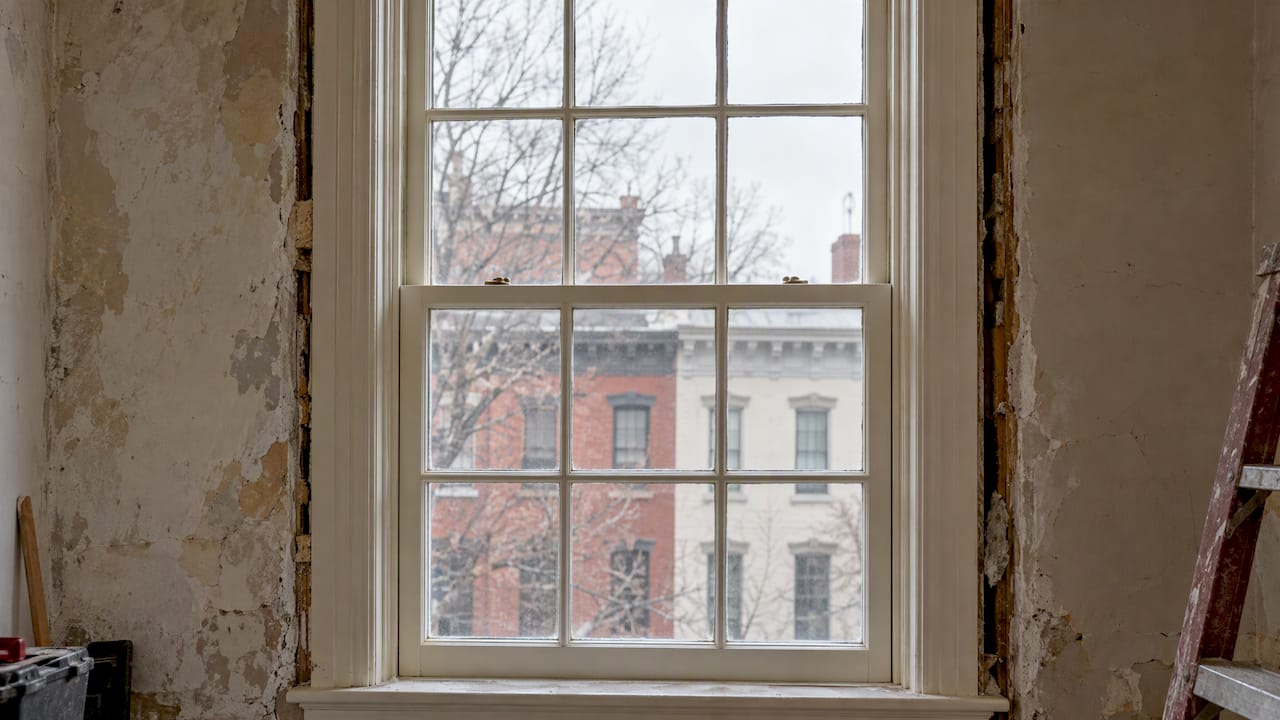
The Secretary of the Interior’s Standards for Rehabilitation shape every judgment NPS and DC SHPO reviewers make, and that scrutiny extends deep into detail work that many owners assume is cosmetic. Window and door assemblies are frequently the most visible test of compliance, since replacing a historic sash with a modern vinyl unit, even one that looks similar from the sidewalk, routinely triggers rejection. Period-accurate millwork, matched in wood species, profile, and glazing pattern to the original fabric, is often what separates an approved Part 2 from one sent back for revision.
More than 20% of eligible rehabilitation cost returns to the owner as a federal tax credit, which is precisely why documentation precision on items like windows carries financial weight, not just aesthetic significance.
A final requirement anchors the whole program: the building must remain in qualified income-producing use for five years after rehabilitation. Selling, converting to owner-occupied use, or otherwise changing that status within the holding period triggers partial recapture of the credit already claimed, calculated on a declining schedule tied to how much of the five years has elapsed.
How DC developers commonly pair HTCs with LIHTC and other finance tools
Larger DC rehabilitation projects rarely rely on the federal historic credit alone. Pairing it with Low-Income Housing Tax Credits is a well-established strategy in the District, particularly for adaptive reuse of institutional buildings, former school buildings, and larger apartment conversions where the combined credits attract equity investors who would not otherwise underwrite a historic rehabilitation on its own.
Scale matters in this calculation. Transaction costs, legal structuring, and the accounting overhead of syndicating tax credits mean smaller rehabilitation budgets often cannot justify the complexity of a paired transaction, while larger commercial or multifamily projects with substantial qualified expenditures can absorb those costs and still come out ahead.
- Pairing HTC with LIHTC typically suits larger, income-restricted housing developments with substantial rehabilitation scope.
- Claiming the historic credit reduces the eligible basis available for LIHTC calculations, a tradeoff that requires early coordination between tax counsel and the development team.
- New Markets Tax Credits sometimes layer into the same capital stack for projects in qualifying census tracts.
- Many developers sell or syndicate the historic credit to a tax-equity investor rather than using it directly, converting a future tax benefit into upfront project capital.
This layering explains why serious DC historic rehabilitation projects assemble their financing and preservation teams simultaneously rather than sequentially.
Common reasons HPCA applications fail and how to avoid them
Most denials and delays trace back to a small set of avoidable mistakes, and nearly all of them are preventable with earlier coordination.
- Starting irreversible work before Part 2 approval. Demolishing a feature, removing a window, or altering a floor plan before DC SHPO and NPS sign off on the design puts the entire credit at risk, since approval cannot retroactively bless work already completed.
- Weak cost documentation. Reviewers and the IRS expect clear allocation between qualified and non-qualified expenditures, supported by invoices, contractor timesheets, and change orders tied to specific scope items rather than lump-sum billing.
- Inadequate millwork and window documentation. Shop drawings, material specifications, and sample mockups submitted with Part 2 give reviewers confidence that a proposed replacement genuinely matches the original, a level of specificity that generic product cut sheets rarely provide.
- Overlooking the recapture period. A sale, refinancing that changes ownership structure, or conversion to non-income use within five years of completion can trigger recapture, so any anticipated ownership change should be reviewed with tax counsel before it happens, not after.
Pro Tip: Photograph every character-defining feature before demolition begins, even features not explicitly discussed in your Part 2 narrative. Reviewers sometimes ask about details you did not think to document.
Gepetto Millworks: practical millwork practices that support HPCA compliance
Historic windows, doors, and trim are frequently the detail on which an HPCA Part 2 review turns, since reviewers judge replication work against the original profile, material, and glazing pattern rather than against a general impression of historical style. A specialized custom millwork provider for historic building projects produces the kind of shop drawings and photographic documentation that HPCA reviewers expect to see alongside a rehabilitation narrative.
Typical deliverables that support a compliant submission include:
- Detailed shop drawings showing exact profiles, joinery, and dimensions matched to the original element.
- A material list specifying wood species, glazing type, and hardware consistent with the building’s period.
- Sample mockups that reviewers or SHPO staff can examine before full fabrication proceeds.
- In-progress and completed photographs documenting the installation for the Part 3 submission.
For DC rowhouses and commercial buildings alike, this level of specificity in window and door replication, drawn from a focus on exact historic replication using authentic materials and techniques, is often what distinguishes a Part 2 narrative that sails through review from one that draws a request for revision. The firm’s work on replica wooden windows illustrates the kind of documentation trail that supports, rather than undermines, a certification application.
When pursuing the DC historic tax credit is worth the effort
A rowhouse conversion to a handful of rental units can qualify, but the paperwork burden scales less gracefully than the credit itself.
Assembling the right team early matters more than any single filing tactic: a preservation architect fluent in the Secretary’s Standards, tax counsel who understands recapture and basis reduction, a historic consultant who has worked with DC SHPO before, a contractor experienced in rehabilitation sequencing, and a millwork specialist who can produce documentation reviewers trust. Expect the certification process to add real lead time to a project schedule, and budget for it accordingly rather than treating documentation as an afterthought once construction is already underway.
— Gepetto
Millwork support for HPCA-compliant DC projects
Meeting the Secretary’s Standards on windows, doors, and trim is often the narrowest part of an HPCA approval, and it is the part Gepetto Millworks works on directly. The firm’s Historic Window Restoration service restores original sash and frames where repair is feasible, while custom fabrication covers replication when replacement is unavoidable.

Beyond the physical work, preparation of shop drawings, material specifications, and in-progress photographs are part of what a Part 3 submission requires, documentation built to hold up under SHPO and NPS review rather than assembled after the fact. Owners and developers planning a DC rehabilitation that depends on window or door replication can review the Historic Window Restoration page to see how that documentation process fits into a broader project timeline.
Sources
Confirming current rules directly with primary sources avoids relying on outdated guidance.
- Federal Historic Preservation Tax Incentives: Application process | National Park Service
- Rehabilitation credit | Internal Revenue Service
- Rehabilitation Tax Credits | District of Columbia Office of Planning
FAQ
What are the DC tax credits and how can I get them?
The primary credit available to DC property owners is the federal 20% rehabilitation tax credit, which applies to certified rehabilitation of income-producing historic buildings. Owners apply by filing the three-part HPCA application with DC SHPO and NPS, documenting qualified expenditures, and completing work that meets the Secretary of the Interior’s Standards.
How does a historic tax credit work?
A qualifying owner completes a certified rehabilitation of an income-producing historic building and claims a credit equal to 20% of qualified rehabilitation expenditures, generally spread ratably over five years under IRS rules. The building must stay in qualified use for five years, or the owner faces partial recapture of the credit already claimed.
What are the downsides of historic preservation?
Preservation requirements can limit design flexibility, since exterior alterations and many interior changes must follow the Secretary of the Interior’s Standards rather than an owner’s original design preferences. The certification process also adds administrative lead time and documentation cost, and starting irreversible work before approval can jeopardize the credit entirely.
How do I know if my house is in a historic district?
DC’s Office of Planning maintains records of designated historic districts and can confirm whether a specific address carries contributing status within one. A property’s certified historic structure status is also confirmed through the National Register listing process if it is not already part of a recognized district.