
If you own, manage or build in one of Savannah’s historic districts, you have four realistic paths for historic windows: repair them yourself with training, hire a general repair or handyman service, engage a preservation-minded restoration shop, or commission new custom windows when a review confirms the originals are beyond saving. Each suits a different building and budget, and the city’s review process narrows the choices sooner than most owners expect. This guide compares the options on the criteria that matter: regulatory fit, retention of historic fabric, performance, cost drivers and the questions to put to any provider.
TL;DR
- In Savannah’s local historic districts, original windows must be repaired before replacement is considered, and the MPC Preservation Department verifies on a site visit that they are beyond repair.
- When replacement is approved, it must be in-kind: the same composition, material and design as the original.
- A general window repair or handyman service suits glass and hardware problems; wood sash, frames and muntins call for a shop with restoration and fabrication capability.
- Cost depends on condition, sash count, glazing pattern and access, and large landmark projects run into the hundreds of thousands of dollars.
- We at Gepetto Millworks restore historic wood windows and fabricate exact replicas when replacement is approved.
Table of Contents
- What Savannah’s historic districts require
- The four options compared
- What proper restoration includes
- What historic window work costs
- How to evaluate a provider
- Perspective: why repair-first is the better preservation outcome
- Working with Gepetto Millworks
- FAQ
- Sources
What Savannah’s historic districts require
Savannah’s rules are unusually clear, and they shape every option below. The Metropolitan Planning Commission’s guidance states that original windows should always be repaired before replacement is considered, and that its Preservation Department must verify through a scheduled site visit that a window is beyond repair. The same document sets the standard for replacement: when it becomes necessary, the new window is replaced in-kind, retaining the original composition, material and design.
Two practical consequences follow. First, a vinyl or aluminum insert on a wood-sash building is not a quiet upgrade; it is generally outside what the review allows. Second, the documentation burden falls on the applicant. The Chatham County Historic Preservation Commission application for a Certificate of Appropriateness asks for clear color photographs showing why replacement is needed, together with manufacturer specifications and catalog cuts for the proposed windows. A provider who photographs sash and frame condition methodically from the first visit saves you weeks.
The guidance also notes that routine window and door maintenance is expected in the districts, and that repair does not require a building permit while replacement does. Always confirm the current requirements with the MPC Preservation Department before work starts, since classifications differ between the city’s districts and individual properties.
The underlying philosophy is worth understanding, because it informs how a good provider works. The MPC’s in-kind policy holds that properly and routinely maintained historic materials are generally durable and serviceable, and it requires that any new material match the original in type, design, dimension and texture. Old-growth heart pine and cypress sash, with their tight grain and rot resistance, are the very material that modern stock windows cannot reproduce.
The four options compared
| Option | Best for | Strengths | Limits |
|---|---|---|---|
| Hands-on workshop and DIY repair | Owners of one or two houses with time and patience | Low cost, deep understanding of the building | Slow, skill-dependent, not suited to rotted sash or large projects |
| General window repair or handyman service | Cracked panes, failed seals, hardware, minor glazing | Fast scheduling, convenient | Usually not equipped to rebuild wood sash, match muntin profiles or document work for review |
| Preservation-minded restoration shop | Wood sash and frames with deterioration, tax-credit or district-reviewed work | Retains original fabric, can fabricate missing parts, understands review standards | Longer lead time, project-based pricing |
| Custom replacement fabrication | Windows confirmed beyond repair, missing or previously replaced units | Exact in-kind match, new sash in correct species and profile | Requires approval, drawings and a documented case for replacement |
Hands-on training and DIY repair
Savannah has a steady tradition of preservation workshops that teach owners to glaze, reputty, free painted-shut sash and replace cords. For a single house with sound frames, this is a sensible way to learn what the building needs and to carry out routine maintenance yourself. It is a poor fit when frames are soft, sash joints have opened or the project involves a dozen or more openings on a schedule, because the learning curve is paid for in the building’s fabric.
General window repair services
Local repair services and handyman franchises handle foggy insulated units, broken panes, failed locks and basic weatherstripping. For a mid-century storefront or an addition with modern units, that is exactly the right call. On a nineteenth-century sash window, the same approach tends to stop at the glass. Replacing a pane is not the same as repairing a deteriorated meeting rail, a split stile or a rotted sill, and these services seldom cut new muntins to match an existing profile.
Preservation-minded restoration shops
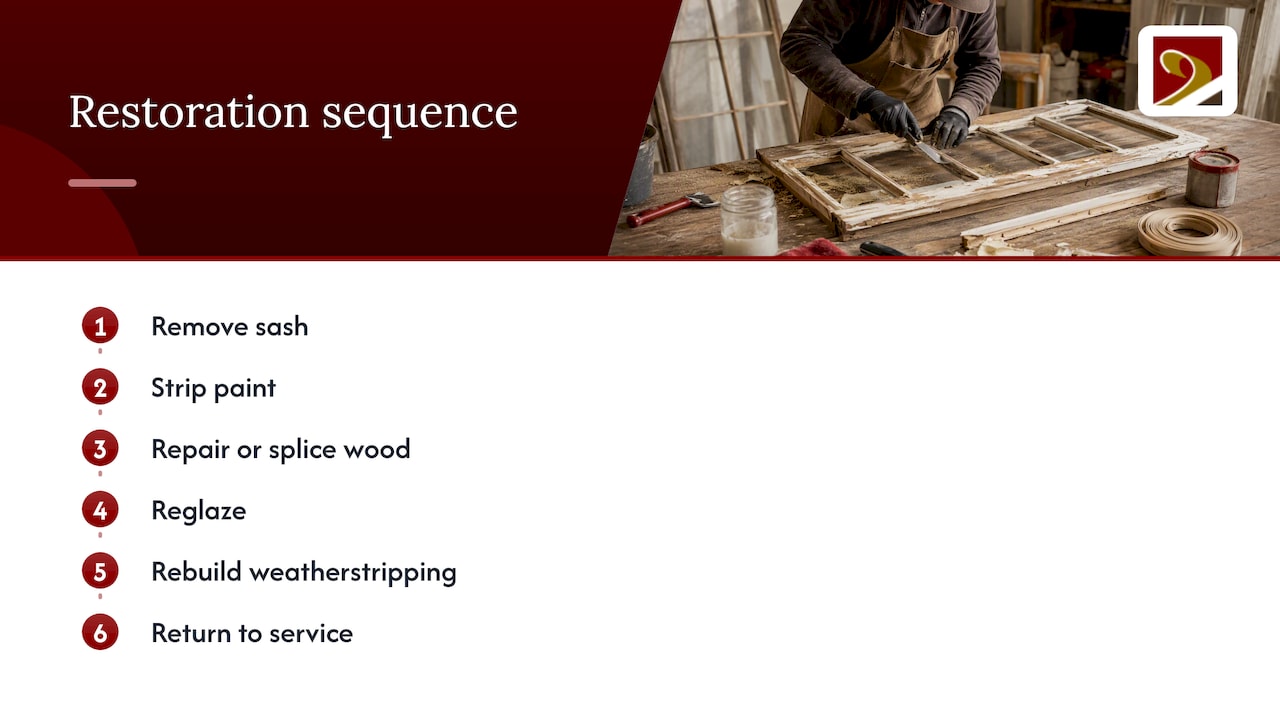
This is the category most owners in the historic districts eventually need, and where our work sits. A restoration shop removes the sash, strips the paint, repairs or splices the wood, reglazes, rebuilds the weatherstripping and returns the unit to service. The goal is retention: the more of the original wood and glass survives, the stronger the case under review and, for income-producing buildings, under the federal historic tax credit.
Custom replacement fabrication
Sometimes a window is gone, or has been replaced with something that does not belong. Here, the work is replication: measured drawings, correct species, matching muntin profiles, true divided lights, and glazing and hardware appropriate to the period. This is where in-kind rules meet craft. The submission needs the manufacturer or fabricator specifications that the commission expects, so choose a shop that produces shop drawings routinely.
What proper restoration includes
A useful test of any proposal is whether it describes the full sequence. The National Park Service’s Preservation Brief 9 on repairing historic wooden windows lays out the standard workflow: paint removal, removal and repair of the sash, frame repair, reglazing, weatherstripping and final repainting. Taken together, these steps retain historic fabric while restoring operation and improving thermal performance.
In practice, a thorough scope reads as follows:
- Survey and documentation. Each opening is numbered, photographed and assessed for sash, frame, sill, glass and hardware condition.
- Sash removal. Sash are taken to the shop wherever possible, where they can be repaired on the bench rather than in place.
- Paint removal. Layers of old coatings are stripped with methods that do not scorch the glass or raise the grain.
- Wood repair. Deteriorated sections are spliced with matching species, and joints are tightened and pegged.
- Reglazing. Loose or missing putty is renewed, and original glass is retained wherever it survives.
- Frame and sill work. Jambs, stops and parting beads are repaired, and sills are corrected for drainage.
- Weatherstripping and balance. Cords, weights or modern spring balances are restored so the sash run freely.
- Priming and painting. All surfaces, including the putty line, are sealed.
When reglazing is the right fix
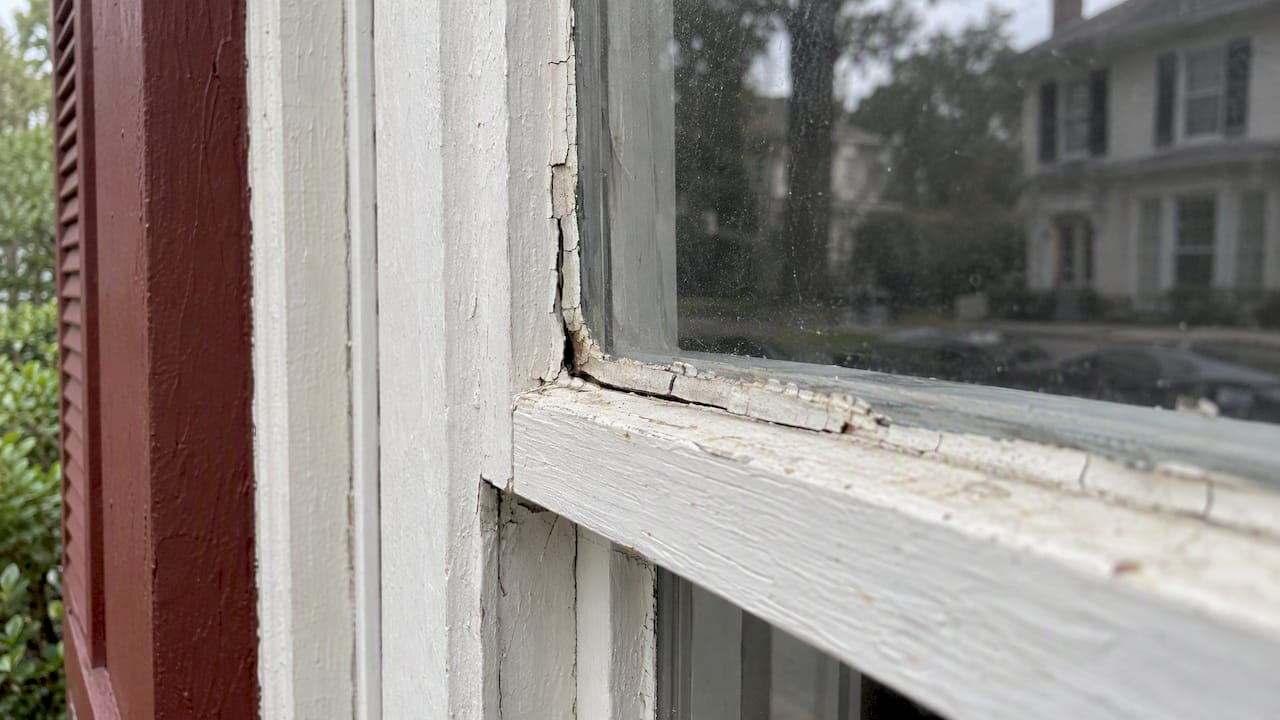
Reglazing belongs in routine maintenance. The Park Service advises inspecting for cracked, loose or missing putty, since gaps let water saturate the wood and start the rot that leads to replacement requests. A sash with sound wood and failing putty is an inexpensive repair; the same sash left alone for five more summers becomes a rebuild.
Performance and energy
Owners often ask whether historic wood windows can perform acceptably. With tight weatherstripping and a properly fitted storm window, repaired sash can reach comfortable performance without losing their profile. Our pages on energy efficiency in historic windows and double-pane historical windows cover the trade-offs, including where insulated glazing is appropriate and where reviewers may object.
What historic window work costs
No honest provider quotes a per-window figure without seeing the building, because the price turns on condition and complexity. The main drivers are:
- Condition. Putty and paint failure is a modest repair; rot in rails, stiles and sills is not.
- Count and size. Tall parlor-floor sash and arched or elliptical units cost more than standard double-hung windows.
- Glazing pattern. Six-over-six and nine-over-nine sash carry more muntins and more glass to retain.
- Access. Scaffolding on upper stories adds cost to every opening.
- Documentation and review. Drawings and photographs for the commission take time, and they matter.
- Finish. Historic color matching and multi-coat finishing add labor.
Public projects show the scale at the high end. A two-year exterior restoration of the Juliette Gordon Low Birthplace that included window repair cost about $2.5 million, and the stained-glass restoration at First African Baptist Church carries a $615,000 price tag. Those are landmarks with exceptional scope, not benchmarks for a rowhouse. Still, they illustrate that specialized glass and wood work is priced as craft, and that funding often comes from grants and tax incentives.
We do not publish prices, because every project is scoped individually. We provide itemized proposals by opening, so you can see where the cost sits and decide what to phase.
How to evaluate a provider
Whether you are an architect writing a specification or an owner collecting bids, ask the same questions of every candidate:
- Do they repair before they replace? A bid that proposes new units on every opening contradicts Savannah’s review process.
- Can they show comparable work? Look for sash restoration on buildings of the same era and construction, not just glass or door work.
- What species and material do they use for repairs? In-kind means type, design, dimension and texture match.
- Do they fabricate in-house? Matching a muntin profile or a lost sash requires shop capability, not a catalog order.
- Will they document for review? Photographs, condition notes and drawings should be part of the scope.
- Do they understand tax-credit work? Projects seeking the federal historic tax credit need work that meets the Secretary of the Interior’s standards, so the provider should have worked within them.
- How do they handle hazards and sequencing? Older buildings sometimes require testing and, where it is called for, asbestos abatement services before millwork begins, so the schedule needs room for it.
Perspective: why repair-first is the better preservation outcome
We come at this work as millwrights first. A historic sash is a small piece of engineering: a mortise-and-tenon frame in old-growth wood, hand-glazed with glass that carries the faint waviness of its period, and proportioned so that slender muntins hold their shape for two centuries. When owners replace these units, they lose more than a material; they lose the sightline, the shadow depth and the evidence of how the building was made.
In our experience, the windows that reach us for replacement are, more often than not, windows that could have been saved with earlier attention to putty, paint and sills. Where replacement is truly necessary, we believe it should be an act of replication rather than substitution: correct species, correct profile, true divided lights, drawn from measurements of the original. Our shop takes on complex, architecturally significant work and custom requests that other shops decline, and we pair restoration with exact replication so that a project’s windows can meet district review and tax-credit standards.
Savannah’s in-kind policy articulates what we try to practice on every job: keep what survives, and make whatever must be new indistinguishable in kind from what was lost.
— Gepetto
Working with Gepetto Millworks
We are a Richmond, Virginia millwork and restoration shop, and our historic window restoration service covers sash and frame repair, reglazing, weatherstripping and finishing. When the review confirms replacement, our wooden windows are fabricated to match the original in species, profile and glazing pattern. Architects and contractors can also see how we approach the work on our Savannah historic window services page, and we are happy to discuss scope and logistics for projects in the region. Contact us with photographs of your openings and the district classification, and we will tell you plainly whether repair, replication or a combination fits.
FAQ
Do I need approval to repair historic windows in Savannah?
The MPC’s guidance indicates that repair does not require a building permit, while replacement does and must meet in-kind standards. Because district rules and property classifications vary, confirm with the MPC Preservation Department before beginning. Keep photographs of the existing condition either way.
Can I replace my historic windows with vinyl or aluminum?
In Savannah’s local historic districts, replacement windows must match the originals in composition, material and design, so a different material is generally not approved. The first step is demonstrating, on a scheduled site visit, that the originals are beyond repair. Then the replacements are submitted with manufacturer specifications.
How much does historic window restoration cost?
There is no standard rate, because condition, count, size and glazing pattern vary widely. Landmark projects show the upper range, such as the $2.5 million Juliette Gordon Low Birthplace exterior restoration, but a typical house is scoped opening by opening. Ask for an itemized proposal.
Is reglazing old windows worth it?
Yes, when the wood is sound and the putty has cracked or gone missing. The National Park Service treats reglazing as part of routine maintenance because failed putty lets water into the wood. It costs far less than rebuilding a rotted sash.
Sources
- Windows in Historic Savannah, MPC (2022)
- In Kind Repair and Replacement, MPC
- Chatham County Historic Preservation Commission, Certificate of Appropriateness application
- Preservation Brief 9: The Repair of Historic Wooden Windows, National Park Service
- Renovations approved for Juliette Gordon Low Birthplace, Savannah Morning News
- First African Baptist Church receives $500,000 grant, WTOC