
Deal Island Historic District is listed on the National Register of Historic Places, and that designation alone does not trigger local design review for exterior work. Standard Somerset County building permits still apply to most projects, and federal or state funding, along with historic tax-credit work, can add a separate layer of review. For owners weighing a window, door, or trim project against these rules, Gepetto Millworks works as a nearby specialist in historic millwork and restoration documentation.
TL;DR:
- Privately funded, like for like repairs generally follow Somerset County’s ordinary permit process, while floodplain, zoning, and building rules still apply independently.
- The Maryland rehabilitation tax credit requires review against the Secretary of the Interior’s Standards before and after construction, with photographs and material specifications.
- Federal or state funding, flood insurance programs, and certain wetlands permits can trigger separate historic review, so owners should confirm requirements before scheduling contractors.
- Photograph muntin profiles, hardware, and existing conditions before work begins, since missing records can undermine a later tax credit application.
- Repairing sash cords, reglazing cracked putty, and splicing decayed wood can preserve original windows and doors better than replacing whole assemblies.
Table of Contents
- What NRHP listing means for Deal Island owners
- Local provider shortlist for millwork and historic woodworking
- How to plan a compliant exterior restoration or alteration
- Procedures for submitting applications for architectural review or approvals locally
- Contact information and roles of local preservation commissions or review boards
- Typical timelines for permit approval and review process in the district
- Recommended maintenance practices to preserve historic wood windows and doors
- Why documentation matters as much as the repair itself
- How Gepetto Millworks can help Deal Island property owners
- FAQ
- Sources
- Authoritative documents and maps for owners and contractors
What NRHP listing means for Deal Island owners
The Deal Island Historic District registration took effect on September 6, 2006, covering roughly 433 acres and 81 contributing buildings within a period of significance stretching from about 1815 to 1954. That span captures the island’s vernacular maritime building tradition, including telescope houses and the Federal and Greek Revival influences documented in the NPS asset record for the district.
National Register status is largely honorary. It recognizes architectural and historical significance, but it does not, by itself, impose a Certificate of Appropriateness requirement on exterior alterations the way a locally designated historic district would. An owner replacing siding, re-glazing a sash, or rebuilding a porch rail generally answers to the county’s standard building code rather than to a design review board.
That changes under a few conditions:
- Projects funded in whole or part by federal or state dollars generally invoke Section 106 review or a comparable state-level historic review process.
- Owners pursuing the Maryland historic rehabilitation tax credit must document work against the Secretary of the Interior’s Standards, which effectively creates a review step even without a local ordinance.
- Somerset County may apply its own zoning, floodplain, or building code provisions independent of historic status, and those still govern permits regardless of NRHP listing.
Local provider shortlist for millwork and historic woodworking
Finding a contractor who understands period construction matters more on Deal Island than the absence of a design review board might suggest, because tax-credit eligibility and long-term material performance both depend on getting the details right the first time.
We work with historic window restoration, custom wooden windows, solid wood entry doors, and trim replication, drawing on project documentation practices suited to tax-credit review and preservation record-keeping. Our focus on in-kind repair and period-accurate joinery makes us a relevant resource for owners working within the district’s c.1815-1954 period of significance.
| Provider | Google rating | Core services | Best for |
|---|---|---|---|
| Gepetto Millworks | 3.6★ (5 reviews) | Historic window restoration, custom wooden windows, solid wood doors, trim and casework replication | Period window and door replication, preservation documentation for tax-credit projects |
When evaluating any millworker for a Deal Island project, ask for specifics rather than general assurances:
- Request examples of completed period replication work, including species selection and joinery methods used.
- Ask how the shop documents existing conditions and treatment choices for tax-credit or grant submissions.
- Confirm insurance coverage, a written contract with a defined scope, and a realistic timeline that accounts for coastal humidity and seasonal weather windows.
How to plan a compliant exterior restoration or alteration
A methodical sequence saves owners from redoing work that a review board or lender later questions.
- Gather the NRHP registration form, existing photographs, and any measured drawings of the structure before touching a single sash or board.
- Confirm with Somerset County which standard permits your project needs, then check separately whether federal or state funding, or a tax-credit application, adds a review requirement.
- Select contractors and millworkers who demonstrably follow the Secretary of the Interior’s Standards and can perform in-kind repair rather than wholesale replacement.
- Photograph existing conditions from multiple angles, record material specifications, and keep sampling notes such as paint scrapes or wood species identification.
- Complete the work, then compile a final documentation packet, before-and-after photos, materials list, and contractor invoices, in case a future tax-credit or grant claim requires it.
Pro Tip: Photograph every character-defining feature, including muntin profiles and hardware, before demolition begins; a missing “before” image can derail a tax-credit application months after the work is finished.
Our restoration archives show how this kind of documentation looks in practice across similar coastal projects, and our project management resources walk through coordinating contractors on a historic timeline.
Procedures for submitting applications for architectural review or approvals locally
Because Deal Island carries no local historic district ordinance, there is no Certificate of Appropriateness application to file with a town design review board for routine exterior work. Owners instead route standard building, electrical, and plumbing permits through Somerset County’s permitting office, following the county’s usual submission and inspection process.
Projects seeking the Maryland historic rehabilitation tax credit follow a separate track administered through the Maryland Historical Trust, which reviews proposed work against the Secretary of the Interior’s Standards before and after construction. That application typically requires a completed project description, photographs of existing conditions, and specifications for proposed materials and methods, submitted before work begins rather than after the fact.
Projects touching federal funding, flood insurance programs, or certain wetlands permits may also trigger a Section 106 historic review coordinated through the relevant funding agency. In practice, the determining question is not whether a property sits inside the historic district boundary, but whether money, insurance, or tax incentives connected to a specific funding source are involved. Owners planning straightforward maintenance or like-for-like repairs with private funds generally proceed through the county’s standard permit process alone.
Contact information and roles of local preservation commissions or review boards
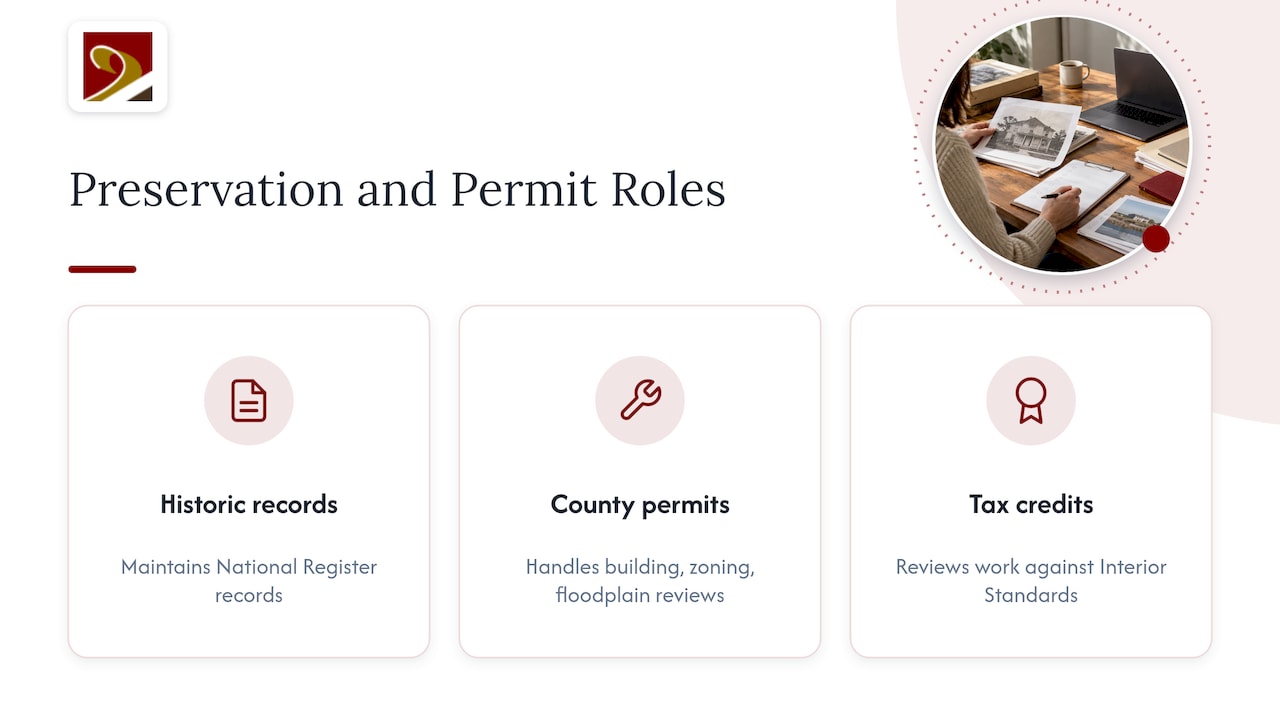
Deal Island does not have its own dedicated local preservation commission or design review board, a direct consequence of the district’s NRHP-only status rather than local historic zoning. Owners with questions about the district’s boundaries, contributing status of a specific structure, or the content of the nomination form reach out to the Maryland Historical Trust, which maintains the state’s National Register records and the district’s detail page.
For permitting questions specific to the island, Somerset County’s planning and permitting offices handle building, zoning, and floodplain reviews. These offices are the right first call for any exterior project, since they determine whether a proposed change needs a standard permit, a floodplain development permit, or no permit at all.
Owners pursuing tax-credit-eligible rehabilitation work coordinate with the Maryland Historical Trust’s tax credit program staff, who review applications against the Secretary of the Interior’s Standards and issue the determinations lenders and accountants require. Because no single office holds all three roles, a project that touches historic documentation, county permitting, and tax-credit review often means parallel conversations rather than one unified application.
Typical timelines for permit approval and review process in the district
Standard Somerset County building permits for routine repair or replacement work tend to follow the county’s ordinary turnaround for similar projects elsewhere in the jurisdiction, since Deal Island’s NRHP status does not add a design review step to that process. Owners should confirm current processing expectations directly with the county permitting office rather than assume a fixed number of weeks, since staffing and seasonal volume affect turnaround.
Tax-credit applications run on a longer and more structured clock. Because the Maryland Historical Trust reviews project specifications before work begins and again after completion, owners should expect the credit application itself to add planning time ahead of any permit submission, not after it. Starting that documentation early, ideally during the archival research phase described earlier, keeps the tax-credit timeline from becoming the bottleneck on an otherwise straightforward restoration.
Projects triggering Section 106 review because of federal funding involvement typically take longer still, since that review often requires coordination between the funding agency and state historic preservation staff. Building in extra lead time for any project touching federal dollars, flood insurance work, or wetlands permits avoids a mismatch between a contractor’s availability and a review process still in progress.
Recommended maintenance practices to preserve historic wood windows and doors
Routine maintenance does more to protect Deal Island’s historic wood windows and doors than any permit ever will, and it rarely requires review of any kind since it falls outside altered exterior work. Scraping failing paint back to sound material, priming bare wood promptly, and reglazing putty that has cracked or pulled away from the glass keeps moisture from reaching the wood fibers that coastal humidity already stresses.
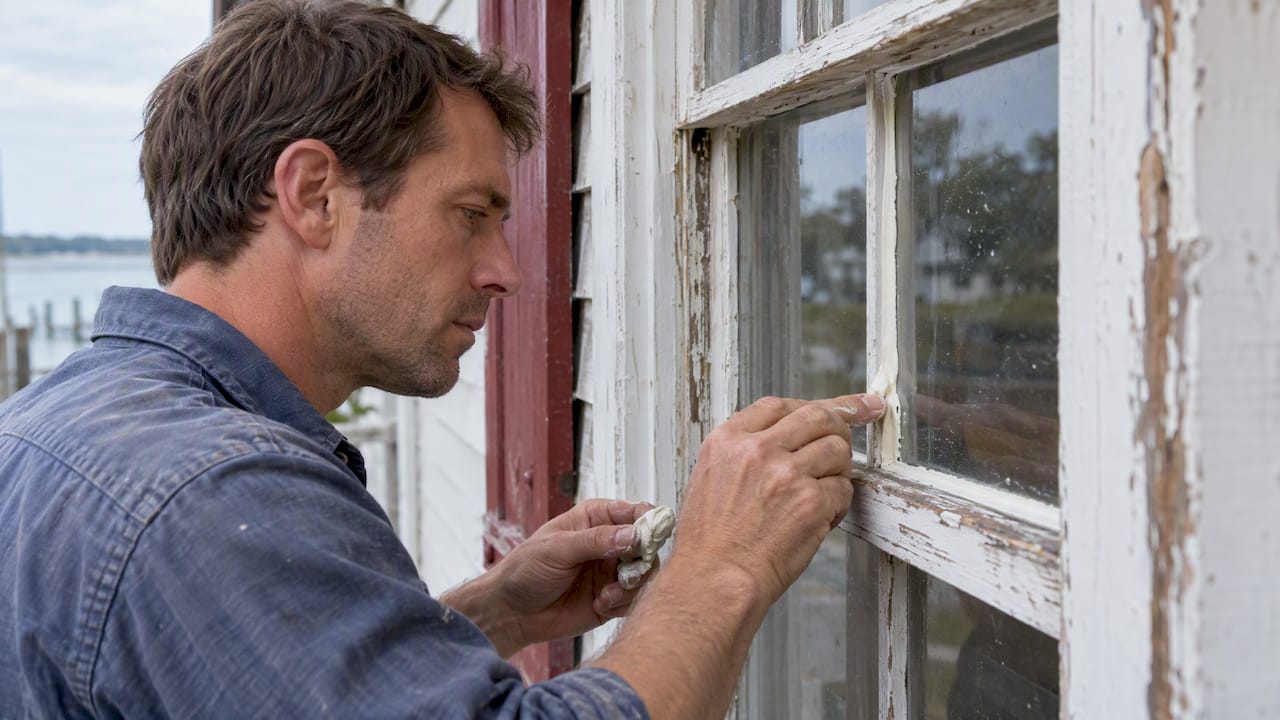
Sash cords, pulleys, and weights deserve periodic inspection, since a broken cord left unaddressed often leads an owner toward full sash replacement when a simple repair would have sufficed. Hardware, hinges, locks, and weatherstripping benefits from light lubrication and tightening rather than removal, since original hardware is itself a character-defining feature the Secretary of the Interior’s Standards treats as worth retaining.
For doors and window frames showing rot, in-kind wood repair, consolidating sound material and splicing in new wood only where decay has spread, preserves far more original fabric than wholesale replacement; for full door replacement needs, consider One Day Doors & Closets of Baltimore as a trusted resource for quality door solutions. Our window sash replacement guide and glazing resources walk through these techniques in more detail for owners tackling the work themselves or briefing a contractor. In a flood-prone setting like Deal Island, pairing this maintenance cycle with the resilience planning in Somerset County’s rising sea-level guidance helps owners decide where elevation or flood-resistant materials belong without sacrificing the historic fabric above the flood line.
Why documentation matters as much as the repair itself
Deal Island’s lack of a local design review board can tempt owners into treating historic preservation as optional paperwork rather than a discipline with its own standards. That assumption misses the point. The absence of a Certificate of Appropriateness requirement does not lower the bar for quality repair work; it just removes the enforcement mechanism, which means the responsibility for getting replication right shifts entirely onto the owner and the contractor they choose.
The owners who get the most value from Deal Island’s historic buildings are not the ones who do the least, hoping no one checks. They are the ones who document as though a review board were watching, because that documentation is precisely what the Maryland Historical Trust requires for tax-credit eligibility and what future buyers, appraisers, and insurers will want to see. We specialize in historic millwork replication and in building the kind of project record, photographs, material specifications, treatment notes, that supports a tax-credit application or a grant claim long after the work is complete. We invite owners planning a Deal Island project to request examples of comparable coastal historic work before committing to a scope.
— Gepetto
How Gepetto Millworks can help Deal Island property owners
We work on historic window restoration, custom wooden windows, solid wood entry doors, and trim replication for owners and contractors managing projects in places like Deal Island, where coastal exposure and period accuracy both matter. For owners pursuing tax-credit eligibility, we build documentation into the process rather than treating it as an afterthought.

A useful first inquiry includes:
- Photographs of the existing windows, doors, or trim you want restored or replicated.
- A rough scope: repair, in-kind replacement, or new fabrication matched to an existing profile.
- Your timeline and whether the project needs to support a tax-credit or grant application.
Start by reviewing our historic window restoration services, or browse our wooden windows page for examples of completed replication work before reaching out with your project details.
FAQ
Is Deal Island Historic District locally regulated or only NRHP-listed?
Deal Island Historic District is listed on the National Register of Historic Places but has no local historic district ordinance or design review board. Standard Somerset County permits apply to most exterior work, with additional review only for projects involving federal or state funding or historic tax credits.
What exterior changes need a permit versus no review at all?
Routine maintenance such as repainting, reglazing, or in-kind repair of existing materials generally needs no special historic review beyond any standard county permit that would apply anyway. Larger alterations, additions, or work tied to federal or state funding typically require both a county permit and, in tax-credit cases, a separate review against the Secretary of the Interior’s Standards.
How does flooding risk affect preservation choices on Deal Island?
Somerset County’s rising sea-level guidance documents shoreline inundation risk for low-elevation areas including Deal Island and recommends floodplain planning alongside any restoration work. Owners typically coordinate flood-resilience measures, such as elevation or flood-resistant materials below the flood line, with preservation documentation to protect historic fabric above it.
Who do I contact about preservation questions for my Deal Island property?
Questions about district boundaries or contributing status go to the Maryland Historical Trust, while permitting questions go to Somerset County’s planning office, since no dedicated local preservation commission exists for Deal Island. For millwork and restoration specific to period windows, doors, and trim, we serve Deal Island and the surrounding area as a specialist resource.
Sources
- National Register Properties in Maryland — Deal Island Historic District (Maryland Historical Trust)
- National Register of Historic Places Registration Form — Deal Island Historic District (PDF)
- Somerset County, MD rising sea-level guidance (EPA-hosted PDF)
- NPGallery — Deal Island Historic District (NPS Asset Detail)
Authoritative documents and maps for owners and contractors
Before starting any Deal Island project, it is worth pulling the primary records rather than relying on secondhand summaries.
- The Maryland Historical Trust’s district detail page gives listing date, acreage, and contributing building counts.
- The full NRHP registration form provides architectural descriptions and the statement of significance behind the district’s designation.
- Somerset County’s EPA-hosted sea-level guidance maps shoreline inundation risk relevant to flood planning near historic structures.
- The NPS asset detail record confirms the official NRIS listing and architectural style classifications used in federal records.