
Which custom wood screen door providers stand out in Virginia?
For Virginia homeowners and architects seeking handcrafted exterior wood screen doors, five providers consistently earn attention: Columbus Woodworks, CVP Windows & Doors, Potomac Windows & Doors, American Screen & Glass, and Hoopes Custom Screening Services LLC. Each serves a distinct need, from online custom manufacturing to licensed local installation.
| Provider | Services Offered | Specialization | Certifications/Licenses | Positioning | Pricing | Rating |
|---|---|---|---|---|---|---|
| Columbus Woodworks | Custom wood screen and storm doors | Solid mahogany, mortise & tenon construction | — | Handcrafted since 1991; ships nationwide | — | 5★ (1 review) |
| CVP Windows & Doors | Custom exterior doors, windows, sliding doors | American-made custom manufacturing | — | Custom American-made products for Virginia contractors and homeowners | — | 4.8★ (94 reviews) |
| Potomac Windows & Doors | Residential door and window replacement | Professional installation, no subcontractors | Virginia Class A license | Exclusively residential; licensed installation | — | 5★ (127 reviews) |
| American Screen & Glass | Screen and glass repair, window repair | Residential and commercial screen services | Licensed & insured | Free written estimates; warranty included | Free estimate | 4.6★ (160 reviews) |
| Hoopes Custom Screening Services LLC | Custom screen fabrication, repair, rescreening | Mobile and drop-off screen service | — | Transparent pricing; local accessibility | $40–$150 | 5★ (35 reviews) |
Columbus Woodworks is the clearest choice for buyers who want a fully custom wood screen door built from solid mahogany with documented pricing. Operating since 1991, the company fabricates each door to order using old-world mortise and tenon joinery, with standard sizes shipping within 10–14 business days and custom dimensions requiring a few weeks.
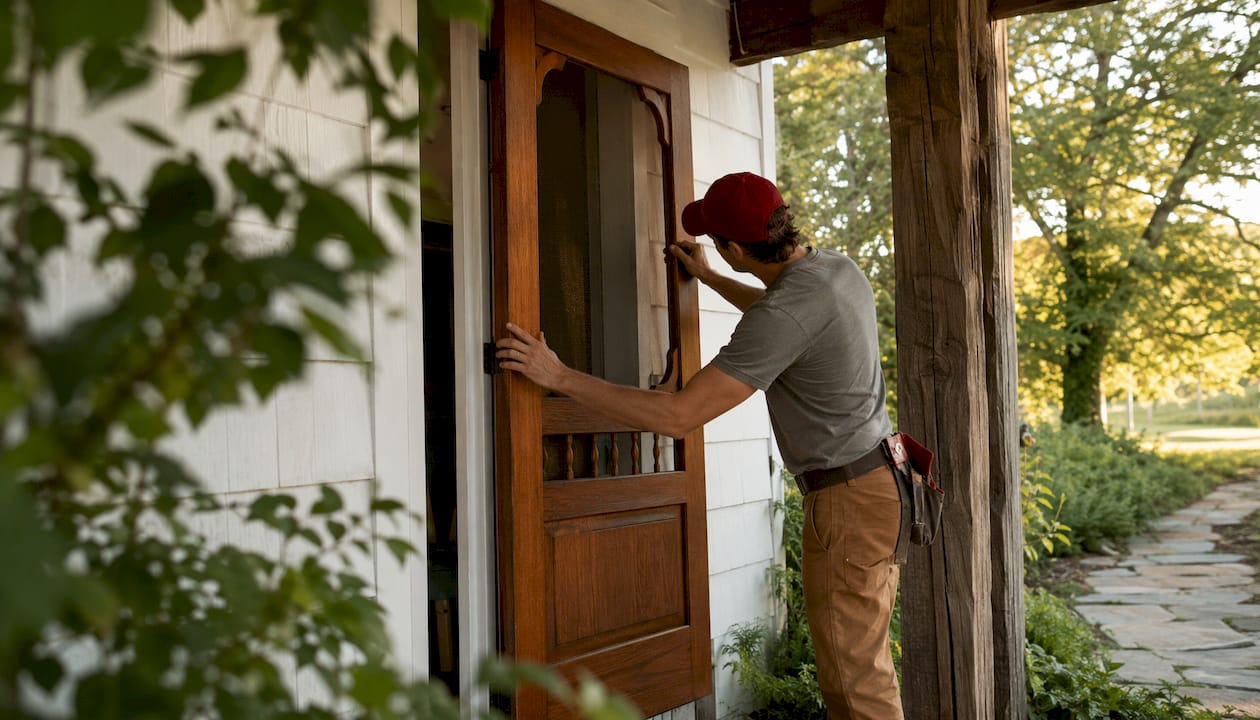
CVP Windows & Doors manufactures custom American-made exterior doors and windows, serving Virginia builders and homeowners directly. Their custom manufacturing capability makes them well suited for architects specifying non-standard openings or period-sensitive replacements.
Potomac Windows & Doors holds a Virginia Class A contractor license and performs all installations without subcontractors, a meaningful distinction for homeowners who want accountability on the job site.
American Screen & Glass covers Northern Virginia with licensed and insured screen and glass repair, free written estimates, and a warranty on work performed. Their scope is repair and replacement rather than bespoke fabrication.
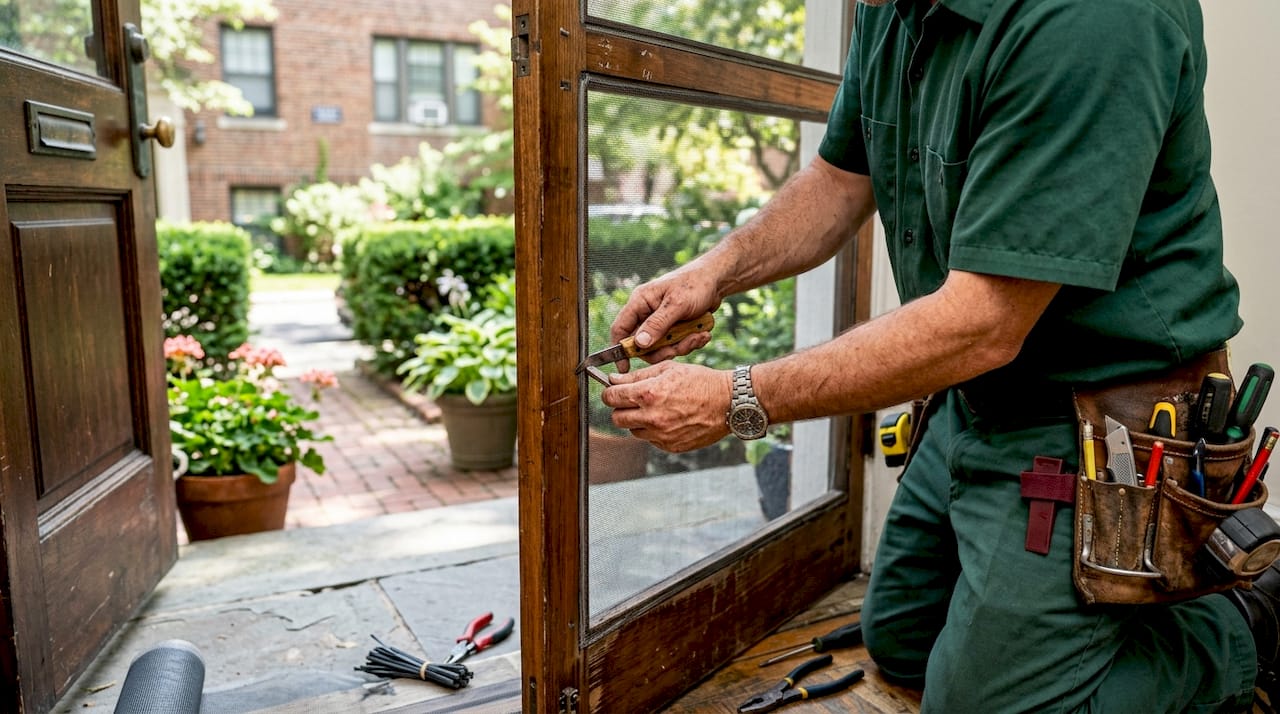
Hoopes Custom Screening Services LLC offers the most flexible access point: mobile service, drop-off repair, and custom screen fabrication with published transparent pricing for standard work.
How do you evaluate a custom wood screen door provider?
Selecting the right provider requires more than comparing star ratings. The following criteria separate a reliable craftsman from a commodity vendor.
- Wood species and joinery: Providers who specify rot-resistant species such as Western Red Cedar or mahogany, and who use traditional mortise and tenon construction, produce doors that outlast cheaper alternatives by years.
- Customization depth: Ask whether the provider accommodates non-standard widths, heights, and arch configurations. Columbus Woodworks, for instance, accepts fully custom dimensions beyond its 32- and 36-inch standard widths.
- Licensing and insurance: A Virginia Class A license, as held by Potomac Windows & Doors, signals that the contractor meets the state’s bonding and competency requirements. For screen repair specialists, licensed and insured status, as with American Screen & Glass, limits your liability if damage occurs during service.
- Lead times: Custom-sized doors typically require a few weeks; supply chain conditions can extend that further. Build this into any renovation or construction schedule.
- Warranty and after-sales support: Ask specifically what the warranty covers: materials, finish, hardware, or labor. A written warranty is a baseline expectation for any custom fabrication contract.
- Installation services: Some manufacturers ship only; others offer installation. If your project requires professional fitting, confirm whether the provider installs directly or refers you to a third party.
- Price transparency: Providers like Hoopes and Columbus Woodworks publish pricing openly. Treat unpublished pricing as a prompt to request a written estimate before committing.
Pro Tip: For historic or period properties, request precise custom-measured templates rather than relying on tape measurements alone. Template-based fitting, as recommended in historic door measurement practice, reduces costly fabrication errors on irregular or settled openings.
What materials and construction methods define a quality wood screen door?
The difference between a door that lasts a decade and one that warps within two seasons comes down to three decisions: wood species, joinery method, and door thickness.
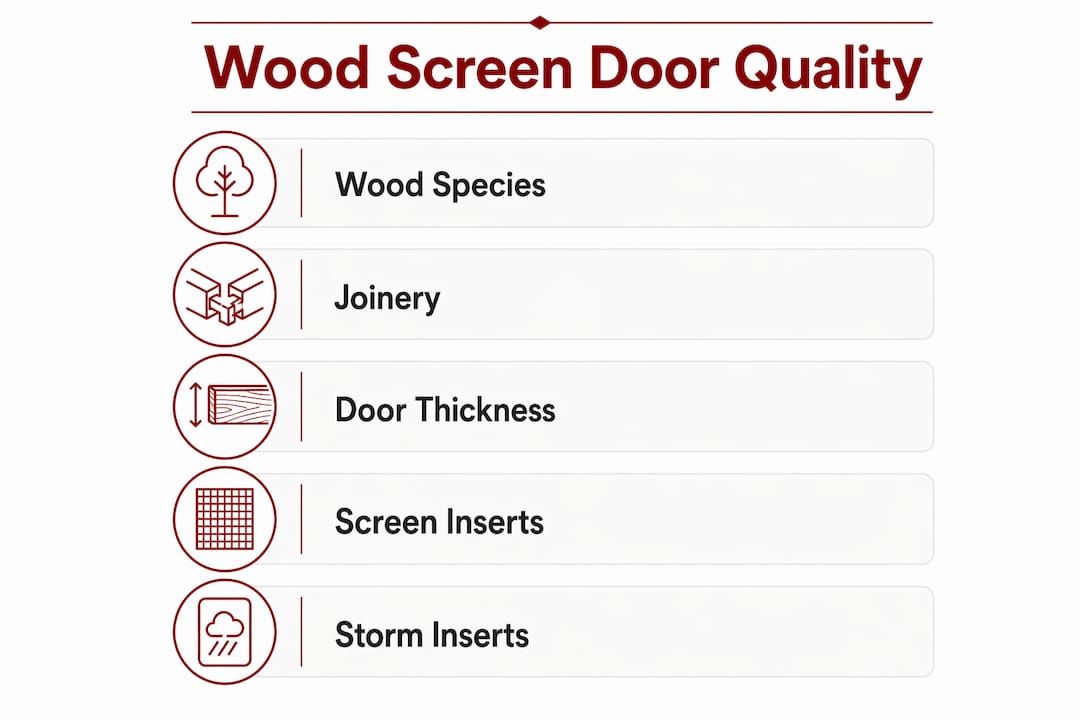
Wood species is the foundation. Western Red Cedar, mahogany, and Accoya each offer natural decay resistance and superior stain adhesion for exterior exposure. Cheaper soft pines absorb moisture unevenly, accelerating warping and rot. Finger-jointed wood, assembled from short offcuts bonded with adhesive, is particularly vulnerable: moisture penetrates the glue lines and initiates rot well before solid-wood alternatives show wear.
Joinery determines structural longevity. Mortise and tenon joinery on stiles and rails creates a mechanically interlocked frame that resists racking under repeated use and seasonal wood movement. Glued butt joints, common in lower-cost production doors, lack this mechanical resistance and tend to open over time. Understanding the role of joinery in exterior woodwork helps clarify why this detail commands a price premium.
Door thickness affects both feel and performance. The standard for custom wood screen doors is 1 1/8 inches, with upgrades to 1 3/4 inches available for large openings or high-wind exposures. Thicker stock resists warping more effectively and carries hardware more securely.
Beyond structure, quality doors support interchangeable screen and storm inserts in fiberglass, aluminum, pet-resistant mesh, or tempered glass, allowing year-round functionality without replacing the door frame itself.
Gepettomillworks brings historic millwork expertise to Virginia
For projects where a standard catalog door simply will not do, Gepettomillworks offers a different order of precision. Specializing in custom fabrication and restoration of architectural millwork for historic buildings, Gepettomillworks works directly with homeowners, architects, and preservation contractors to replicate period features with accuracy that meets historic tax credit eligibility requirements.
Where most screen door providers work from fixed templates, Gepettomillworks begins with the building itself: its proportions, its period, its existing joinery language. Whether the project calls for craftsman style millwork, a mission revival door, or a fully custom historic replica, the fabrication is grounded in architectural precedent rather than catalog selection. Virginia homeowners and architects working on registered historic properties or period-sensitive renovations will find that level of specificity difficult to source elsewhere.
Key Takeaways
For Virginia buyers, the strongest custom wood screen door outcomes come from matching provider type to project scope: a licensed fabricator for bespoke historic work, a certified installer for standard replacement, and a specialist for screen repair.
| Point | Details |
|---|---|
| Match provider to project scope | Columbus Woodworks suits custom fabrication; Potomac Windows & Doors suits licensed installation. |
| Prioritize wood species and joinery | Mahogany, cedar, and mortise and tenon construction outlast finger-jointed or glued alternatives. |
| Verify lead times early | Standard custom doors ship in 10–14 business days; fully custom sizes require a few weeks. |
| Demand written warranties | Ask every provider to specify what their warranty covers: materials, finish, hardware, and labor. |
| Gepettomillworks for historic work | Gepettomillworks specializes in period-accurate custom millwork for historic buildings in Virginia. |