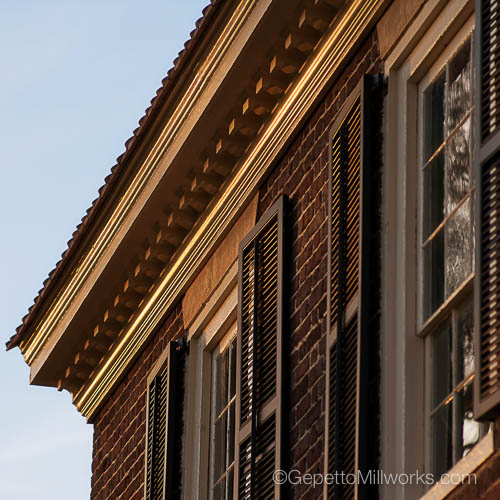
Virginia sawmill operators

The Need for Custom Milled Lumber in Producing Historic Replica Wood Products for Homes, Hotels, and Mixed-Use Properties

Historic buildings tell stories of craftsmanship, architectural vision, and regional heritage. From stately homes with hand-carved moldings to grand hotels adorned with ornamental wood details, each structure carries unique character. When these buildings undergo restoration, expansion, or adaptive reuse, architects, preservationists, and property owners often face a challenge: sourcing authentic wood components that match the originals custom milled lumber becomes essential.

Standard, off-the-shelf wood products rarely replicate the intricate details, species variety, and precise dimensions required for historic replica wood products. Whether the project involves restoring a Georgian-era doorway, recreating Victorian gingerbread trim, or producing millwork for a mixed-use redevelopment of a historic warehouse, custom milled lumber ensures that authenticity, durability, and architectural integrity are maintained.

In this article, we’ll explore why custom milled lumber is indispensable for historic projects, the process behind its creation, and how it benefits property owners, architects, and developers working with historic restoration millwork.


Why Historic Replica Wood Products Require Custom Milled Lumber

1. Standard Lumber Dimensions Don’t Match Historic Profiles
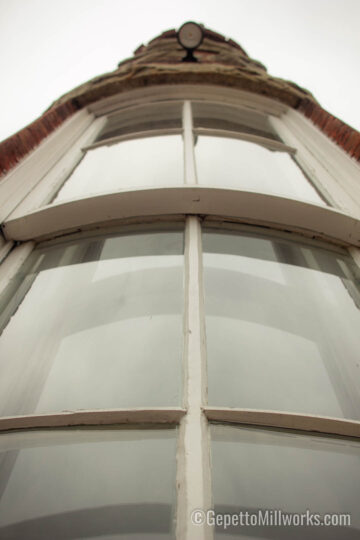
bowed window producer Virginia

Modern lumberyards typically stock dimensional lumber in standard sizes—2x4s, 1x6s, or 4×8 sheets of plywood. Historic builders, however, worked with different milling practices and often used full-dimension lumber with hand-planed finishes. Window sashes, stair treads, or door stiles from the 18th or 19th century are often slightly thicker, wider, or cut with unique joinery that doesn’t align with contemporary production.

Only custom milled lumber can be matched to the original specifications. A mill shop can replicate exact widths, depths, and profiles, ensuring a replacement piece doesn’t look out of place or compromise the building’s historical authenticity.

2. Historic Properties Demand Architectural Accuracy

Preservation guidelines—especially in districts protected by local or national landmark commissions—often require that repairs and replacements remain faithful to original designs. Using mass-produced trim, stock crown molding, or factory windows can jeopardize approvals and reduce the value of the restoration.

By working with a craftsman experienced in historic replica wood products, property owners can be confident that every detail, from mortise-and-tenon joinery to decorative fluting, matches the original craftsmanship.

3. Many Historic Species Are No Longer Commercially Available

Centuries-old buildings often relied on wood species like heart pine, chestnut, or old-growth oak—species that aren’t commonly sold at today’s lumberyards. Custom milling allows artisans to work with reclaimed lumber or responsibly sourced alternatives that mimic the density, grain pattern, and durability of the originals.  Accoya Acetelated wood is the only modern product bending the curve into better wood, as it is chemically altered to not absorb water!

For example:

  • Reclaimed heart pine beams can be remilled into flooring that matches Civil War–era homes.

  • Sapele or mahogany may be substituted for rot-resistant exterior trim when the original tropical hardwood is no longer available.

  • White oak can be quartersawn to mimic the shimmering ray fleck common in Arts & Crafts–era millwork.


The Process of Creating Custom Milled Lumber for Historic Replica Wood Products

Restoring or replicating historic woodwork is a precise and labor-intensive process. Unlike modern production lines that prioritize speed and uniformity, custom milling focuses on detail, flexibility, and one-of-a-kind accuracy.

Step 1: Site Assessment and Documentation

Architects and millworkers begin by surveying the property. Every molding, door stile, or window sash is measured, photographed, and cataloged. Shop drawings may be produced using AutoCAD or hand-drafted sketches. The goal is to capture the exact dimensions, joinery, and ornamental details.

Step 2: Lumber Selection

Choosing the right wood is critical. Preservationists balance authenticity with modern performance requirements. For exterior applications, rot resistance and stability may take precedence, while interior elements prioritize appearance and authenticity.

Step 3: Knife Grinding and Profile Matching

One of the hallmarks of custom milled lumber is profile replication. Specialized steel knives are ground to match the original profile of a molding or trim piece. This allows modern machinery to cut exact replicas that are indistinguishable from 150-year-old originals.

Step 4: Milling and Fabrication

Using planers, shapers, and moulders, raw lumber is transformed into historically accurate components. In some cases, hand tools are used to add the final detail or patina to match existing woodwork.

Step 5: Assembly and Joinery

For larger elements like historic replica windows and doors, traditional joinery methods—such as mortise-and-tenon or pegged joints—are reproduced. These not only provide structural strength but also honor the original methods of construction.

Step 6: Finishing

The final step includes sanding, staining, or painting. Some projects even call for custom finishing techniques to replicate the aged appearance of adjacent woodwork so that the replacement seamlessly integrates.


Applications of Custom Milled Lumber in Historic Replica Wood Products

1. Homes and Residential Properties

Private homeowners restoring historic residences often require custom millwork for:

  • Crown moldings and baseboards to match original interior detailing.

  • Custom windows and shutters designed with historically accurate joinery.

  • Staircases and banisters requiring hand-turned balusters or curved rails.

  • Doors and casings built with raised panels or specific architectural motifs.

2. Hotels and Hospitality Spaces

Grand hotels built during the Gilded Age or early 20th century often feature elaborate wood paneling, ballroom wainscoting, and carved ceiling beams. When these properties undergo restoration or adaptive reuse, custom milled lumber ensures that every lobby, guest room, and banquet hall reflects the elegance of its original era.

For boutique hotels in historic districts, the use of historic replica wood products also creates a sense of authenticity that appeals to guests seeking an immersive experience.

3. Mixed-Use Properties and Commercial Redevelopment

Across the country, developers are transforming warehouses, factories, and historic storefronts into mixed-use properties combining retail, office, and residential units. These adaptive reuse projects rely heavily on custom milled lumber to retain character while meeting modern code requirements.

Examples include:

  • Replicating storefront cornices for historic main streets.

  • Creating interior millwork that complements exposed brick and steel.

  • Designing historically accurate wood windows that meet energy efficiency standards.


Benefits of Using Custom Milled Lumber in Historic Replica Projects

Authenticity

Perhaps the greatest advantage is authenticity. Property owners avoid the “cookie-cutter” look of modern stock components, ensuring the finished project remains true to its origins.

Durability

Custom lumber can be milled from higher-quality, longer-lasting species, ensuring that restored woodwork stands the test of time.

Compliance with Preservation Standards

Local landmark commissions and preservation boards often demand accuracy. Using custom milled lumber demonstrates a commitment to historic integrity, increasing the likelihood of approval for renovation plans.

Increased Property Value

A historically accurate restoration not only preserves cultural heritage but also enhances market appeal. Buyers, investors, and tenants appreciate authentic craftsmanship that sets a property apart.

Sustainability

Reclaimed and responsibly sourced lumber used in custom milling reduces environmental impact while reusing materials that might otherwise go to waste.


Challenges in Producing Custom Milled Lumber

While the advantages are clear, producing custom milled lumber for historic replica wood products also involves unique challenges:

  • Cost: Custom milling requires specialized labor and tooling, which can be more expensive than off-the-shelf options.

  • Lead Times: Knife grinding, material sourcing, and fabrication extend project timelines.

  • Material Availability: Historic species may need substitutes that balance authenticity with availability.

However, most property owners find that the long-term benefits—authenticity, durability, and property value—far outweigh the initial investment.


Case Study Examples

Historic Hotel Renovation

A century-old hotel undergoing renovation required replication of 12-inch crown moldings and intricate ballroom paneling. Off-the-shelf products could not match the profiles. A mill shop used custom milled lumber with ground knives to create exact replicas, preserving the hotel’s grandeur.

Residential Restoration

A homeowner restoring an 1850s farmhouse needed historically accurate windows with true divided lights and hand-forged joinery. Custom milling provided sash frames that matched the originals while integrating energy-efficient glass.

Mixed-Use Development

Developers converting a tobacco warehouse into offices and apartments wanted to preserve the historic storefront façade. Custom milled lumber allowed replication of the original trim, pilasters, and transom frames, giving new life to the streetscape.


The Future of Custom Milled Lumber in Historic Replica Projects

As interest in historic preservation and adaptive reuse grows, the demand for custom milled lumber will continue to rise. Modern technology—such as CNC routers and 3D scanning—enhances accuracy, but traditional craftsmanship remains at the heart of the process.

Sustainability will also play a role. More projects are turning to reclaimed lumber, combining historical integrity with environmentally conscious practices.

For homes, hotels, and mixed-use properties alike, custom milled lumber remains the key to bridging the past and the present.


Conclusion

When it comes to preserving architectural heritage, there is no substitute for custom milled lumber. Whether the goal is restoring a historic home, renovating a grand hotel, or redeveloping a mixed-use property, authenticity and craftsmanship matter. Stock components cannot replicate the details, durability, or artistry of historic replica wood products.

By investing in custom milling, property owners ensure their projects meet preservation standards, stand the test of time, and honor the legacy of the structures they inhabit. From carved moldings to hand-crafted windows, custom milled lumber keeps history alive—one project at a time.
Custom Wood Turning for Historic Restoration

Custom Wood Turning for Historic Restoration

Handmade Turned wood rounds

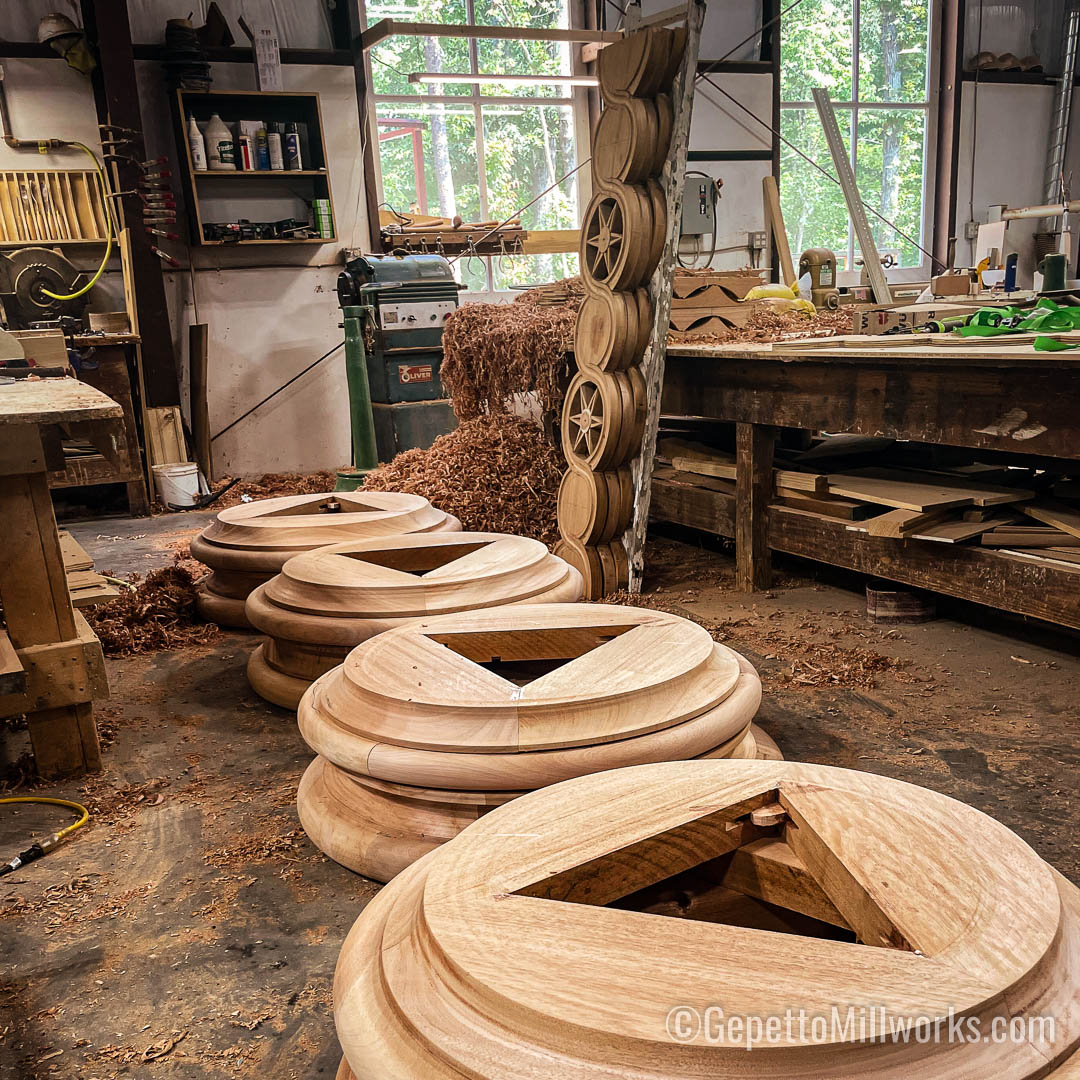
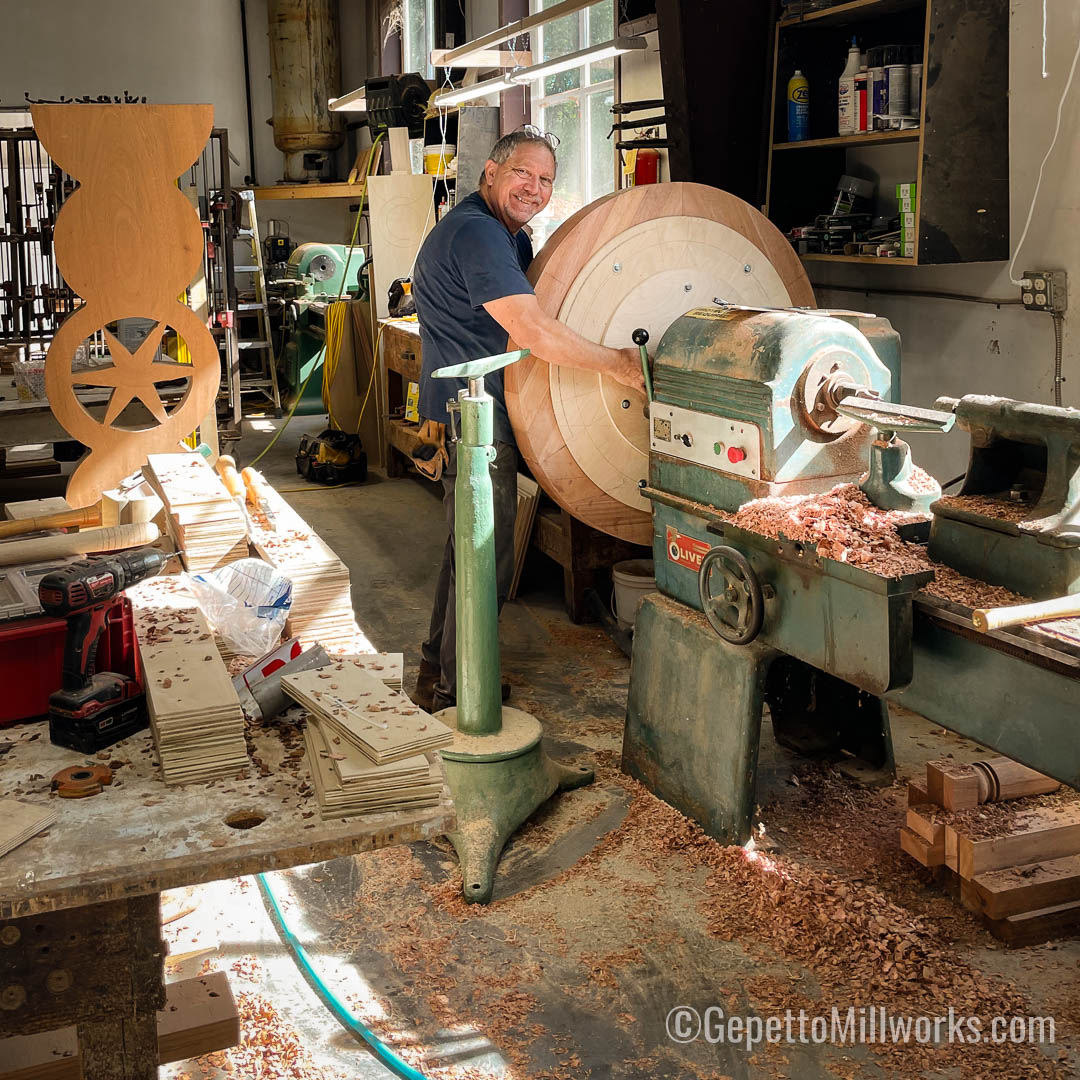
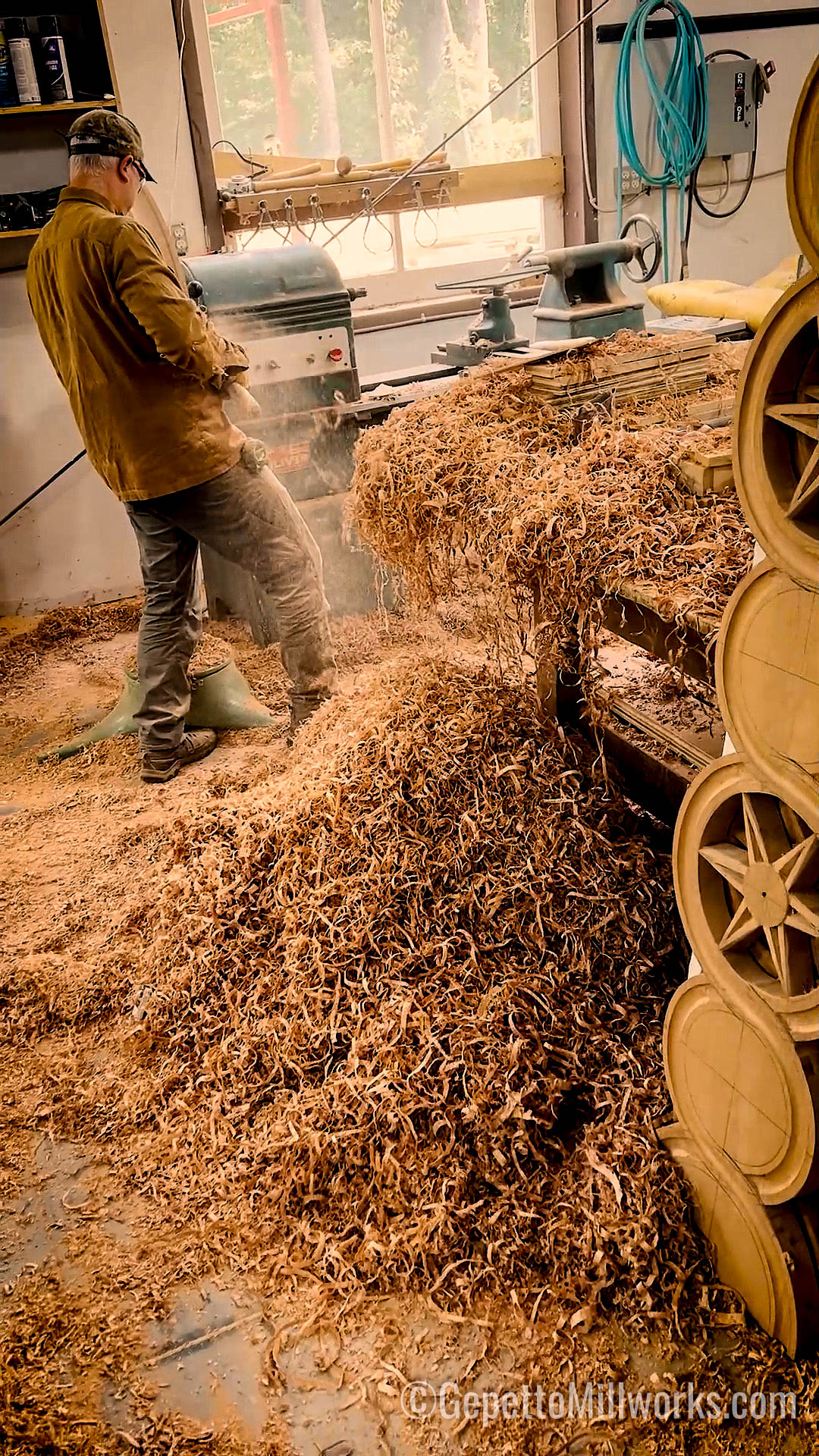
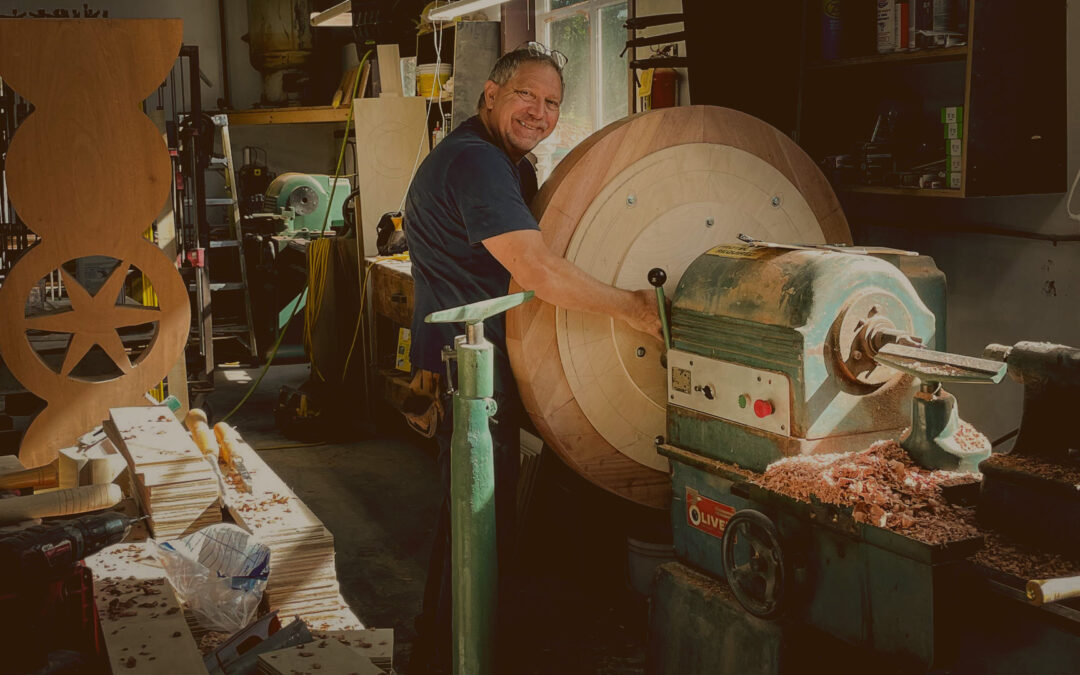
We hand turn solid wood round pieces for historic restoration projects.  That means that we pickup the damaged or worn parts to recreate them in our Charlottesville VA shop.

k

CUSTOM

REPAIR

HAND
MADE

CALL MATT

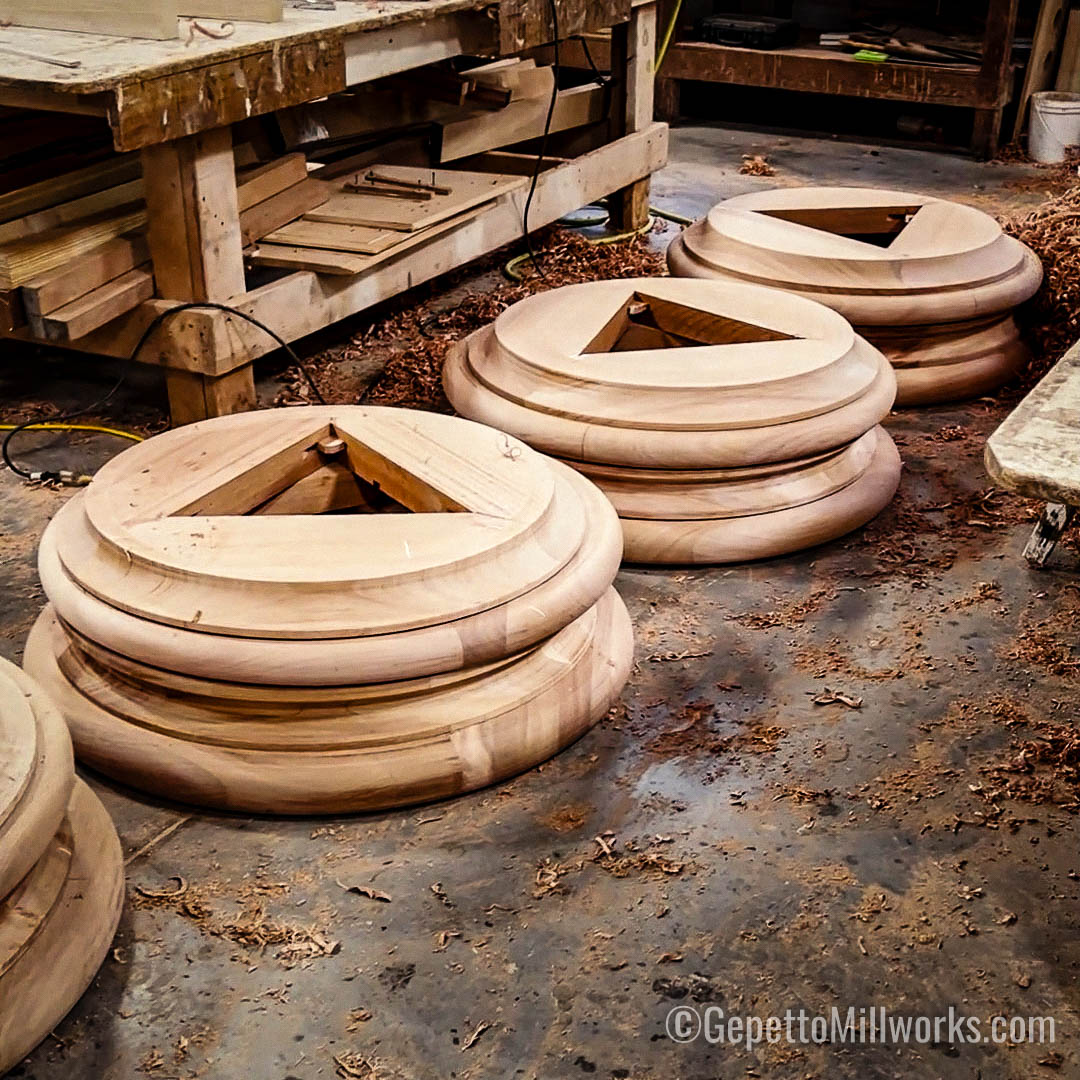
If you are searching for unique pieces for historic restoration building – call Matthew to discuss your needs!  We can build whatever you need, from whatever time period you are restoring.  These hand carved or turned pieces are being delivered to New Kent Virginia 


804.938.2094

solid wood round historic hand turning services

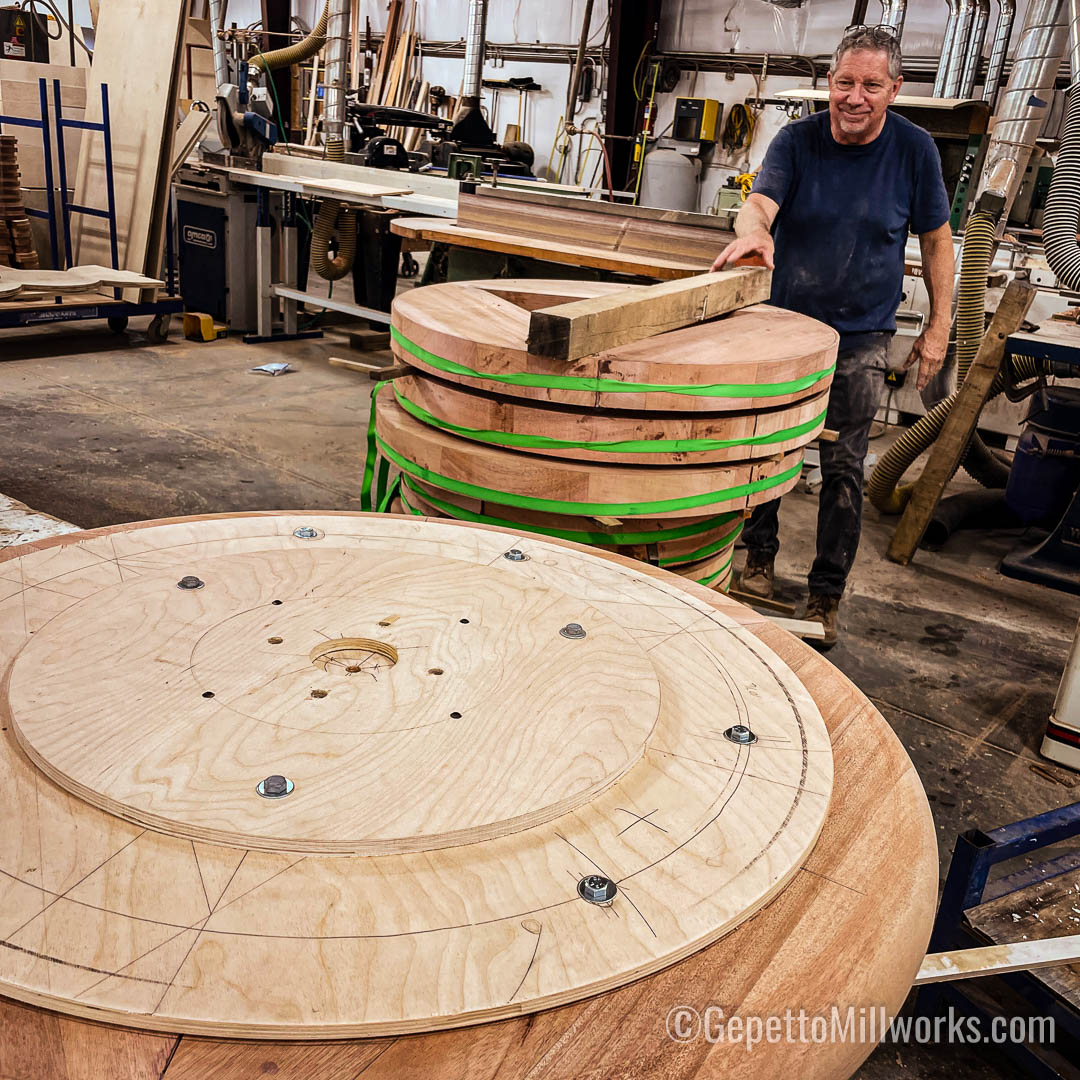
Handmade wood turnings made to order by Virginia craftsmen.  Whatever your project calls for we will make it to your specifications.  First step will be getting ‘shop drawings’ done, completely accurate architectural drawings.  From there we just need time!

Watch Them Turn Solid Wood

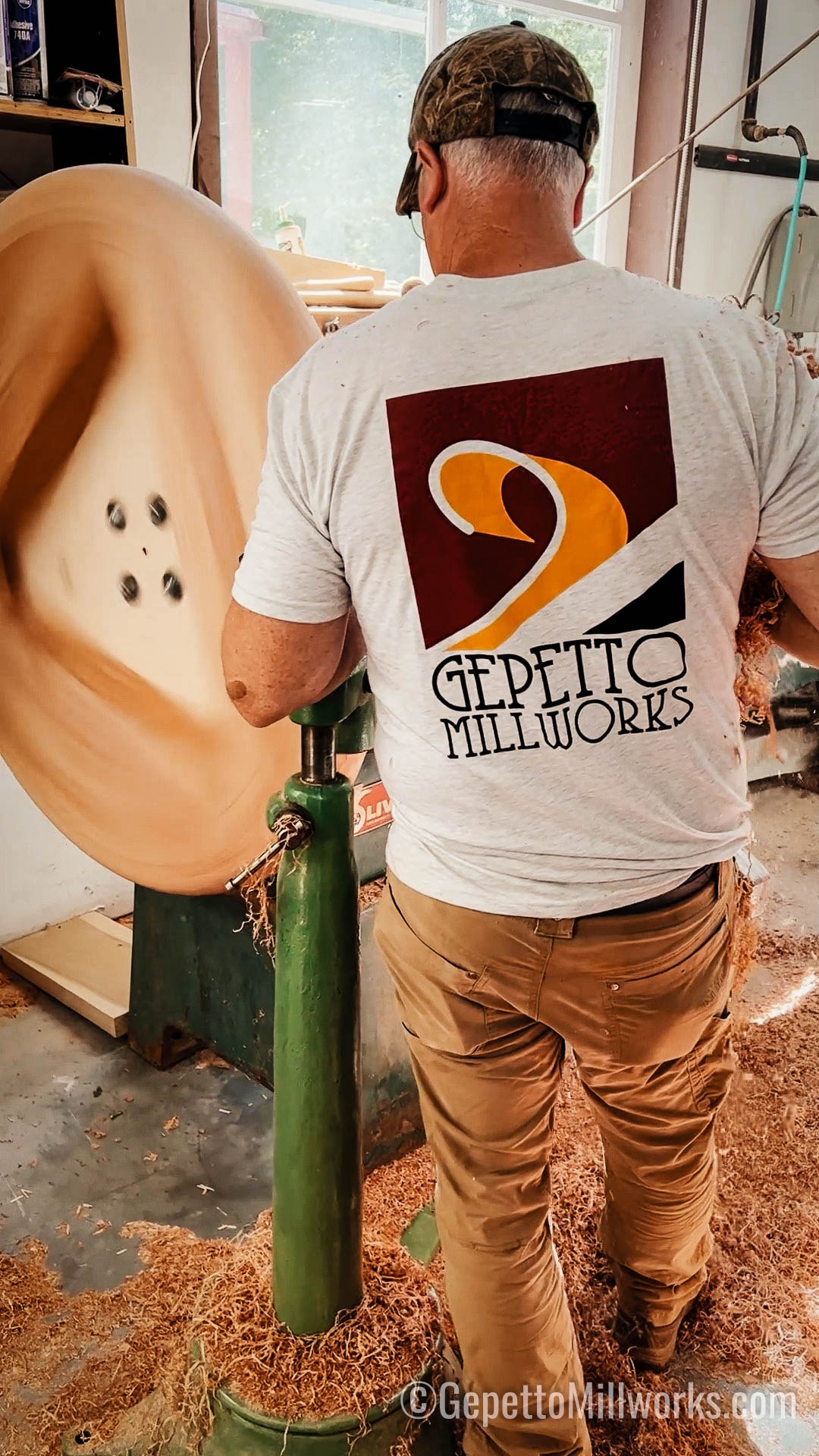
@gepetto.millworks Matt is making #handturned column bases from solid mahogany today in the shop - if you don’t think that you can find the parts and pieces for your #historicrenovation ♬ original sound - Gepettomillworks

GEPETTO CRAFTSMEN MAKE

Shop Magic

Hand Turned Solid Wood Column Base for Historic Restoration

A Legacy in Woodworking

At the heart of the historic restoration narrative lies Gepetto Millworks, a revered name in the woodworking realm, known for its unrivaled dedication to traditional craftsmanship. Situated in the woodlands of Virginia, Gepetto Millworks boasts a legacy spanning three generations, breathing life into the art of woodturning and historic restoration. Starting with Robert Wiley, now retired, Matt Wiley was trained by the demands of rural western Virginia farm life. Pragmatic attention to planning and time management crucial for farm life made Matt ready to manage a Millwork Shop. Robert’s 40 years of carpentry experience passed on to Matt a wide understanding of the building trades, common problems and historic solutions not readily available on Google or Youtube. Starting in 2022 now the 3rd generation began their apprenticeship under Matt with the understanding that fine wine takes time to mature! Gepetto now operates the shop facility from a nearly hidden hollow of 100 acres of farmland in the historic hills around Charlottesville VA.

The Art of Turning Solid Wood Pieces

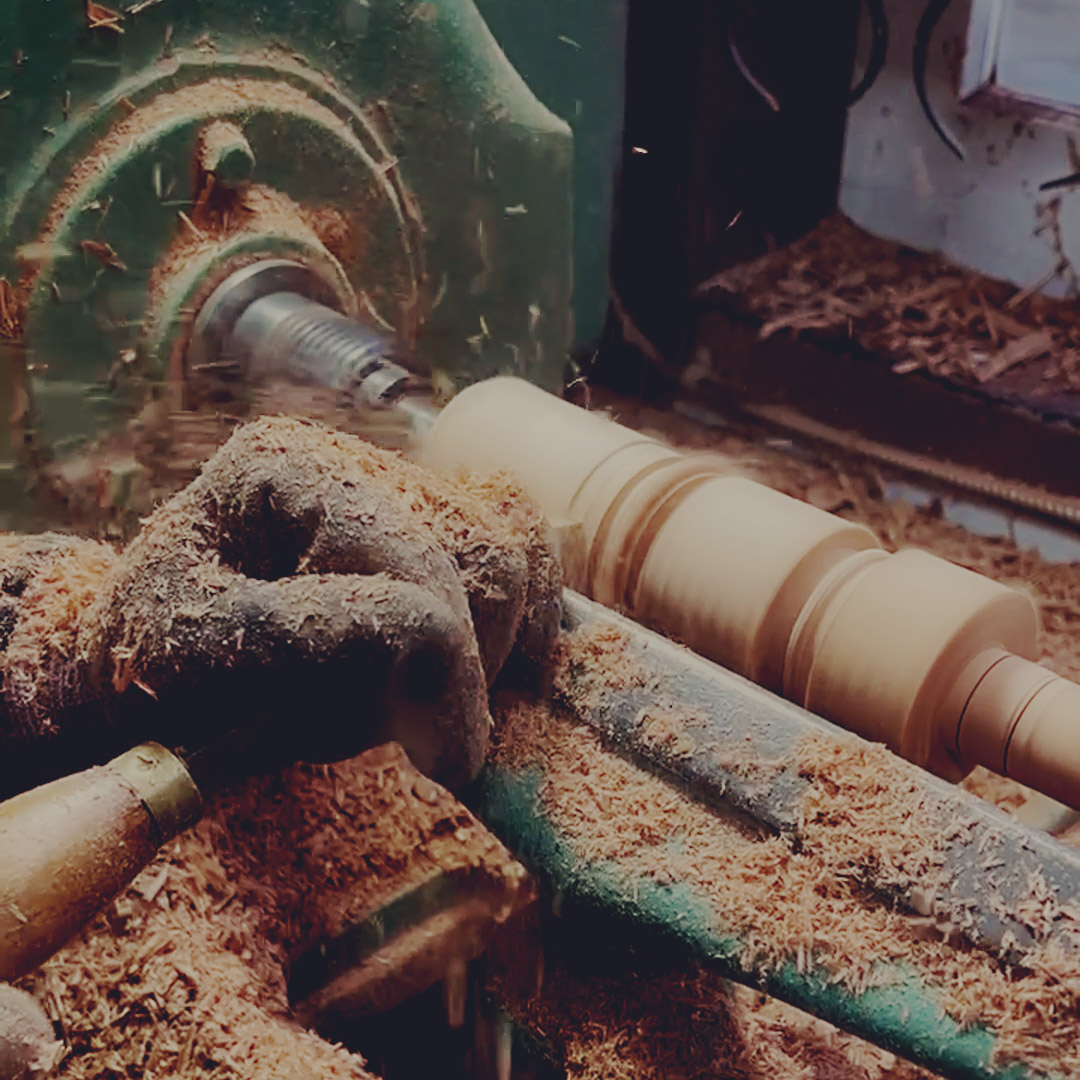
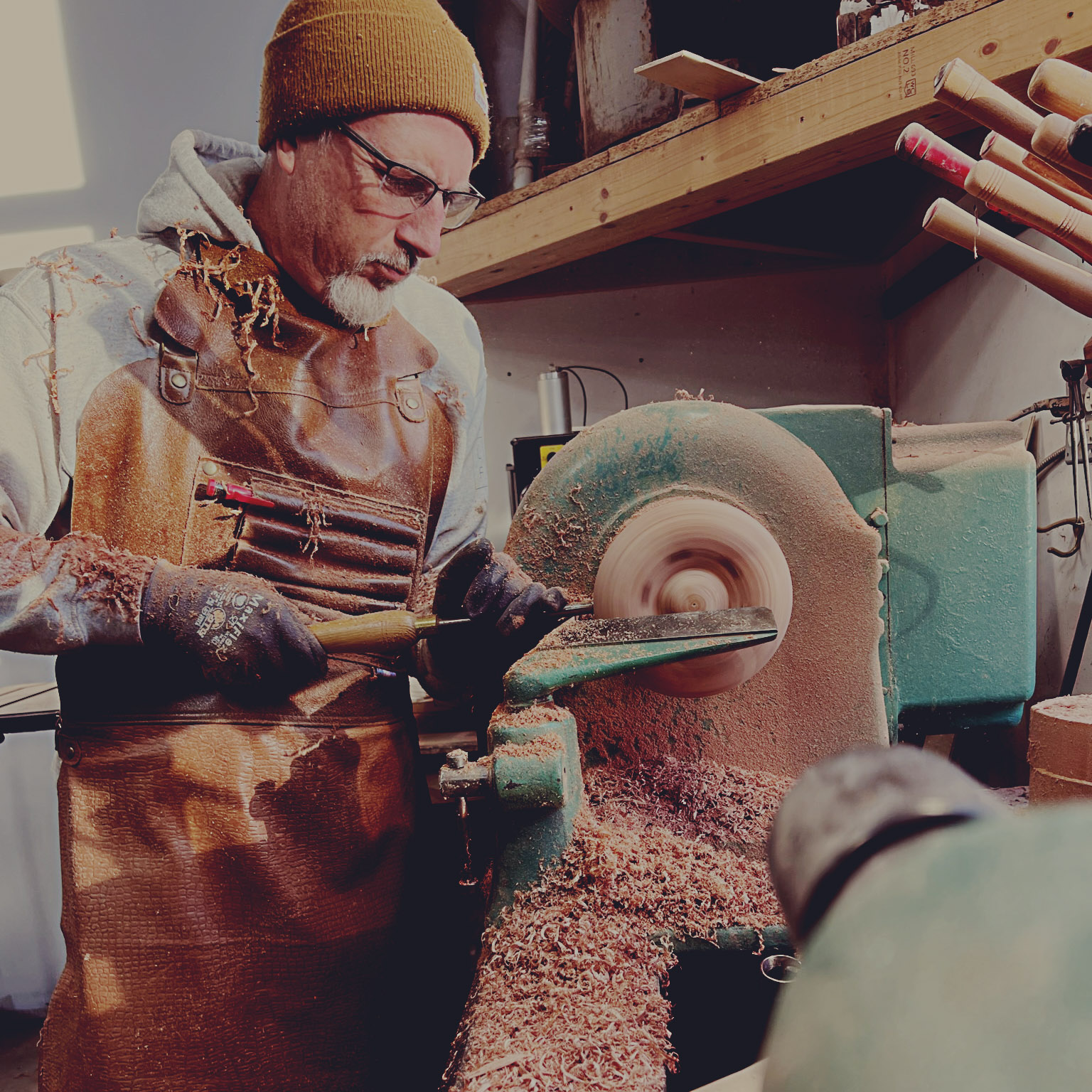
The process of turning solid wood pieces is a harmonious blend of skill, precision, and patience. This age-old technique involves placing a wood blank on a lathe and shaping it using various cutting tools while it spins. For historic restoration, this technique offers the ability to recreate ornate profiles and subtle curves that were the hallmarks of architectural decoration in a bygone era where time & labor were less costly. Gepetto runs a very small staff of highly experienced craftsmen, so that projects are completed in a timely manner – and the trade skills and secrets are maintained. If you are seeking a unique piece – don’t worry, we’ve heard of it – and can recreate it accurately!

Column Bases: Echoes of Elegance

Column bases are architectural features that have graced structures for centuries, each reflecting the design trends of their time. In historic restoration, crafting column bases involves not just replicating their appearance but also understanding the construction techniques and materials that were prevalent during the structure’s era. Gepetto Millworks’ mastery shines in meticulously recreating column bases, capturing the very essence of the original design while ensuring structural integrity. We can craft a base from a single piece of solid mahogany so that environmental stressors are less likely to damage the piece. Historic building methods often have pragmatic reasons for their implementation. While we are capable of making a plywood style layered composite, the effective durability of a solid slab of weather durable mahogany is higher than a manufactured material. Architectural millwork encompasses a vast array of components, from intricate cornices to elaborate friezes. In historic restoration, these elements are the pièce de résistance, embodying the grandeur and attention to detail that defined the architecture of yesteryears. The artisans at Gepetto Millworks approach architectural millwork with a profound respect for tradition, using age-old techniques to replicate every fine detail, ensuring an authentic restoration that stands the test of time.
Hand Turned Solid Wood Column Base for Historic Restoration

Turned Solid Wood Pieces

Historic restoration is a noble endeavor that bridges the gap between the past and the present, preserving the essence of bygone eras for generations to come. One of the essential elements in such restoration projects is the art of turning solid wood pieces. Gepetto craftsmen are some of the only professional supply options for general contractors, architects and restoration specialists looking to recreate solid wood pieces. Delve into the intricate world of historic restoration construction with us! That world where turned wood components like column bases, balustrades, and newels, meticulously handcrafted on the wood lathes of Gepetto Millworks in Virginia continue to be exemplary producers of timeless craftsmanship that lasts centuries.

The Essence of Historic Restoration

Historic restoration construction involves a delicate balance between honoring the architectural legacy of a structure and ensuring its continued viability for modern use. In this context, turned solid wood pieces play a pivotal role because so many general contractors are not aware of services like Gepetto provides. The general contractor of today does not have an army of skilled woodworkers supplying their job sites any longer as in the historic time periods we are task to restore. You can return to the essence of an era, preserving the stylistic intricacies that defined the architectural preferences of that past time period. These pieces when installed properly continue the irreplaceable charm of the historic building.

Column Bases: Echoes of Elegance

Column bases are architectural features that have graced structures for centuries, each reflecting the design trends of their time. In historic restoration, crafting column bases involves not just replicating their appearance but also understanding the construction techniques and materials that were prevalent during the structure’s era. Gepetto Millworks’ mastery shines in meticulously recreating column bases, capturing the very essence of the original design while ensuring structural integrity. We can craft a base from a single piece of solid mahogany so that environmental stressors are less likely to damage the piece. Historic building methods often have pragmatic reasons for their implementation. While we are capable of making a plywood style layered composite, the effective durability of a solid slab of weather durable mahogany is higher than a manufactured material. Architectural millwork encompasses a vast array of components, from intricate cornices to elaborate friezes. In historic restoration, these elements are the pièce de résistance, embodying the grandeur and attention to detail that defined the architecture of yesteryears. The artisans at Gepetto Millworks approach architectural millwork with a profound respect for tradition, using age-old techniques to replicate every fine detail, ensuring an authentic restoration that stands the test of time.

Balustrades and Newels: Stairways to History

Balustrades and newels are often the visual centerpiece of historic buildings centered around the staircase. Adorning staircases with intricate designs that were once the high style elegance in that era. In the meticulous restoration of these components, Gepetto Millworks’ woodturning expertise comes to the fore. Every spindle, rail, and newel is handcrafted with the utmost care, ensuring that the soul of the original design is captured and the handmade nuances remain. What sets Gepetto Millworks apart is not just its remarkable craftsmanship, but its commitment to historical accuracy. The artisans delve deep into architectural records, scrutinizing historical documents and photographs to unravel the design elements of anything lost to the past. This dedication extends to sourcing the right wood species, using traditional joinery methods, and applying authentic finishes, ensuring that each turned wood piece is a faithful representation of its era.

Preservation Through Education

The legacy of historic restoration lives on through education. Gepetto Millworks recognizes the importance of passing on the torch of craftsmanship to the next generation. The woodworking workshops and apprenticeships offered by the millworks provide budding artisans with the opportunity to learn the nuances of turning solid wood pieces, perpetuating a tradition that might otherwise fade away. In the realm of historic restoration construction, turned solid wood pieces embody the essence of eras long past. Gepetto Millworks, nestled in the heart of Virginia, breathes life into this legacy, crafting column bases, architectural millwork, balustrades, and newels that stand as testaments to the artistry of yore. As we gaze upon these masterpieces, we are reminded that the past is not merely history; it is a living, breathing entity that continues to enrich our present and inspire our future.

Contact Gepetto for Bid Information

Timeline

Choosing the Right General Contractor for a Historic Renovation or Fix-and-Flip in Richmond, Virginia

Richmond, Virginia, is a city steeped in history, with neighborhoods that showcase architectural styles from the late 18th century through the early 20th century. For homeowners, real estate investors, and architects, this makes Richmond a prime location for historic...

arched and elliptical window builder Virginia

arched and elliptical window builder Virginia

Bowed Windows Made in Virginia

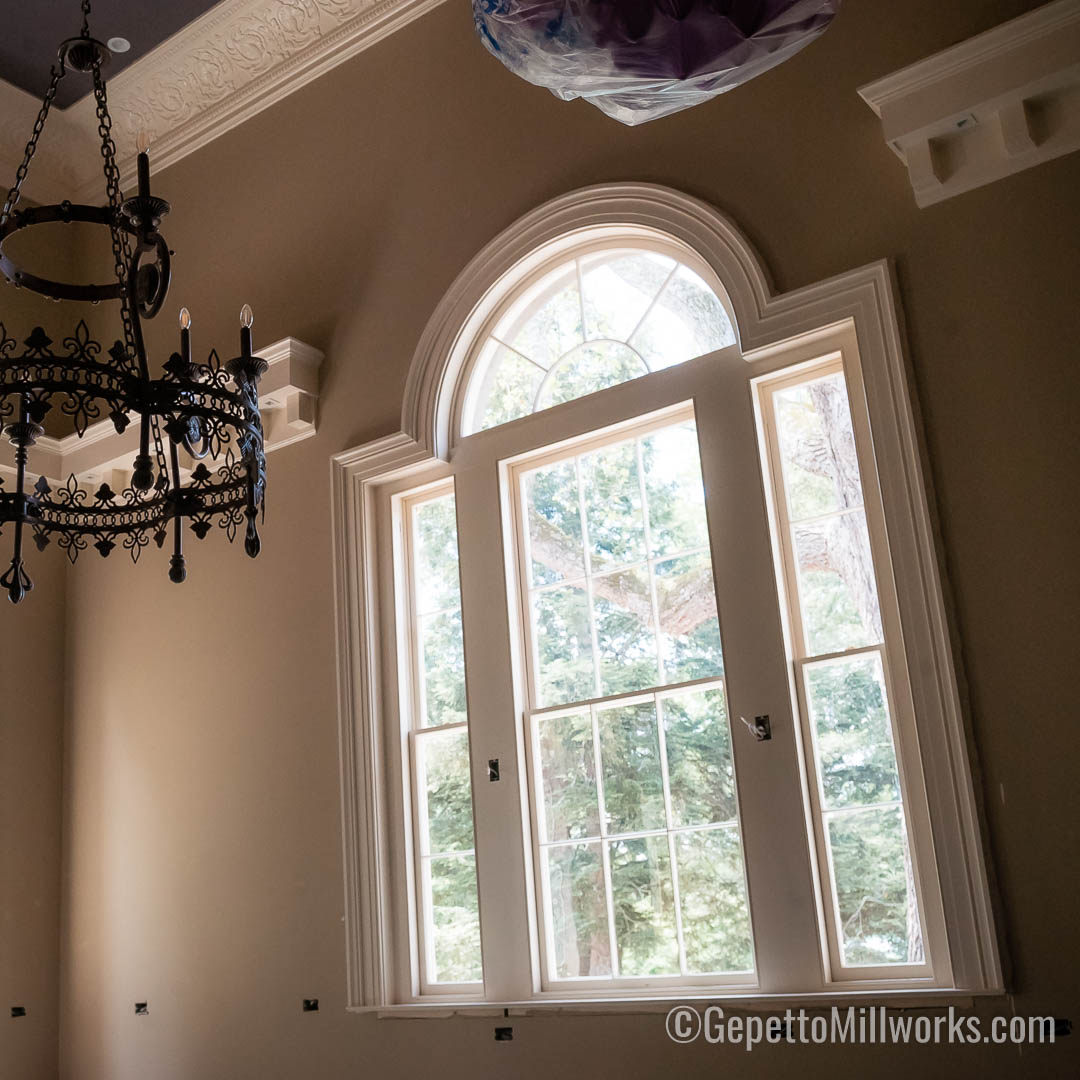
Round, Arc, Gothic Arch, and Bowed Windows Handcrafted in Virginia: When it comes to bespoke architectural woodwork, Gepetto Millworks stands at the pinnacle of craftsmanship in Virginia. Specializing in historically accurate, handcrafted windows, our artisans are...

Church Hill Richmond Virginia Historic Millwork and Restoration Wood Supplier

Church Hill in Richmond, Virginia, Richmond's first neighborhood, is a historic district boasting antebellum homes and architectural styles like Greek Revival, Federal, Queen Anne, and Italianate, known for its cobblestone streets and gas streetlampThe Church Hill...

Arch, Round Top, and Radius Window Builder

Arch, Round Top, and Radius Window Builder

Round & Arc Top Windows

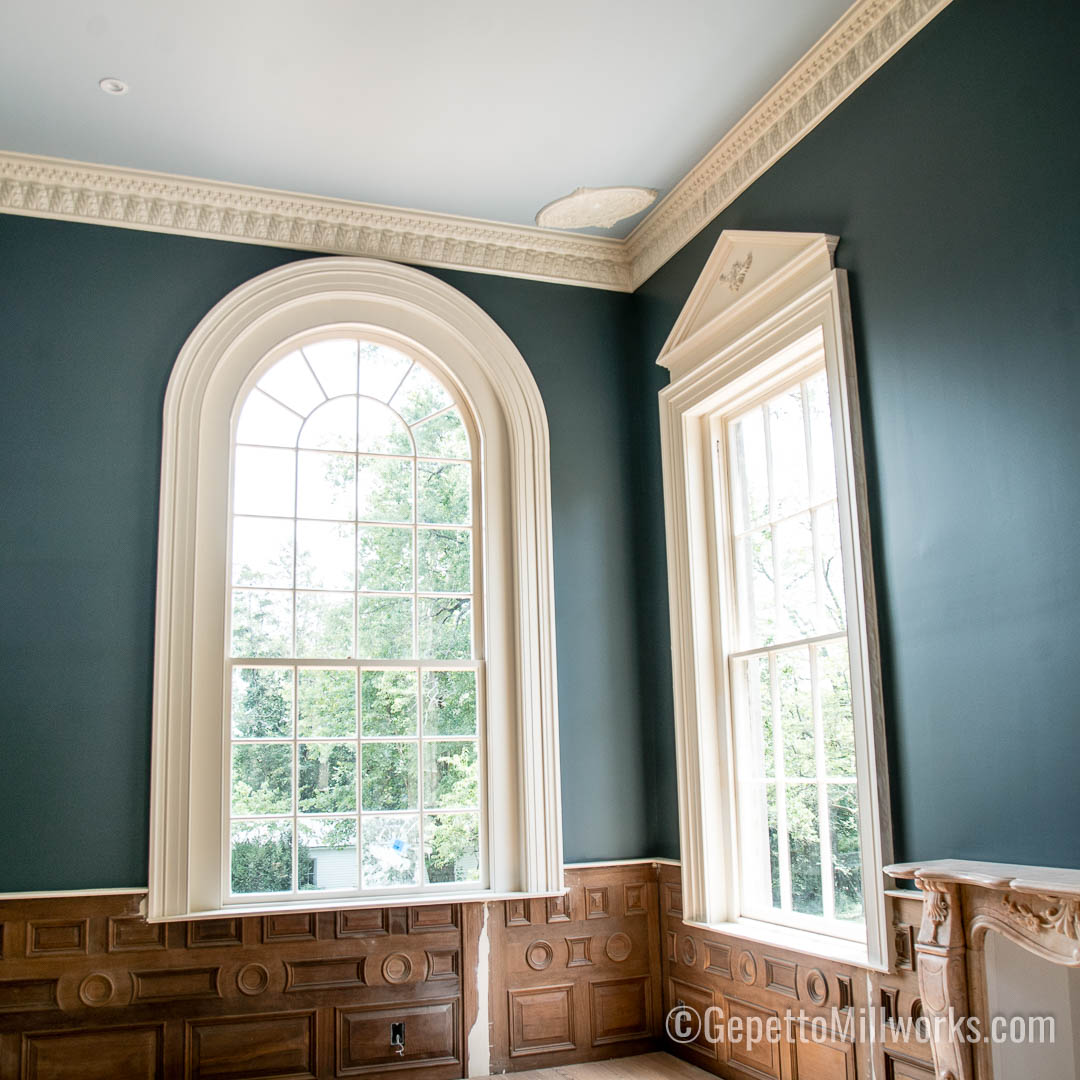
Arch & Round Top Radius Wooden Windows Custom Built to Order or Restored in Virginia by local craftsmen with historically accurate methods

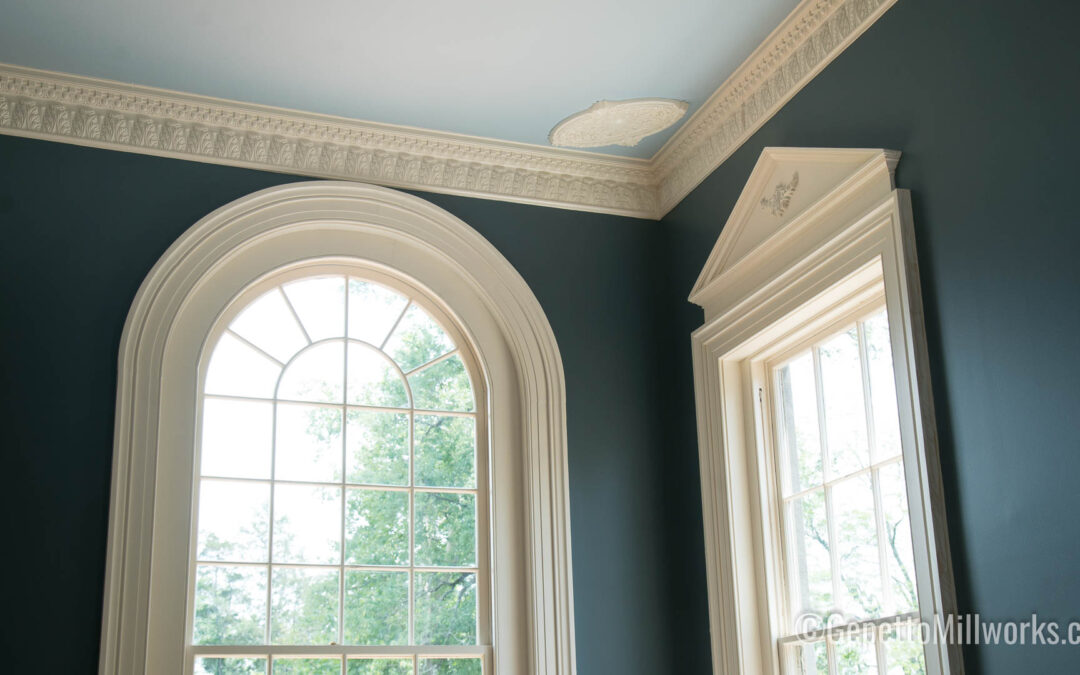
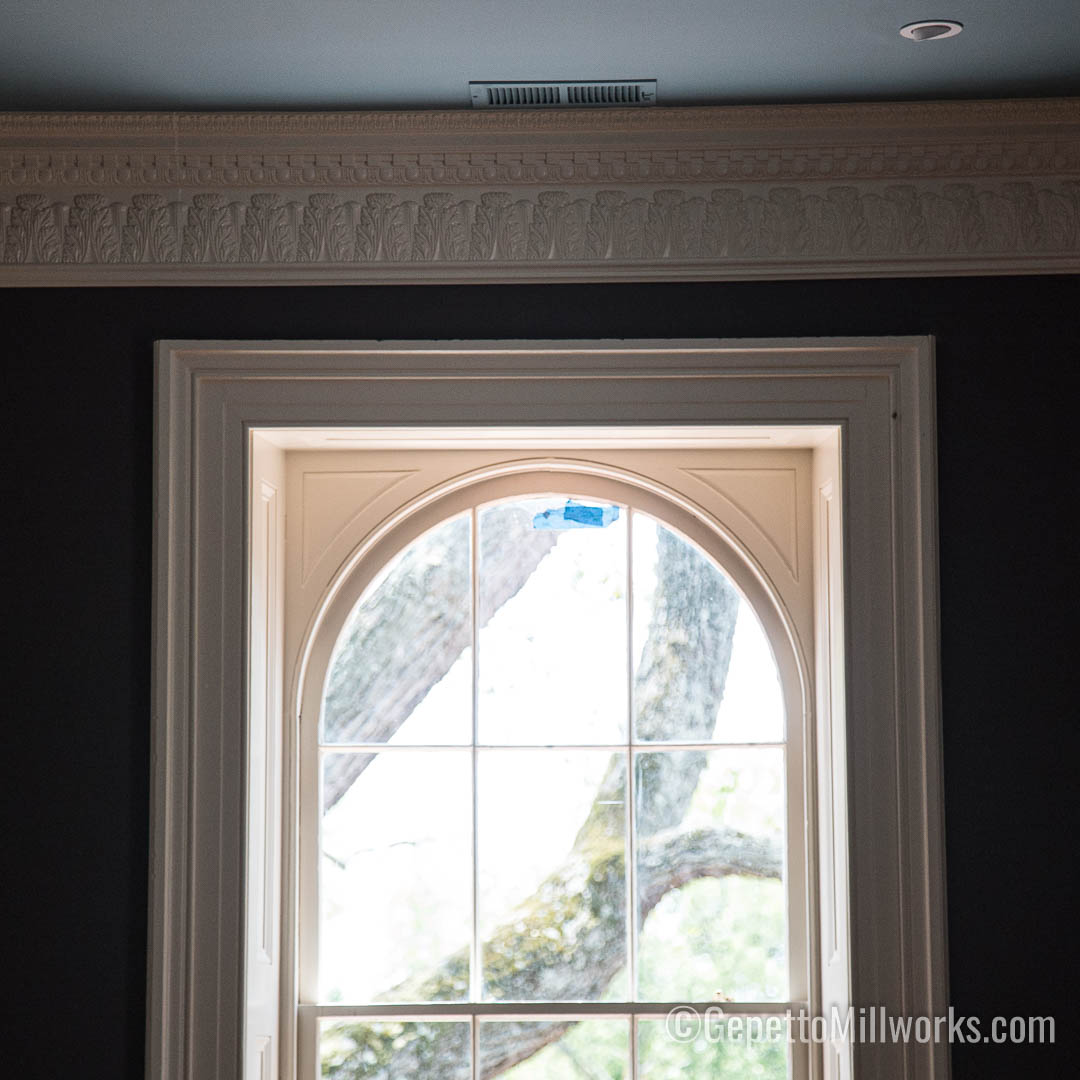
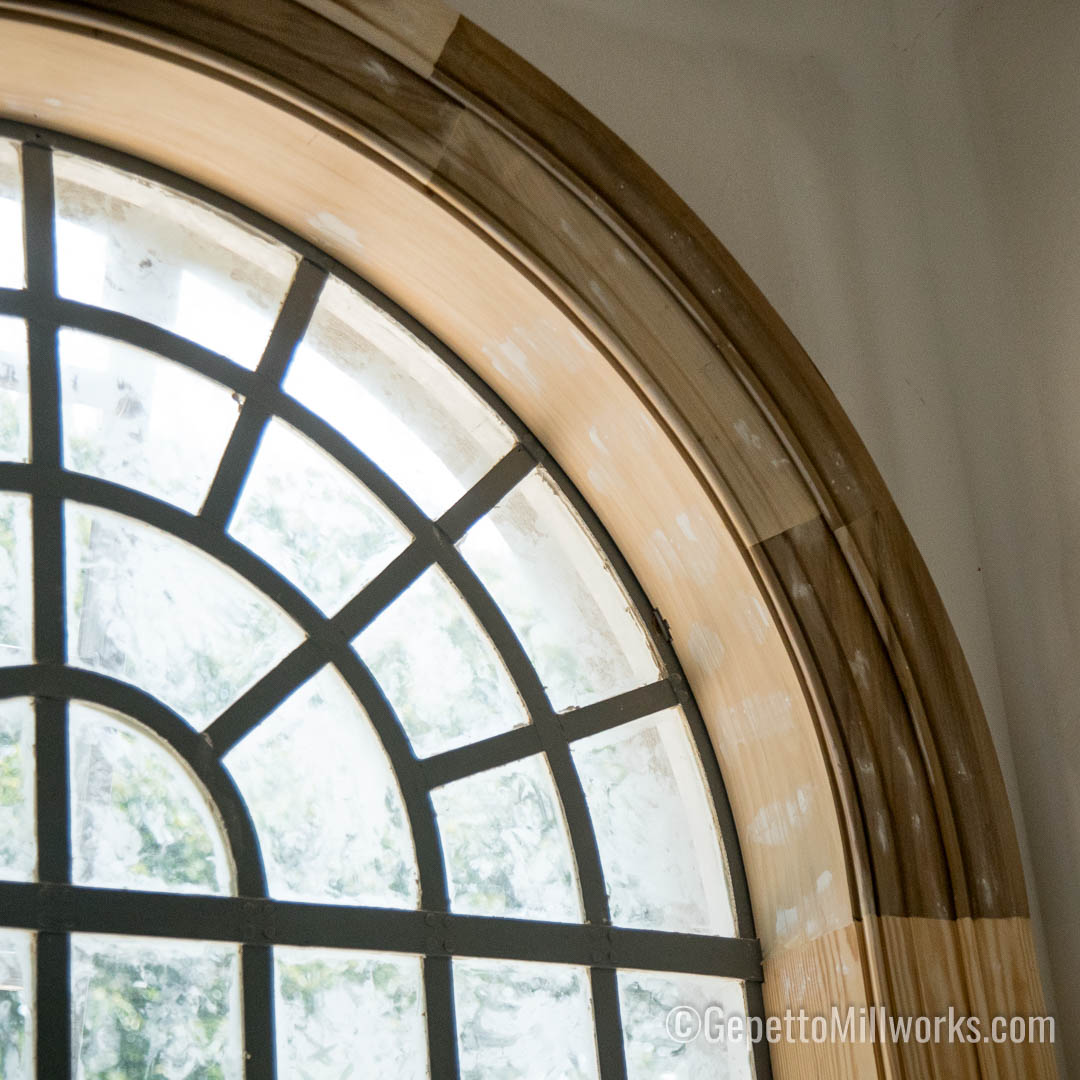
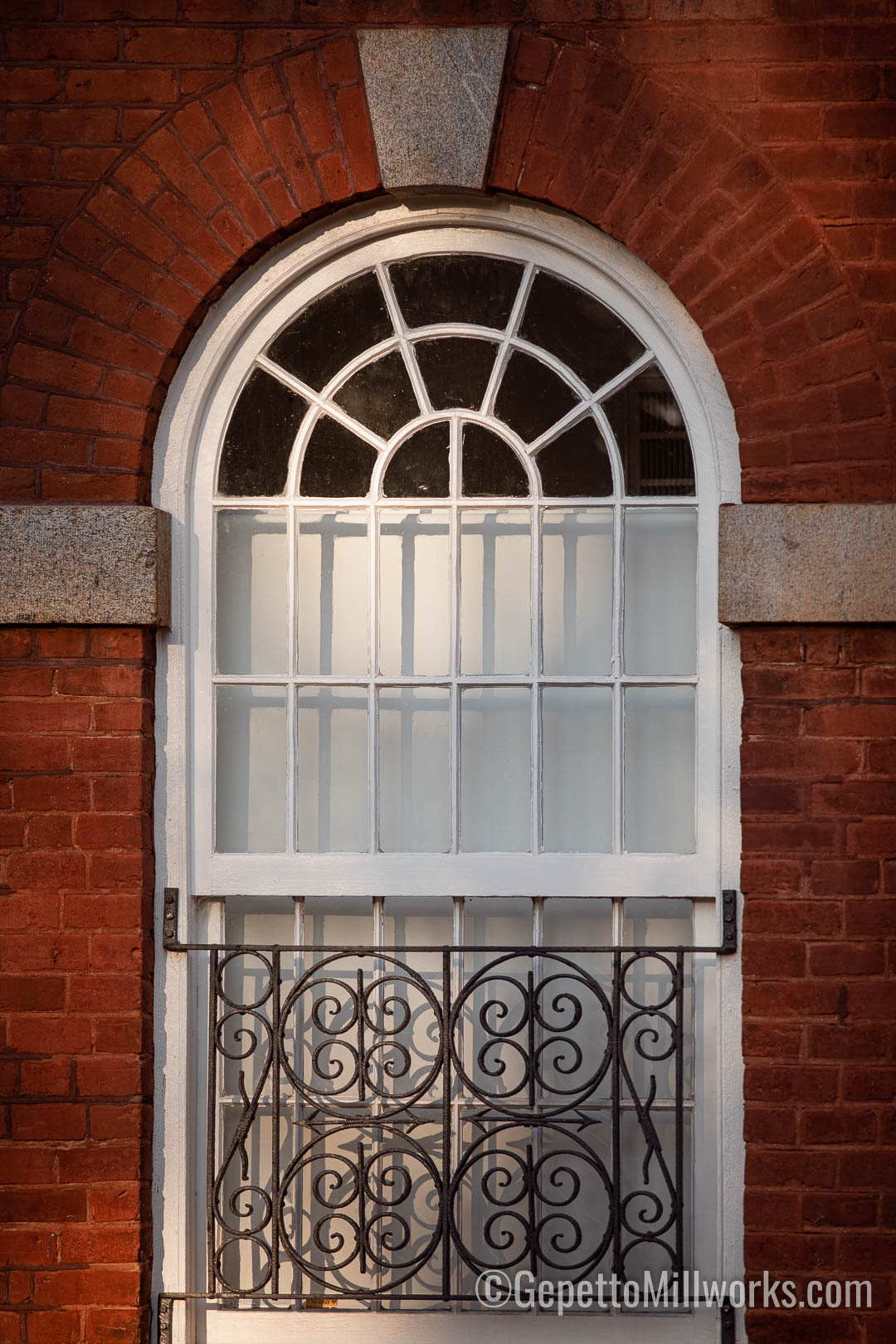
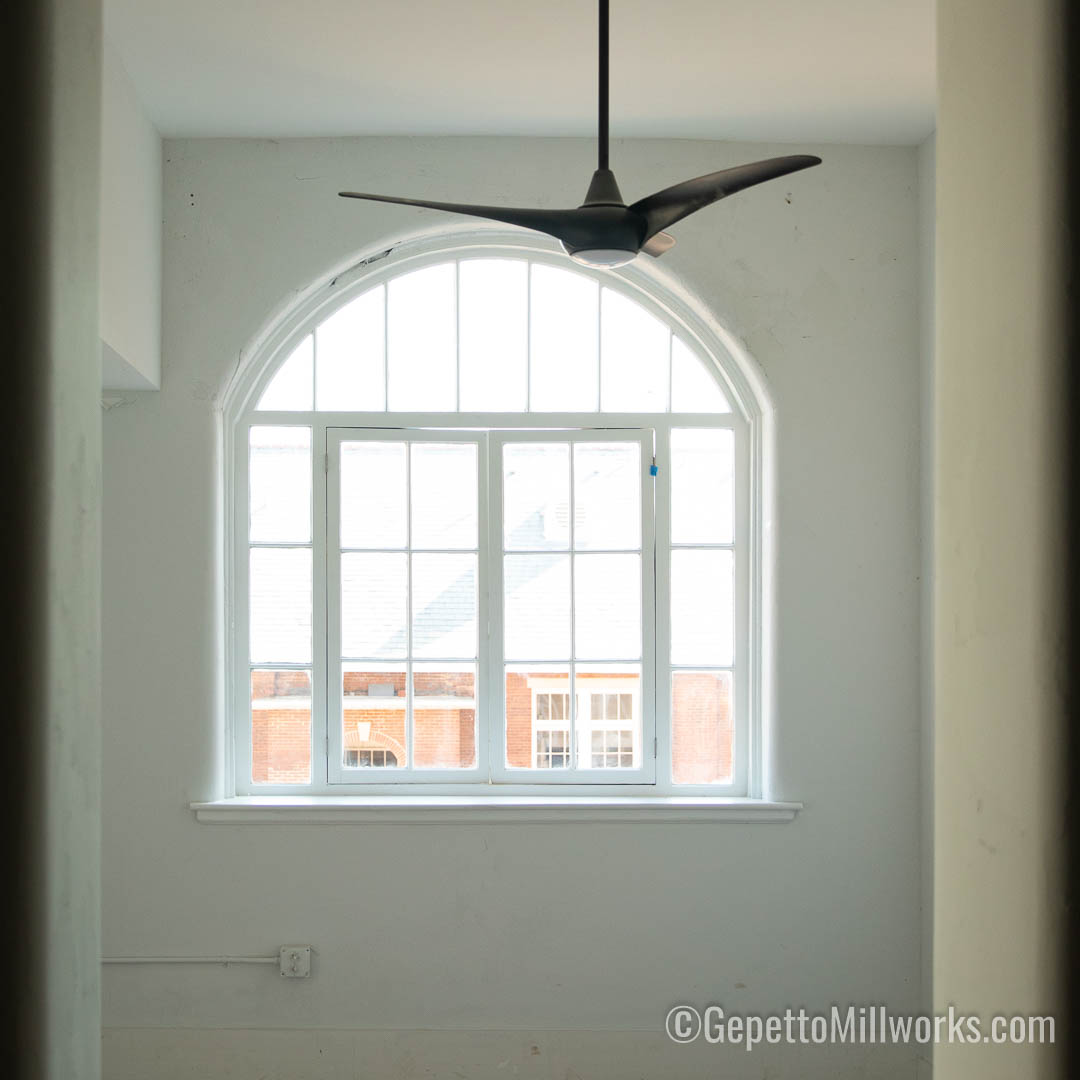
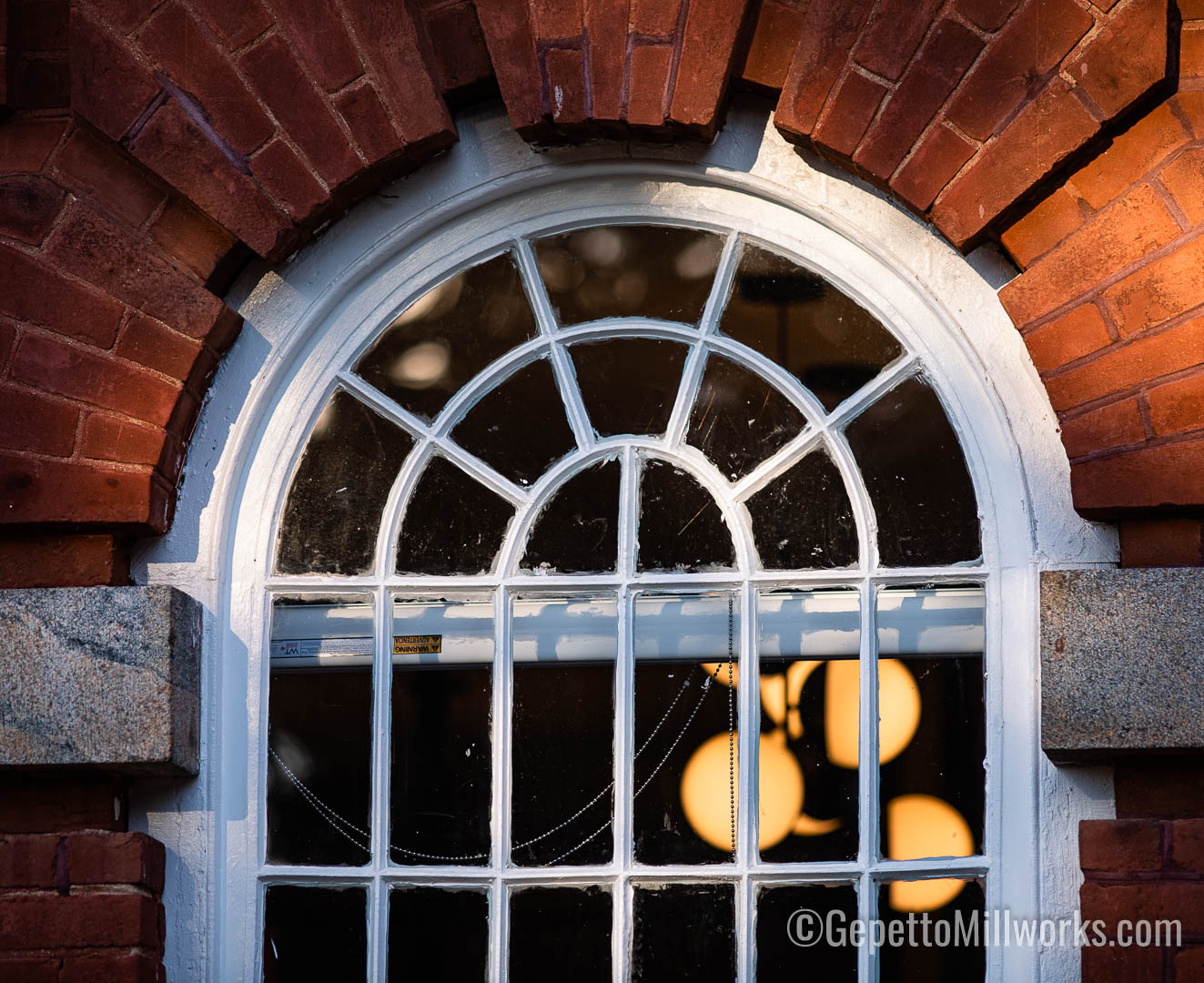
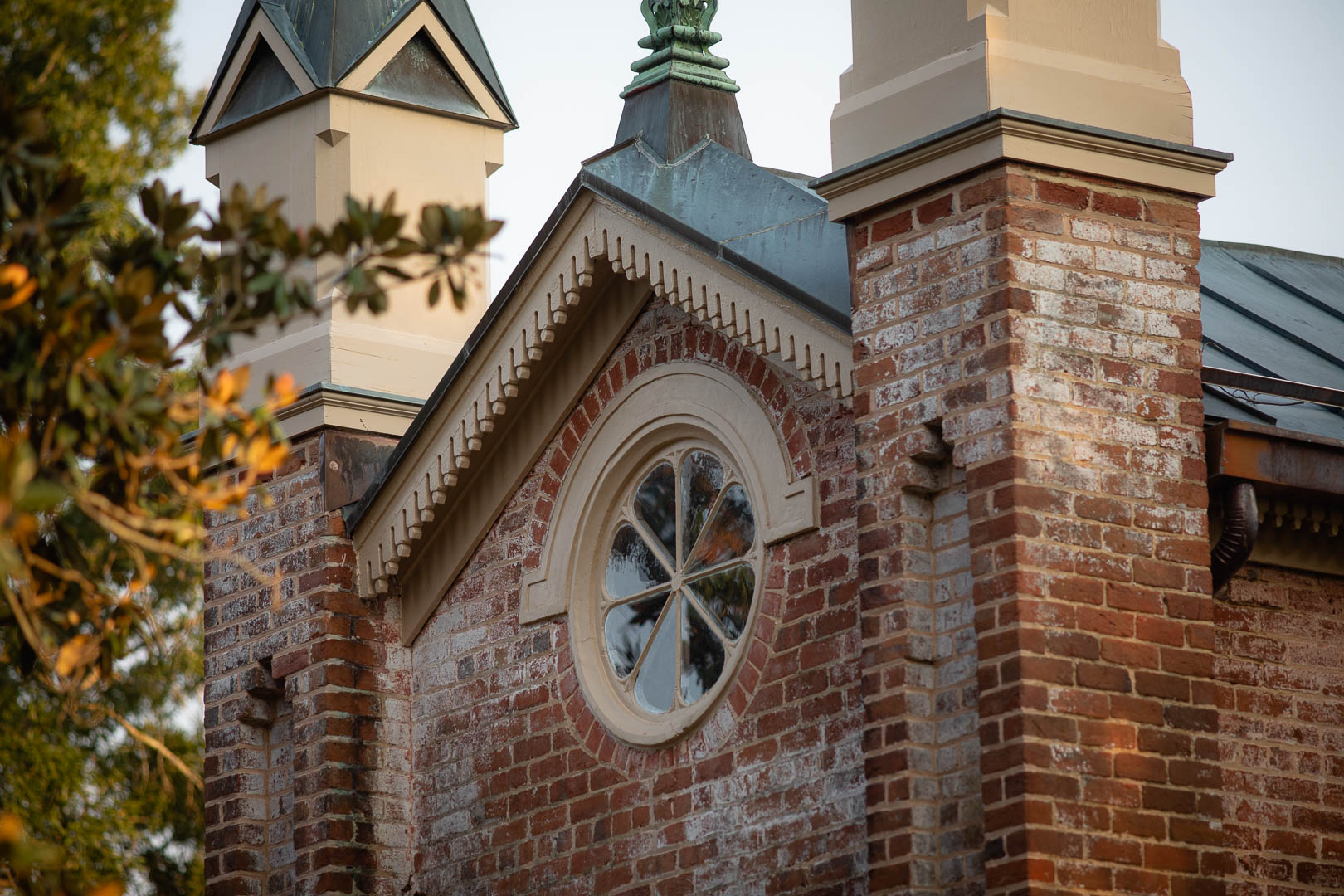
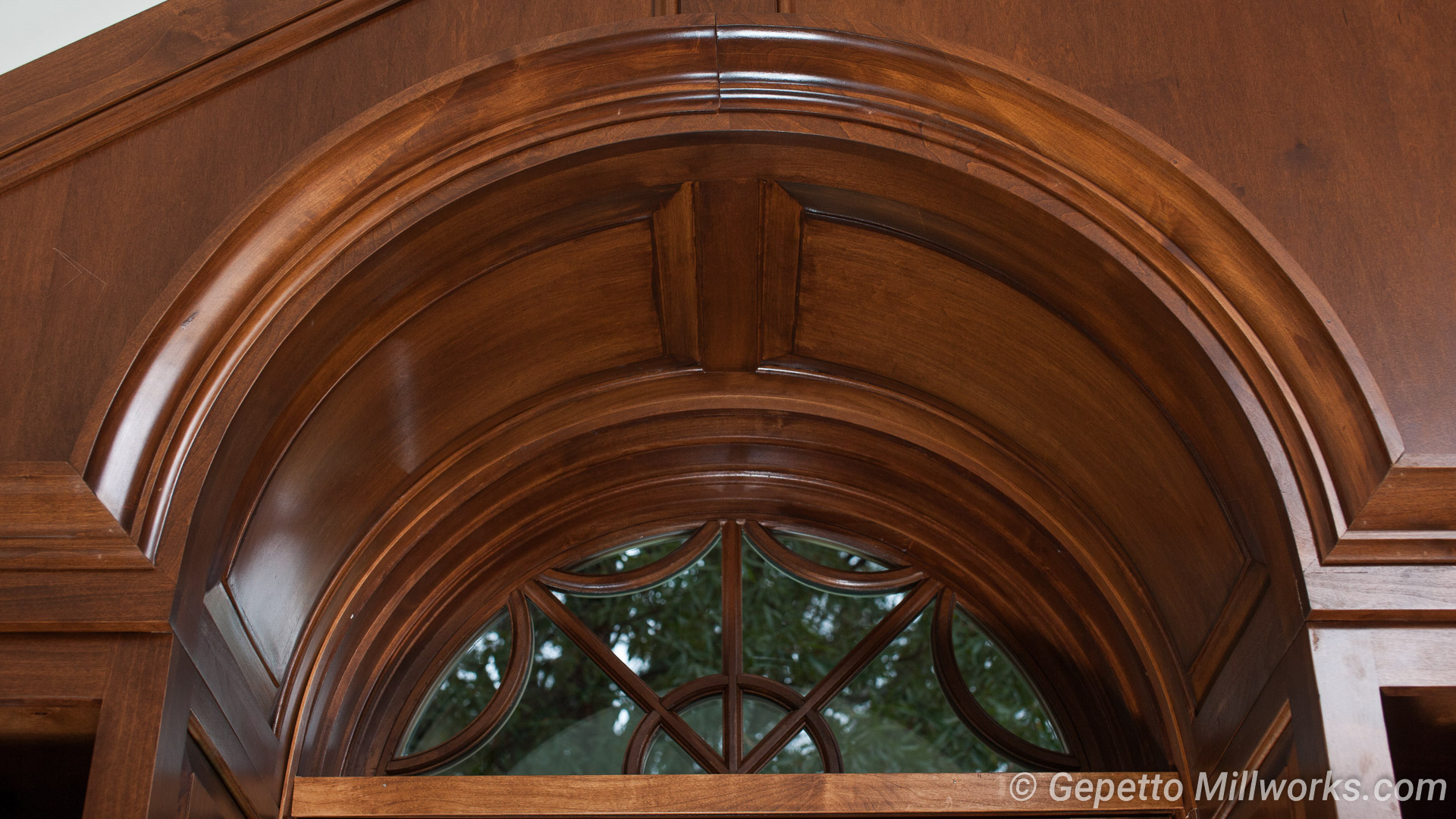
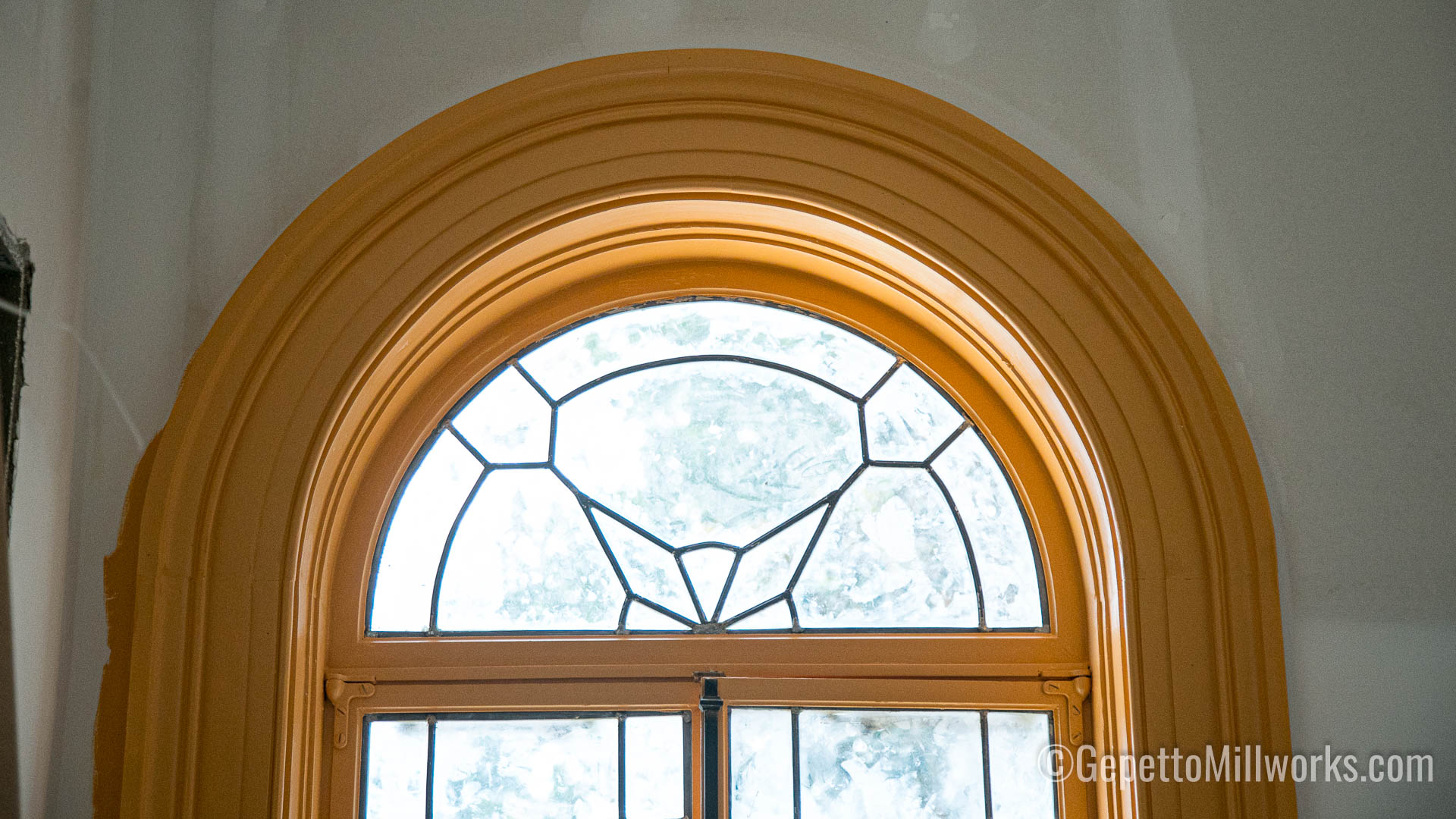
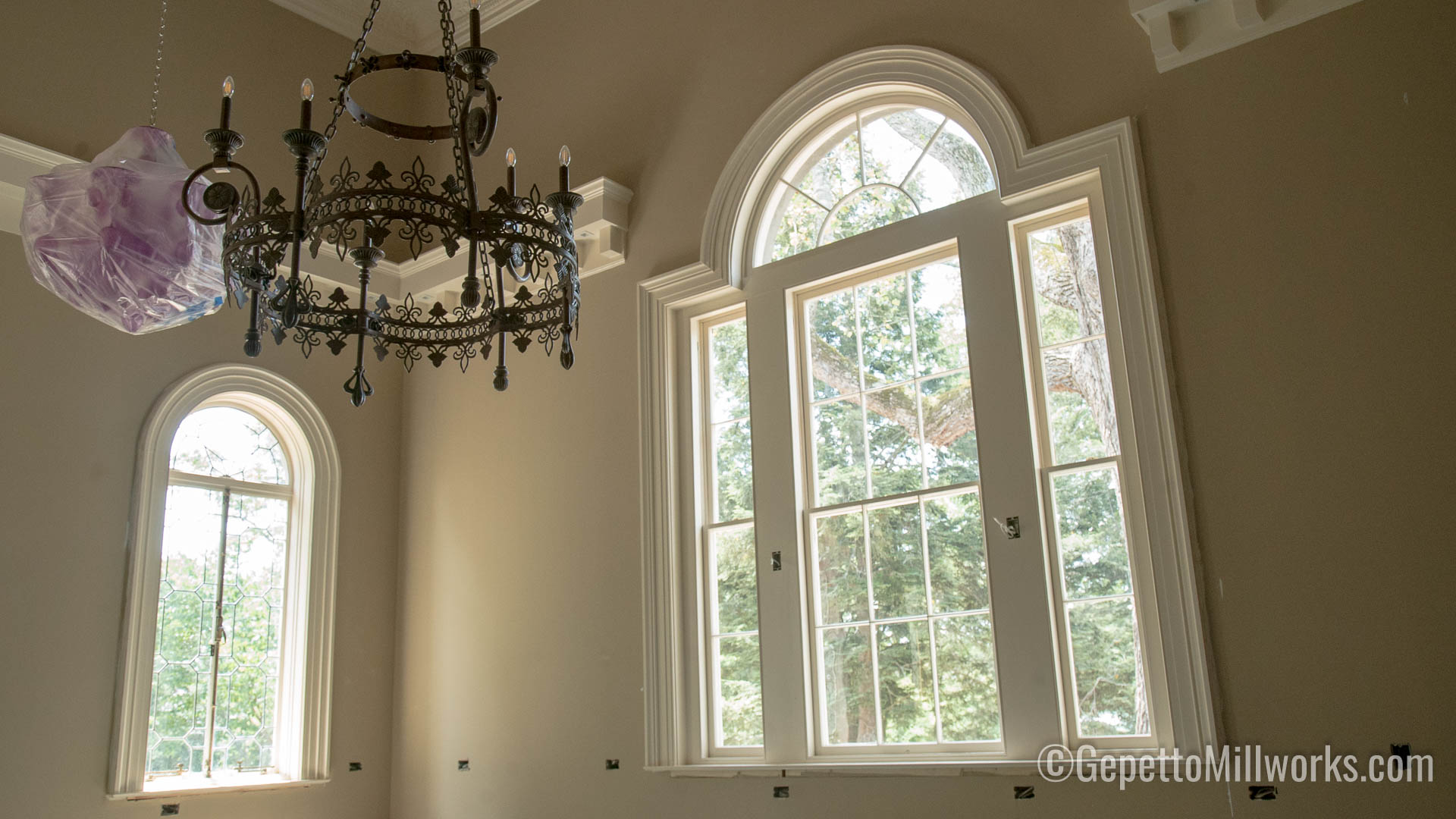
Gepetto craftsmen have been restoring windows with half-round lights above the window or full arc keystone panes (pictured in next photo) for over 15 years.  Restoration of water rot or damaged sashes, or completely new solid wood replication to fit your historic Virginia home or church.  Gepetto uses a mixture of modern shop tools and hand assembly to speed the building process.  Historic homes of the 18th and 19th century relied heavily on the natural light from windows as remember it was either candles or oil lamps for light after the sun had hit the horizon.

Made with Love in the Blue Ridge Gepetto Craftsmen supply plantation house, row house, and all manner of 18th and 19th centrury historic replica windows.  Specifically hard to find are craftsmen skilled and trained to replicate or repair uniquely shaped round windows or upper window panes of various arc lengths.


Rounded Top Replica Historic Windows

Arch & Round Top Radius Wooden Windows Custom Built

If you are a homeowner who needs window service, it’s best to bring in a local contractor because Gepetto acually supplies local contractors.  If your local contrator or handyman seems shy to work with your historic wooden windows, have them give Matthew a call and we’ll be glad to assure them of the skills or techniques they would need to have the hardware fabricated at our millwork shop, and installed by them locally.  Our craftsmen are generally millwrights and while they can install windows, it’s simply not time efficient for us as most general contractors can do a good job.

Arch & Radius Arc Wooden Window Builder

Arch & Round Top Radius Wooden Windows Custom Built

Historically Accurate Round Windows

Arch & Round Top Radius Wooden Windows Custom Built to Order or Restored in Virginia by local craftsmen with historically accurate methods

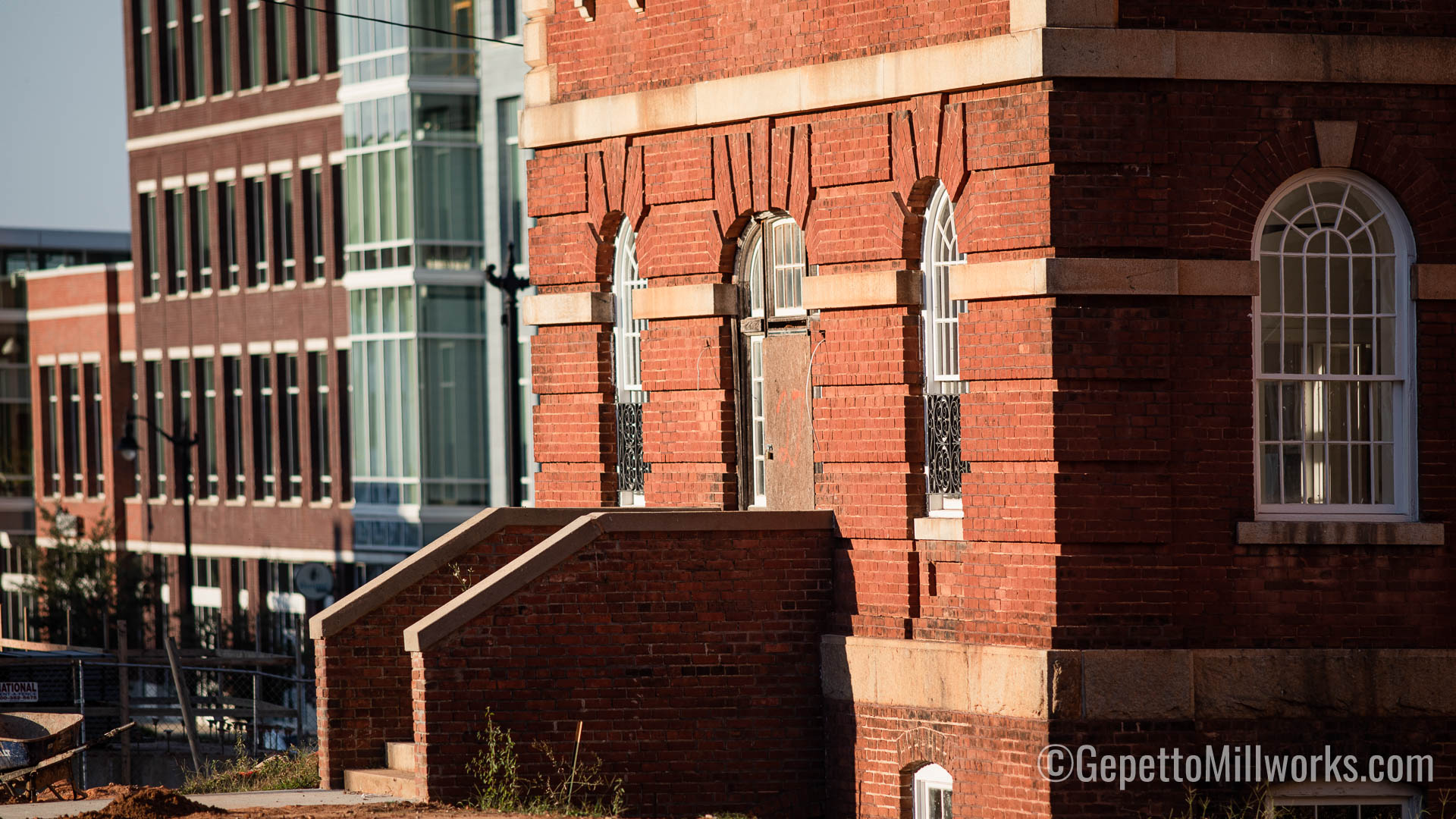
Arc top classic southern historic window builder supplying replacement windows from our Virginia shop.  Built by hand to historic standards and matching solid wood mortise and tennon construction of the original windows.  Whether it’s a specific wood rot, that just needs some restoration we can replace anthing from a section to the whole window.  Bring in a single sash to our shop in the blue ridge and we’ll gladly restore it by hand.  We have also handled large scale commercial restorations supplying as many as 900 sashes (450 windows and frames) to a single building historic restoration.

Arch & Round Top Radius Wooden Windows Custom Built to Order or Restored in Virginia by local craftsmen with historically accurate methods
Historic Church Restoration Wooden Doors & Decorative Elements
Arch & Round Top Radius Wooden Windows Custom Built to Order or Restored in Virginia by local craftsmen with historically accurate methods
Arch & Round Top Radius Wooden Windows Custom Built
Arch & Round Top Radius Wooden Windows Custom Built to Order or Restored in Virginia by local craftsmen with historically accurate methods
Arch & Round Top Radius Wooden Windows Custom Built

Round Window Builder Virginia

Country Chic Interior Design for Fabrication

The country charm of the rolling blue ridge hills opens in to a delightfully designed 19th century farmhouse.  The reclaimed barnwood used for paneling has dated period newspaper adhered to the finish for an authentic dated feel.  Gepetto Craftsmen finished the kitchen counters with solid walnut counter tops, contrasting with bright white finish on the cabinetry.  Joining the small kitchen space to the dining room is a custom butcher block style countertop.  We crafted a solid wood live or raw edge dining table with three inch thick hardwood top.   Solid wood counter tops in the bathroom and other antique chic features unify the rooms throughout the house. Richmond Custom Kitchen Builder Services.

Reclaimed Barnwood for Wall Paneling

You’ll notice the wall paneling in many rooms was speckled with period newspapers which we found while cleaning out the walls.  To build the legend of the house, as well as period color to the walls we ripped and pasted sections into the old boards as we sealed them for final install.  The pant chips are authentic and the final patina a priceless touch that both unifies the rooms while adding unique details that are worth bending over to read.  If you are designing a country house look and feel contact us to discuss techniques to build the story, legend and look in your finished project.

We have brought the unique texture and feel of reclaimed wood installations to office space construction, creative restaurant building, hospitality spaces in hotels, and rustic bar fabrication.  If you have a barn on your property you would like to convert it to furnishings for your kitchen cabinets, tables, wall coverings or any other design elements for your new construction drop us a note to start your project.

Virginia Wood Window Restoration

The history of America beats from the heart of VA, particularly during the pre-Colonial period. Jamestown Virginia was founded in 1607 and was credited as the first permanent English settlement in North America while Henricus was even earlier, but was moved due to flooding.  The surrenders ending both the American Revolution (Yorktown) and the Civil War (Appomattox) occurred in Virginia. The state is called the “Mother of Presidents” because eight U.S. presidents were born there.  The colony nearly failed until tobacco emerged as a profitable export. It was grown on plantations, using primarily indentured servants for the intensive hand labor involved.  The Virginia Colony became the wealthiest and most populated British colony in North America, with an elected General Assembly. The colony was dominated by rich planters who were also in control of the established Anglican Church. Baptist and Methodist preachers brought the Great Awakening, welcoming black members and leading to many evangelical and racially integrated churches. Virginia planters had a major role in gaining independence and in the development of democratic-republican ideals of the United States. They were important in the Declaration of Independence, writing the Constitutional Convention (and preserving protection for the slave trade), and establishing the Bill of Rights. The state of Kentucky separated from Virginia in 1792. [source: WikiPedia]

Wooden Window Restoration VA

Is our specialty because there are so many rich layers of history that can be preserved in architecture.  Gepetto builds to order or repairs existing window frames, casings and sashes so that you can receive historic tax credits for your renovation or building budget.

https://gepettomillworks.com/virginia-wood-window-restoration

Historic Virginia Wood Window Restoration Project

https://gepettomillworks.com/virginia-wood-window-restoration

Charlottesville Virginia Wooden Window Historic Restoration