
Preserve and repair original wood windows whenever feasible. If replacement is required, commission built-to-order windows that match the original design, material and profiles, and document the work for a Certificate of Appropriateness (COA) and tax-credit eligibility. Start by photographing the condition, then contact Winchester Planning, then ask a qualified millwork shop such as ours for an assessment.
TL;DR:
- Drafts often come from worn sash cords, weights, or weatherstripping, so tune hardware and add storm windows before considering removal.
- Replace only when decay cannot be stabilized or function cannot be restored; specify matching wood, dimensions, pane layout, muntin profiles, and operating style.
- Contact Winchester Planning before exterior work, since maintenance may not need a COA but replacements typically require approval and can affect tax incentives.
- Project costs depend on window count, wood damage, profile complexity, glazing, and installation; larger projects can spread setup and tooling costs across more openings.
- Before hiring a specialist, ask for historic project references, matched profile drawings or mockups, COA coordination experience, insurance, and clear warranty terms.
Table of Contents
- Why preservation comes first for historic windows
- What a full historic window restoration includes
- When replacement is justified and how to specify built-to-order windows
- Permits, COAs and tax credits in Winchester
- Timeline and cost drivers for restoration versus custom fabrication
- How to choose a restoration specialist
- Our perspective on restoring and fabricating historic windows
- Start your Winchester window project with us
- FAQ
- Sources
Why preservation comes first for historic windows
Preservation guidance rests on a simple premise: the original fabric is the asset. Preservation Brief 9 recommends retaining and repairing original wooden windows whenever possible, and the Secretary of the Interior’s Standards for Rehabilitation, which govern most historic tax incentives, follow the same logic. Replacement is the exception that must be justified, not the default.
Winchester applies that principle locally. Properties in the city’s designated historic districts must comply with architectural standards, and the planning department requires documentation to justify replacing a severely deteriorated feature. Several points shape most decisions:
- Original old-growth wood, joinery and glass often outlast modern substitutes when they are maintained.
- Drafts usually trace to worn cords, weights and weatherstripping, not to the window itself.
- Storm windows and weatherization can close most of the efficiency gap without removing a single sash.
That last point deserves emphasis. Our own energy efficiency resources explain how interior or exterior storm units, tuned hardware and new weatherstripping preserve the historic fabric while improving comfort. A repair-first plan also tends to cost less than the alternative, as a repair specialist in another market explains.
What a full historic window restoration includes
A proper restoration is a sequence of deliberate steps, not a quick caulking job. Preservation Brief 9 documents the common tasks, and we follow the same order on our own projects.
- Assess and document. We photograph each opening, measure it and record the paint layers, so the scope and the COA paperwork rest on facts.
- Strip paint and putty. Failed coatings come off the sash and frame so we can see the true condition of the wood.
- Remove the sash and inspect the balance. We check cords, pulleys and weights, then rebalance the system so the window moves smoothly.
- Repair the wood. Sound wood is consolidated, and decayed sections are spliced or replaced with matching profiles. Muntins that cannot be saved are duplicated at the mill.
- Reglaze. Glass is reset in fresh glazing compound, retaining original panes wherever they survive.
- Weatherstrip and reinstall. New weatherstripping goes in and the sash is returned to a tuned frame.
- Finish and protect. Priming and repainting seal the wood, and storm windows are added if the owner wants them.
Some work happens on site: glazing, weatherstripping and minor repairs. Rot in a sill, a failed joint or a lost muntin pattern calls for removing the sash and working at the bench.
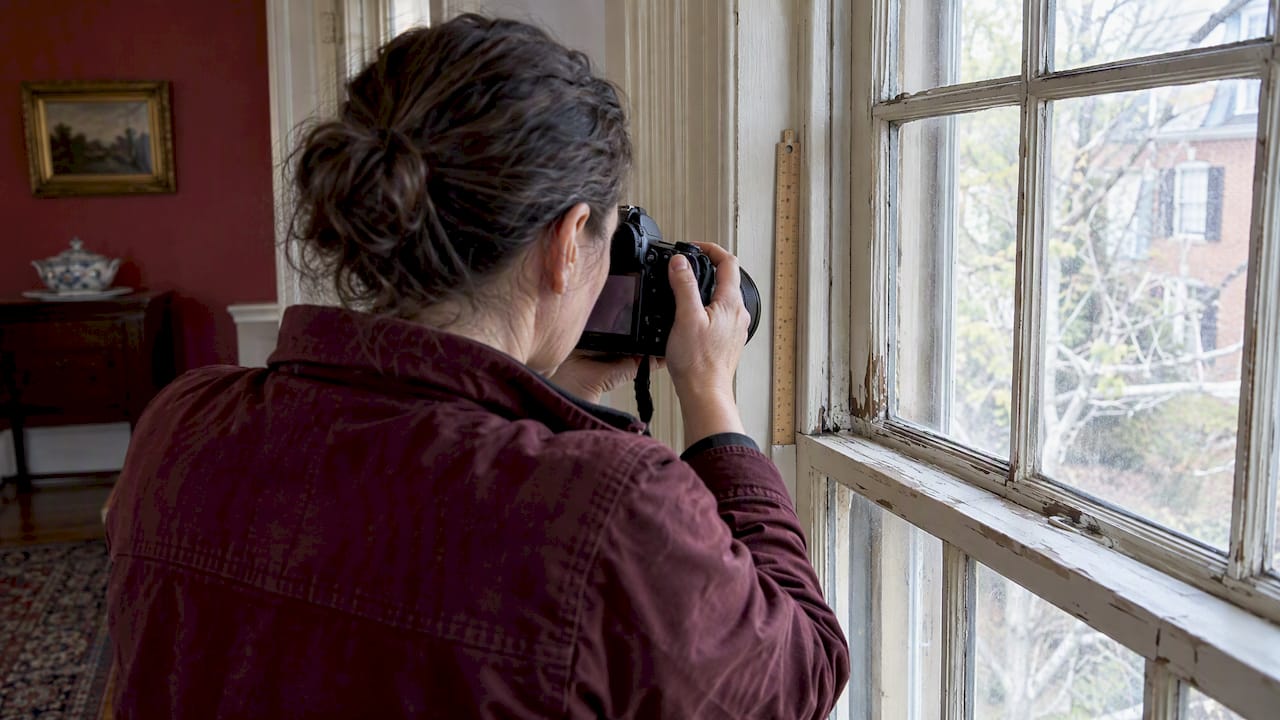
Pro Tip: Photograph every window before anyone touches it, with a ruler in frame for scale. Those images double as COA documentation and as the reference for any shop drawings.
When replacement is justified and how to specify built-to-order windows
Replacement is justified when a component cannot be stabilized, or when function cannot be restored despite competent repair. Even then, the new unit has to read as the old one. The NPS maintenance guidance for Isle Royale says replacement windows should match the original material, dimensions and pane configuration, and notes that manufacturers can custom-size units to duplicate originals when instructed.
A sound specification covers these points:
- Material: the same wood species or a close equivalent, not vinyl or fiberglass.
- Dimensions and sightlines: rail and stile widths, sash thickness and frame depth that match the original, so the facade keeps its rhythm.
- Pane configuration and muntin profiles: the same lights and the same muntin shape, ideally with true divided lights.
- Operation: the original style, such as double-hung with counterweights, rather than a tilt-in substitute.
Reproduction comes in degrees. An exact custom reproduction duplicates every profile and joint. A reasonable facsimile matches the visible character but simplifies hidden construction. Aluminum-clad wood trades a lower maintenance burden for different exterior profiles and finishes, which reviewers may question on a contributing building. Our wooden windows are built to order from drawn profiles, so the specification starts with your window, not a catalog.
Permits, COAs and tax credits in Winchester
Before any exterior window work, confirm what approval you need. Winchester’s planning guidelines clarify district designations and administrative COA options, and they advise contacting the Planning Department to determine required approvals. Routine maintenance that does not change form or materials may not need a COA, but replacements typically involve permits.
- Confirm first. Call or visit Planning with your address and a short description of the work.
- Know the two paths. Some projects qualify for administrative approval, while others go before the Board of Architectural Review. General design guideline procedures describe both pathways and the documentation they involve.
- Bring documentation. Expect to submit photographs, measurements, and drawings or mock-ups of replacement units.
- Never skip approval. In the Historic District, working without a required COA can jeopardize tax abatements and create legal problems.
The city also posts real estate tax exemption and credit materials, including an application for rehabilitated historic property. Those incentives generally depend on following the Secretary of the Interior’s Standards, and an improper replacement can disqualify a project. Confirm current eligibility with the city and the state preservation office before you commit.
Timeline and cost drivers for restoration versus custom fabrication
Neither restoration nor custom fabrication has a flat price, because the variables differ from house to house. Primary cost drivers include:
- The number of windows in the project.
- How much splicing or new sash the wood requires.
- The complexity of the muntins and profiles.
- The glazing type, including whether original glass is retained.
- Shop fabrication, shipping, installation and finishing.
Projects usually move in this order: assessment, then COA and permits, then shop work and repairs, then installation, then finishing. Permit review often sets the pace, so we start paperwork early and keep fabrication parallel where we can.
Scale matters. Setup, profile tooling and mobilization get spread across more openings, so larger projects often lower the per-window cost. A single failed sash can still be worth repairing on its own, since Preservation Brief 9 treats repair as the preferred course even for individual windows.
Repair, not replace, is the starting point: Preservation Brief 9 recommends retaining and repairing original wooden windows whenever possible, which is why the cheapest compliant path is usually the most conservative one.
How to choose a restoration specialist
A good specialist can show you their work, not just describe it. Use this checklist when you compare shops:
- A portfolio of historic projects, with references you can call.
- Documented mock-ups or shop drawings before fabrication begins.
- Working knowledge of the Secretary of the Interior’s Standards.
- Experience coordinating with preservation officers on COA submissions.
- Current insurance and clear warranty terms for both repairs and new windows.
Then ask direct questions. Can you show examples of matched profiles? Which past projects involved a COA? Will you provide sample drawings or a mock-up before building? How long does fabrication take? What does the warranty cover, and for how long?
Watch for red flags: no historic examples, reluctance to document how profiles will be matched, and an inability to supply references or explain COA coordination. Specialist shops exist across the country, and some, as a preservation league contractor listing shows, restore windows with traditional methods and ship them back for specialized repairs.
Pro Tip: Ask each shop to describe, step by step, how they would handle your worst window. A vague answer is a warning, and a detailed one shows real experience.
Our perspective on restoring and fabricating historic windows
We believe a window is a kinetic system, and that restoration succeeds only when appearance and operation both come back. We replicate with authentic materials and techniques, coordinate with preservation staff, and keep photographs, drawings and profile records for your COA and tax-credit documentation. You can see examples of our approach in our restoration archive.
— Gepetto
Start your Winchester window project with us
Most owners want the same thing: windows that look original and work properly. We deliver both through restoration and custom fabrication.

- Historic window restoration, from assessment through reinstallation.
- Wooden windows made to order, with matched profiles and muntins.
- Installation support and COA-aware documentation.
Send us photos and measurements, and ask for sample mock-ups and references. Begin with our Historic Window Restoration page, or review our wooden windows and request an estimate.
FAQ
Should I repair or replace historic windows in Winchester?
Repair them whenever feasible. Preservation guidance favors retaining original wooden windows, and replacement should follow only when decay cannot be stabilized or function cannot be restored.
Do I need a COA to replace windows in Winchester’s historic district?
Often yes. Confirm with the Winchester Planning Department before starting, because routine maintenance may be exempt but replacements typically require approval.
Can old windows be made energy efficient?
Yes. Rebalanced sash, new weatherstripping and storm windows address most drafts without replacement. Solar control options such as installer-applied window films can add further comfort while leaving original sash in place.
What should custom replacement windows match?
They should match the original material, dimensions, pane configuration, muntin profiles and operating style. This keeps the facade’s character intact and protects tax-credit eligibility.