
For most U.S. homeowners and property managers who prioritize longevity and minimal upkeep, fiberglass is the practical choice. For properties where historic authenticity, period profiles, or tax-credit compliance govern the specification, custom wood windows are not merely preferable — they are often the only architecturally defensible option.
Two qualifiers shape every project before material selection begins: installation quality and glazing specification. Air sealing, correct flashing, and a well-chosen glass package frequently determine real-world energy performance more decisively than the frame material itself.
- Choose fiberglass when thermal stability, low maintenance, and a 40–50 year service life are the primary criteria.
- Choose custom wood when preservation boards, historic tax-credit documentation, or authentic shadow lines and muntins govern the design.
- In either case, specify your glazing package first — low-E coatings, argon fills, and warm-edge spacers affect U-factor more than frame material alone.
Table of Contents
- How do wood and fiberglass windows compare side by side?
- How do wood and fiberglass windows perform on energy efficiency?
- How do durability and maintenance differ between the two materials?
- What should you budget for wood versus fiberglass windows?
- When does historic authenticity require wood?
- Which material fits your climate and property type?
- How should you decide and what to ask installers?
- What are the environmental and sourcing considerations?
- Key Takeaways
- The case for specifying wood where it genuinely matters
- Gepettomillworks: custom wood windows for historic and preservation projects
- Useful sources and further reading
How do wood and fiberglass windows compare side by side?
| Dimension | Wood | Fiberglass |
|---|---|---|
| Thermal performance | Competitive with quality glazing | U-factor avg ~0.20; excellent |
| Durability / rot & pest resistance | Moderate; requires maintenance | High; resists rot, pests, corrosion |
| Maintenance frequency | Inspection + refinish every 5–10 years | Wash twice yearly; touch-up as needed |
| Upfront installed cost | higher per window for wood | moderate per window for fiberglass |
| Aesthetics / customization | Unmatched; unlimited profiles and finishes | Good; woodgrain options available |
| Expected lifespan | about two to three decades for clad-wood with maintenance | several decades with minimal maintenance for fiberglass |
| Climate suitability | Best in stable, controlled environments | Excels in extreme and coastal climates |
Wood windows: Authentic profiles, repairability, and unlimited finish options make wood the material of choice for historic and architecturally demanding projects. The trade-off is a maintenance commitment and a shorter replacement cycle without consistent care.
Fiberglass windows: Dimensional stability, pest and rot resistance, and a lifespan that often doubles wood’s make fiberglass the functional upgrade for homeowners focused on total cost of ownership. Color and profile flexibility have improved markedly, though complex custom profiles remain a wood advantage.
How do wood and fiberglass windows perform on energy efficiency?
Both materials can achieve strong thermal performance, but they arrive there differently. Production fiberglass units average a U-factor of approximately 0.20, compared to vinyl’s standard 0.30 — a measurable advantage that compounds over decades of heating and cooling loads. High-performance engineered wood windows with triple glazing can reach whole-window Uw values of 0.74–0.80 W/m²K, which meets Passive House thresholds when paired with precision glazing packages.
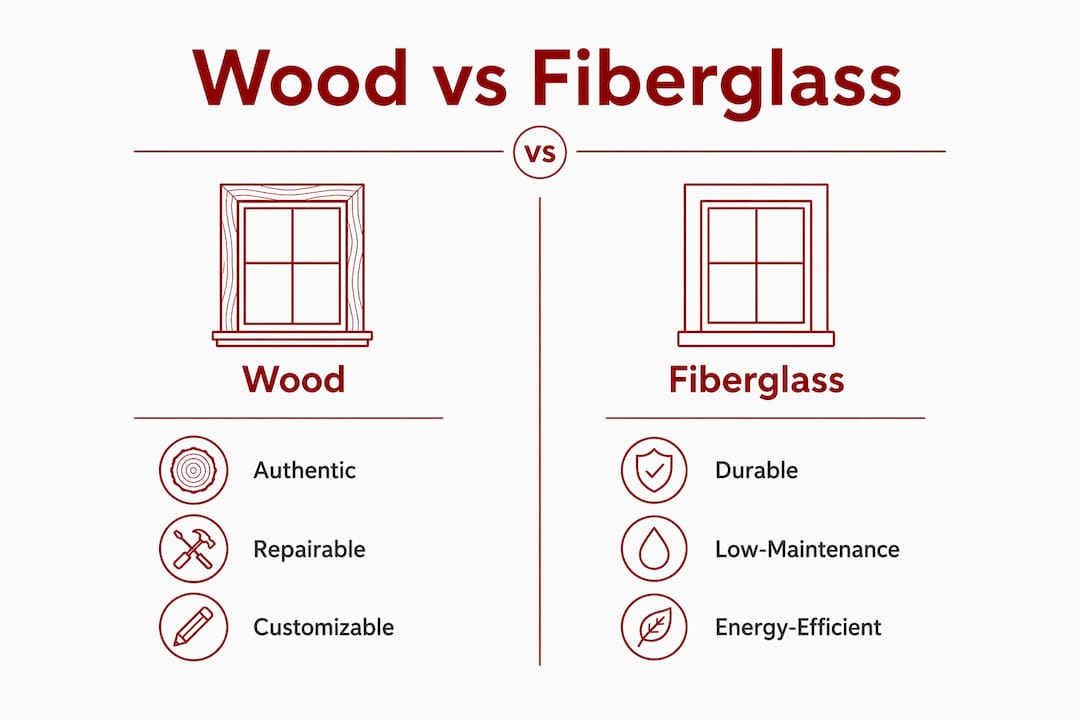
In U.S. terms, a lower U-factor means less heat escaping through the frame in winter and less solar heat entering in summer. The difference between a U-0.20 fiberglass frame and a U-0.30 vinyl frame is real, but the glazing unit — the combination of pane count, low-E coating, gas fill, and spacer bar — typically contributes more to whole-window performance than the frame alone.
One factor that most comparison guides understate: installation quality is often the decisive variable. Air gaps from poor flashing or inadequate air sealing can negate the thermal advantage of even a premium frame. A fiberglass window installed carelessly will underperform a wood window installed with precision.
Pro Tip: When reviewing bids, ask each installer for the whole-window U-factor (not just the glass U-value) with the proposed glazing package. Specify low-E coatings, argon gas fills, and warm-edge spacer bars — these three elements, covered in Gepettomillworks’ glazing project archive, consistently deliver the largest efficiency gains regardless of frame material.
How do durability and maintenance differ between the two materials?
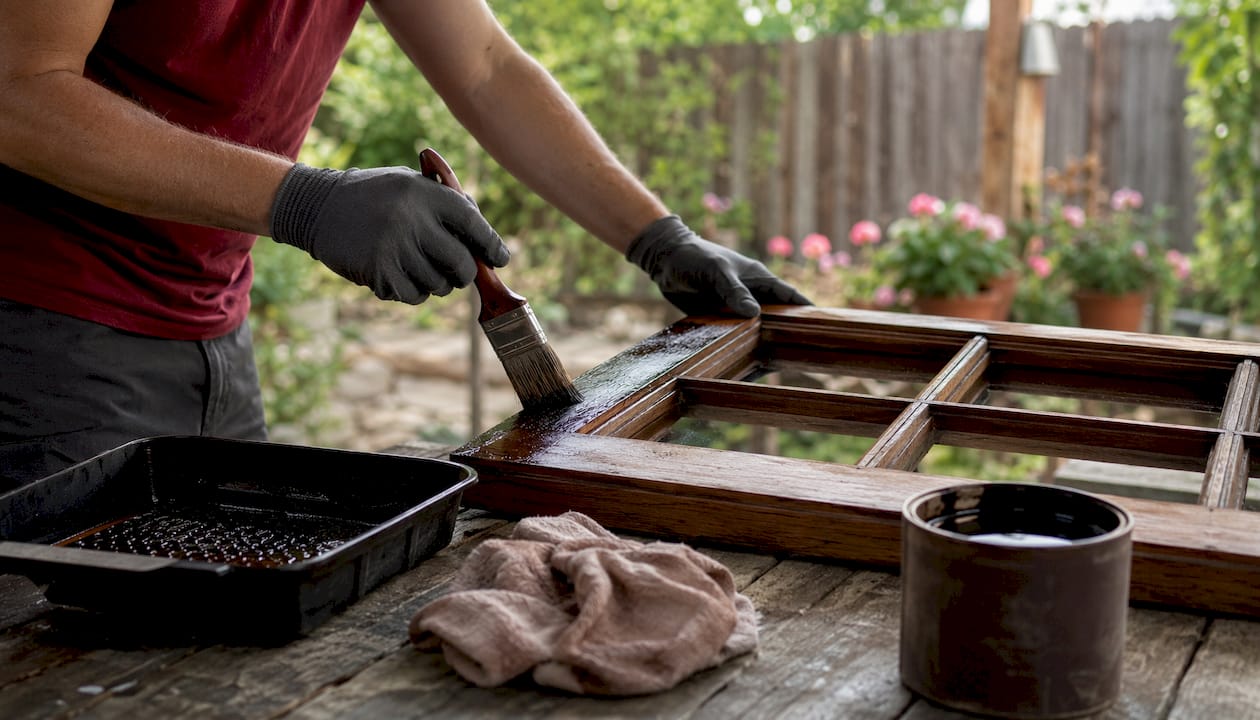
Fiberglass requires minimal maintenance and resists rot, pests, and corrosion. Wood can be repaired and refinished rather than fully replaced, but that repairability comes with a genuine maintenance obligation.
Fiberglass frames expand and contract at a rate closely matching glass itself, which reduces seal stress and preserves airtightness through decades of temperature cycling. Wood frames move more with humidity and temperature changes, which is why cladding details and proper drainage design matter so much in wood-clad systems.
Common failure risks by material:
- Wood: rot from moisture infiltration, paint or stain failure, insect damage in unprotected species, warping in poorly ventilated installations
- Fiberglass: finish wear in lower-quality products, limited standard color ranges in some lines, occasional brittleness at fastener points in cold climates
Realistic maintenance schedule:
- Wood (bare or clad-wood interior): Annual visual inspection of seals and finish; sanding and repainting or restaining every 5–10 years depending on climate and exposure; immediate repair of any cracked or peeling finish to prevent moisture infiltration.
- Fiberglass: Wash frames twice yearly with mild soap; touch up any surface chips with manufacturer-supplied paint; inspect seals at the 15–20 year mark.
Properly engineered wood-clad systems — where an aluminum or fiberglass exterior shell protects a wood interior — extend service life considerably. The critical specification detail is cladding attachment and drainage: a cladding system that traps moisture behind it creates hidden rot that is far more damaging than exposed bare wood.
What should you budget for wood versus fiberglass windows?
Wood carries a higher upfront cost and higher maintenance-driven lifecycle costs. Fiberglass costs more than vinyl at installation but typically delivers a lower total cost of ownership than wood when maintenance and replacement cycles are factored across 30–40 years.
Typical installed price ranges: vinyl is the most affordable, fiberglass is moderately priced, and wood or wood-clad are generally the most expensive, with custom-milled historic profiles costing the most.
| Material | Installed cost range | Expected lifespan | Maintenance cost (lifetime) |
|---|---|---|---|
| Fiberglass | — | 40–50 years | Low |
| Wood / clad-wood | — | 20–30 years (maintained) | Moderate to high |
Cost checklist when collecting bids:
- Confirm glazing specification is included (pane count, coating, gas fill)
- Verify warranty terms cover both frame and glass seal
- Clarify installation scope: flashing, air sealing, interior and exterior trim
- Ask for the expected maintenance schedule in writing
A simple lifecycle comparison: add the installed cost, estimated refinishing or maintenance costs over the window’s service life, and the cost of one replacement cycle. For a 40-year horizon, fiberglass often closes the upfront price gap because it typically requires no replacement within that period.
When does historic authenticity require wood?
Wood remains the superior material for authentic profiles, shadow lines, and the tactile depth that defines pre-20th-century American architectural character. Fiberglass can replicate many visual qualities, but conservation boards and historic tax-credit programs frequently require original materials and profiles that factory-extruded fiberglass cannot satisfy.
Finish and customization options by material:
- Wood: paint, stain, or clear finish in any color; complex profiles including elliptical lights, fanlights, tracery, and Palladian configurations; field-adjustable to non-standard openings
- Fiberglass: factory colors, woodgrain and EverWood-style interior finishes, paintable after installation — but complex custom profiles are constrained by manufacturing tooling
When a local historic district, the National Park Service’s Secretary of the Interior’s Standards, or a state historic tax-credit program governs a project, wood is often effectively mandated. Historically accurate window replication requires not just matching the visual profile but reproducing the muntin dimensions, glazing bar geometry, and glass type that preservation authorities expect.
Gepettomillworks fabricates custom wood windows to period-accurate profiles for historic restoration projects, including documentation support for federal and state historic tax credit eligibility. Where a planning board or preservation commission requires authentic wood profiles and shadowlines, that specification is the starting point, not a constraint.
Which material fits your climate and property type?
Fiberglass excels in extreme, variable, and coastal climates because its dimensional stability preserves seal integrity through wide temperature swings and salt-air exposure. Wood performs well in stable, interior, or controlled environments and is the natural choice for conservation and restoration contexts.
Climate guidance:
- Cold climates (Upper Midwest, New England): Prioritize low U-factor and triple glazing; fiberglass’s seal stability under thermal cycling is a meaningful advantage.
- Hot/humid climates (Gulf Coast, Southeast): Rot and moisture resistance favor fiberglass; wood-clad systems with proper drainage can perform, but require more vigilance.
- Coastal environments: Salt air and corrosion exposure make fiberglass the clear choice for longevity; bare wood exteriors degrade rapidly without frequent maintenance.
- High-sun climates (Southwest): UV-stable factory finishes on fiberglass outperform painted wood over time; specify UV-resistant coatings for either material.
| Climate / Property type | Recommended material | Primary reason |
|---|---|---|
| Cold, extreme temperature swings | Fiberglass | Seal stability, low U-factor |
| Hot/humid | Fiberglass | Rot and moisture resistance |
| Coastal / salt air | Fiberglass | Corrosion and UV resistance |
| Historic landmark / conservation | Wood | Authenticity, preservation compliance |
| Multi-family replacement | Fiberglass | Low maintenance, long service life |
| Single-family, Craftsman / bungalow | Wood or fiberglass | Depends on historic status and budget |
How should you decide and what to ask installers?
Define your priorities in this order: authenticity vs. maintenance burden vs. thermal performance. Then set the glazing specification. Then compare frame options. Then vet installers on their installation practices, not just their product lines.
Decision checklist:
- Identify your primary priority: historic authenticity, energy performance, or low lifetime cost.
- Choose your glazing package: triple vs. double pane, low-E coating type, gas fill, spacer bar.
- Obtain at least three bids with identical glazing specifications for a fair comparison.
- Check installer references specifically for flashing and air-sealing practices.
- Confirm warranty coverage for both frame and glass seal separately.
Questions to ask every bidder:
- What is the whole-window U-factor with the proposed glazing, not just the center-of-glass value?
- What is the flashing and air-sealing approach at the rough opening?
- What does the warranty cover, and who handles claims — the manufacturer or the installer?
- Can you provide examples of similar projects, including any historic or preservation work?
Red flags in bids: vague installation scope with no mention of flashing; missing glazing specifications; prices significantly below market ranges without a clear explanation; no written maintenance schedule provided.
What are the environmental and sourcing considerations?
Timber typically carries lower embodied carbon than many manufactured cladding materials when sourced responsibly, and its natural origin makes it the only genuinely renewable frame material in common use. Lifecycle durability and replacement frequency, however, affect whole-life carbon as much as upfront material choice — a fiberglass window that lasts 40–50 years may carry a lower whole-life carbon footprint than a wood window replaced twice in the same period.
Sourcing checks:
- Wood: Look for FSC (Forest Stewardship Council) or PEFC certification; ask about reclaimed timber options for restoration projects, which carry near-zero embodied carbon.
- Fiberglass: Manufactured from glass fiber and resin; energy-intensive to produce; limited recyclability at end of life compared to timber.
Properly engineered wood with protective exterior cladding, particularly when fabricated from certified or reclaimed timber, can be a genuinely low-carbon option for conservation projects where replacement frequency is low and the material is maintained correctly.
Pro Tip: When evaluating environmental impact, ask suppliers for a whole-life carbon estimate, not just an upfront material comparison. A well-maintained wood window on a 40-year cycle with FSC-certified timber often compares favorably to a fiberglass unit when manufacturing energy is included in the calculation.
Key Takeaways
Fiberglass delivers the lowest lifetime maintenance burden and strongest dimensional stability; wood remains the only material that satisfies historic preservation requirements and delivers authentic period profiles.
| Point | Details |
|---|---|
| Fiberglass for longevity | Fiberglass windows last multiple decades with minimal maintenance, outpacing wood’s 20–30 year cycle. |
| Wood for authenticity | Historic boards and tax-credit programs often require authentic wood profiles that fiberglass cannot replicate. |
| Glazing outweighs frame | Low-E coatings, argon fills, and warm-edge spacers affect U-factor more than frame material alone. |
| Installation is decisive | Poor flashing and air sealing negate even premium frames; vet installers on their rough-opening practices. |
| Gepettomillworks for historic work | Gepettomillworks fabricates custom wood windows to period-accurate profiles, including historic tax-credit documentation support. |
The case for specifying wood where it genuinely matters
The window material debate tends to flatten into a simple maintenance-vs-aesthetics trade-off, and that framing misses the most consequential dimension: regulatory and architectural obligation. For a Victorian rowhouse, a Craftsman bungalow, or a neoclassical civic building, the question is rarely “which material performs better in the abstract” — it is “which material the preservation authority will accept and which profile the building’s character demands.”
Fiberglass has earned its reputation as the functional upgrade for replacement projects in demanding climates, and the performance data supports that reputation. But the assumption that fiberglass woodgrain finishes satisfy conservation boards is one of the more persistent misconceptions in the window industry. Preservation commissions evaluate muntin profiles, glazing bar dimensions, and glass type with a precision that factory-extruded profiles rarely meet. The handmade wood windows that Gepettomillworks produces are not a nostalgic preference — they are a technical response to specifications that no off-the-shelf product addresses.
For homeowners and property managers who are not bound by preservation requirements, the honest recommendation is fiberglass for most replacement projects. For those who are, or who simply want the architectural depth that only worked wood delivers, the specification conversation starts with material and profile, not with U-factor.
Gepettomillworks: custom wood windows for historic and preservation projects
Historic properties deserve windows fabricated to the exact profiles, shadowlines, and glazing configurations their architecture requires — not the closest available substitute.
Gepettomillworks designs and fabricates custom wood windows for historic replica projects, restoration work, and new construction where period authenticity is the governing specification. Services include custom window fabrication to period-accurate profiles, glazing coordination for high-performance glass packages, and documentation support for federal and state historic tax-credit eligibility. Whether the project is a single fanlight or a full-building restoration, the starting point is always the building’s original character.
Contact Gepettomillworks to discuss your project and receive a specification-level consultation grounded in preservation standards.
Useful sources and further reading
- Windows: Energy Efficiency Facts and Myths — Washington State Department of Archaeology and Historic Preservation; covers R-value realities, rehabilitation costs, and historic window performance.
- Vinyl, Wood, or Fiberglass Windows: Here’s the Data — comparative U-factor, lifespan, and cost data across frame materials.
- The Benefits of Fiberglass Windows — lifespan and maintenance expectations for fiberglass.
- Fiberglass vs Wood Windows (Infinity by Marvin) — dimensional stability and seal longevity comparison.
- All-Timber Windows: Performance and Value Guide (Norrsken) — Uw values for triple-glazed timber and Passive House thresholds.
- Best Replacement Windows: Vinyl vs Fiberglass vs Wood — installed price ranges across material categories.
- Benefits of Fiberglass Windows (Milgard) — manufacturer perspective on installation requirements and cost-benefit.
- Gepettomillworks: glazing project archive — glazing specifications and project examples for historic and high-performance installations.
- Gepettomillworks: historically accurate windows — period profile replication and preservation documentation.
- Gepettomillworks: historic tax credit projects — tax-credit eligibility documentation and restoration project examples.