
Architectural wood products are defined as custom wood elements crafted for both structural and decorative roles in building construction, combining biological material science with precise millwork craft. Washington, D.C.’s built environment, from its Federal-period row houses to its Beaux-Arts civic monuments, depends on these components to maintain both historical integrity and functional performance. Gepettomillworks specializes in exactly this territory, producing custom millwork for historic building projects where material selection and fabrication precision are not optional considerations but foundational requirements. Understanding the full spectrum of wood species, engineered timber systems, modification techniques, and sustainability frameworks gives architects, builders, and restoration professionals the material intelligence to specify with confidence.
What are architectural wood products and how are they classified?
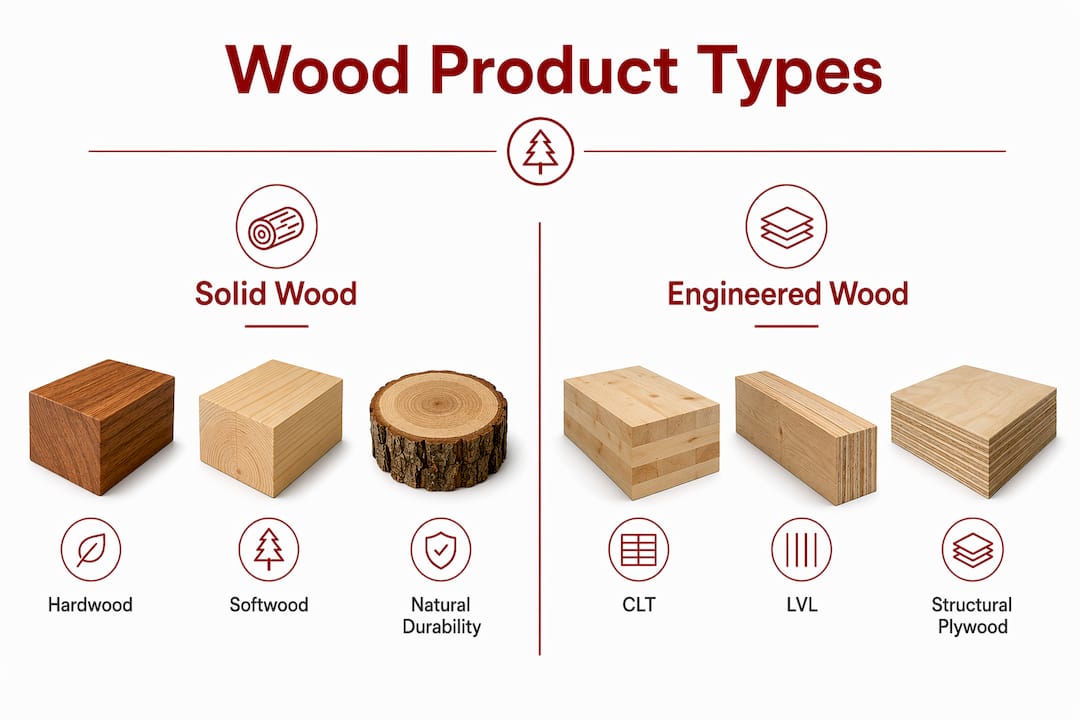
Architectural wood products encompass solid lumber, engineered wood assemblies, and modified wood elements used in structural framing, cladding, joinery, and decorative millwork. The industry recognizes two primary categories: solid wood, milled from a single log, and engineered wood, manufactured by bonding wood fibers, veneers, or strands under heat and pressure. Each category serves distinct architectural purposes, and the choice between them depends on span requirements, dimensional stability needs, and aesthetic intent.
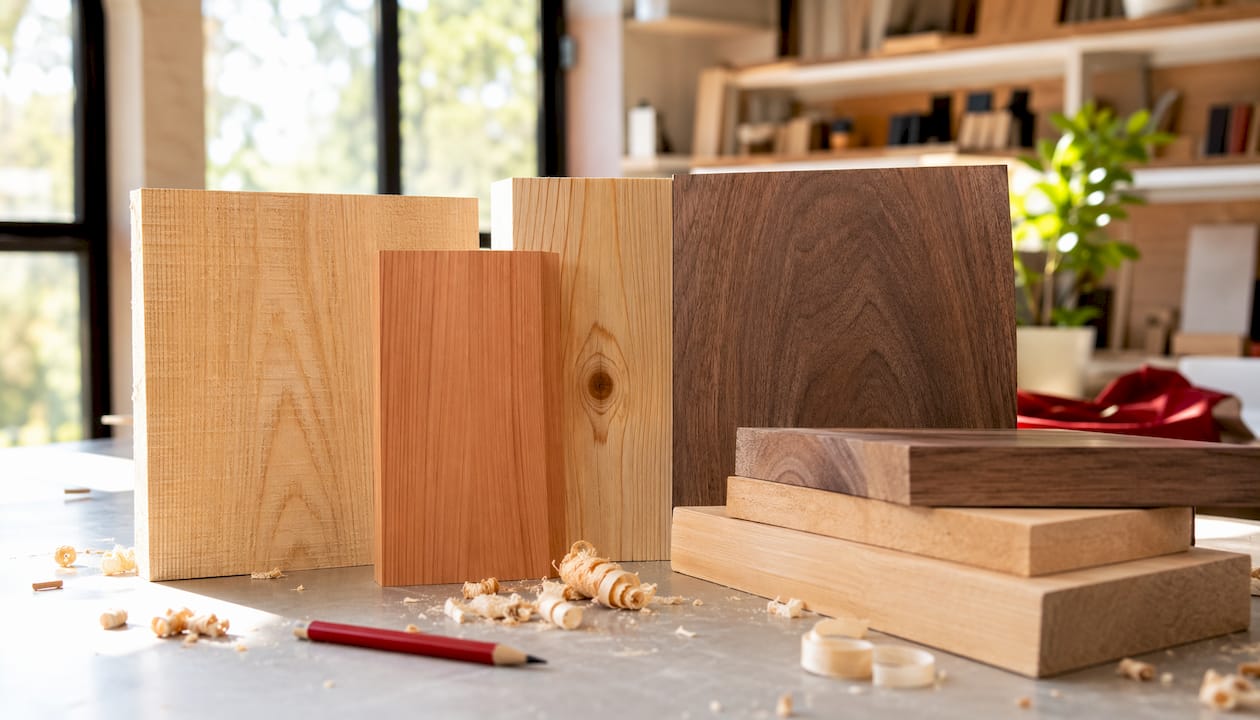
Solid wood species divide further into softwoods and hardwoods, a botanical distinction that does not always predict hardness. Cedar and Pine are softwoods prized for their workability and natural resin content, making them reliable choices for exterior cladding and trim. Oak, Walnut, and Cherry are hardwoods valued for their grain density, figure, and resistance to surface wear, making them the preferred species for flooring, paneling, and interior joinery. Each species carries a distinct set of mechanical and aesthetic properties that must align with the project’s performance requirements.
Engineered wood products, including Cross-Laminated Timber (CLT), Laminated Veneer Lumber (LVL), and structural plywood, address the size and stability limitations of solid lumber. CLT panels can span large open floor plates without intermediate columns, a structural capability no solid timber beam can match at equivalent dimensions. IBC Type IV-A mass timber standards allow buildings up to 18 stories with complete encapsulation providing two hours of fire resistance. That regulatory recognition signals that engineered timber has moved from experimental to mainstream in multi-story construction.
| Material | Durability | Structural Strength | Typical Use |
|---|---|---|---|
| Cedar (solid) | High natural resistance | Moderate | Exterior cladding, trim |
| Oak (solid) | Very high | High | Flooring, interior joinery |
| Pine (solid) | Moderate | Moderate | Framing, millwork |
| CLT (engineered) | High with treatment | Very high | Structural floors, walls |
| LVL (engineered) | High | Very high | Beams, headers |
| Structural plywood | Moderate | High | Sheathing, subfloors |
Pro Tip: When specifying solid wood for exterior millwork in D.C.’s humid summers and cold winters, prioritize species with a natural resin content, such as Cedar or old-growth Pine, before reaching for chemical treatments.
How do wood modification techniques improve durability?
Wood modification is the process of chemically or thermally altering wood’s cellular structure to improve its performance without relying on biocidal preservatives. Three techniques dominate current specification practice: acetylation, thermal modification, and furfurylation. Each method changes different aspects of wood’s biological behavior, and each carries trade-offs that affect specification decisions.
Acetylated wood, commercially produced as Accoya, undergoes a process that replaces the wood’s hydroxyl groups with acetyl groups, dramatically reducing the material’s ability to absorb moisture. Acetylated wood reduces swelling and shrinking by approximately 75% compared to unmodified softwood and achieves EN 350 Durability Class 1 rating, the highest classification for natural durability. That performance level makes it the material of choice for exterior joinery, window frames, and cladding in climates with significant seasonal moisture variation.
Thermal modification, marketed under the ThermoWood brand, uses heat between 160°C and 230°C to permanently alter wood’s cell structure, reducing hygroscopicity and improving biological resistance. The process darkens the wood’s color and reduces its bending strength modestly, which limits its use in load-bearing applications. Furfurylation, the process behind Kebony, impregnates wood with furfuryl alcohol derived from agricultural waste, increasing density and hardness while achieving durability ratings comparable to tropical hardwoods.
Key trade-offs across modification methods:
- Acetylation (Accoya): Superior dimensional stability, Class 1 durability, paintable surface; not suitable for in-ground or heavy structural load applications
- Thermal modification (ThermoWood): Good biological resistance, reduced strength, color darkens over time outdoors
- Furfurylation (Kebony): High hardness and density, sustainable feedstock, higher cost per linear foot than thermal alternatives
Modified wood retains durability without biocides but still requires proper moisture management. Poor installation, particularly inadequate end-grain sealing and drainage detailing, forces failure even in the most durable modified species.
Pro Tip: Always seal end grain on modified wood components before installation. End grain absorbs moisture at a rate many times higher than face grain, and no modification process fully eliminates that differential.
Why does sustainability regulation now favor wood construction?
Sustainability regulation has shifted from voluntary guidance to mandatory compliance across major construction markets, and wood is the primary beneficiary of that shift. Wood is among few materials capable of achieving a net negative carbon footprint in a full life cycle assessment, a distinction that places it in a separate category from concrete, steel, and aluminum. The European Union’s Green Deal and Construction Products Regulation now require mandatory sustainability declarations for wood products including doors, windows, and structural elements. That regulatory pressure is accelerating wood specification across building types that previously defaulted to steel or concrete.
“Market shifts toward mandatory sustainability regulations make wood the leading construction material capable of net-negative carbon footprints, a distinction no other mainstream building material can claim across a full life cycle assessment.”
The carbon accounting logic behind this preference is straightforward. Trees sequester carbon during growth, and that carbon remains stored in the wood product for the building’s service life. When the building reaches end of life, wood can be reused, recycled into engineered products, or combusted for energy recovery, each pathway extending the carbon storage benefit. Concrete and steel, by contrast, generate significant process emissions during production with no equivalent sequestration offset.
A flexible design approach in timber housing can reduce environmental impact by up to 20% overall and by approximately 60% in construction and end-of-life phases. That finding from a 2026 study in the Journal of Industrial Ecology demonstrates that design strategy, not just material choice, determines the full environmental outcome. Architects who design for adaptability and disassembly extract significantly more carbon benefit from wood than those who treat it as a fixed, permanent assembly.
| Construction Phase | Carbon Impact (Wood vs. Concrete) |
|---|---|
| Material production | Wood significantly lower |
| Construction | Wood lower with prefabrication |
| Operational life | Comparable with good insulation design |
| End of life | Wood lower with reuse or energy recovery |
What are the best practices for designing with wood elements?
The most consequential property architects must account for in wood design is anisotropic movement, the fact that wood expands and contracts at different rates along its three grain axes. Wood’s anisotropic movement due to grain orientation affects dimensional stability; quarter-sawn lumber is measurably more stable than flat-sawn, a distinction critical for maintaining tight tolerances in joinery and paneling. Quarter-sawn boards expose the radial face, which moves roughly half as much as the tangential face exposed in flat-sawn cuts. For complex wood manufacturing applications such as curved moldings, elliptical window surrounds, or Palladian-style casings, specifying quarter-sawn stock prevents the warping and joint failure that flat-sawn material produces over seasonal cycles.
Mass timber connection systems introduce a separate layer of design complexity that many project teams underestimate. Connection hardware complexity impacts crane scheduling and construction sequencing beyond panel assembly, often determining the critical path of a project more than the panels themselves. Fire code requirements for connection encapsulation add fabrication steps that must be coordinated with the structural engineer and contractor before shop drawings are issued. Resolving these details in design development, not during construction administration, prevents costly field modifications.
Parametric design tools now accelerate mass timber selection by modeling embodied carbon and structural feasibility early in the design process. These tools allow architects to evaluate multiple species and section configurations against carbon targets before committing to a structural system. That early-stage analysis closes the gap between environmental ambition and structural reality, a gap that has historically caused mass timber projects to revert to concrete or steel during value engineering.
Practical design guidelines for wood architecture materials:
- Specify quarter-sawn lumber for all exposed interior millwork subject to seasonal humidity variation
- Detail all exterior wood assemblies with positive drainage slopes and ventilated back cavities
- Coordinate mass timber connection hardware with structural engineers before design development is complete
- Use parametric carbon modeling tools to compare CLT, LVL, and glulam options against project carbon budgets
- Allow for wood movement in panel and flooring systems by sizing expansion gaps to the species’ expected seasonal range
Pro Tip: For restoration work on D.C.’s 19th-century row houses and Federal-style buildings, match the grain orientation and species of original millwork before fabricating replacements. A mismatched grain pattern reads as a repair, not a restoration.
Key Takeaways
Architectural wood products deliver both structural performance and aesthetic authenticity when specified with precision, selected for biological compatibility, and detailed for long-term moisture management.
| Point | Details |
|---|---|
| Material classification matters | Distinguish between solid species and engineered products to match structural and aesthetic requirements. |
| Modification extends performance | Acetylated wood achieves EN 350 Class 1 durability with 75% less swelling than unmodified softwood. |
| Sustainability regulation favors wood | Wood is one of the only materials capable of a net negative carbon footprint across a full life cycle. |
| Grain orientation determines stability | Quarter-sawn lumber moves significantly less than flat-sawn, protecting joinery tolerances over time. |
| Connection design drives scheduling | Mass timber hardware complexity affects crane sequencing and must be resolved before construction begins. |
Wood as a living material: what experience teaches
Wood is a living material that continues to breathe and move after installation. That biological reality is not a liability to be engineered away. It is the defining characteristic that makes wood architecture feel different from concrete or steel construction, warmer, more responsive, more honest about the passage of time.
What experience in historic restoration teaches is that most wood failures are not material failures. They are detailing failures. A perfectly specified Accoya window frame installed without adequate end-grain sealing will fail before an ordinary Pine frame installed with meticulous attention to drainage and finish. The material is only as good as the craft surrounding it.
The regulatory momentum behind sustainable wood design is real and accelerating. Architects who build fluency with life cycle assessment, carbon accounting, and modified wood specification now will be better positioned as mandatory sustainability declarations become standard practice across American building codes. The EU’s trajectory on Construction Products Regulation is a reliable leading indicator of where domestic policy is heading.
The most underappreciated opportunity in current practice is the intersection of parametric design tools and traditional millwork craft. Early-stage carbon modeling can identify the optimal timber system for a project’s structural and environmental targets, and that system can then be detailed with the same precision and care that historic craftsmen applied to their work. Technology and tradition are not in tension here. They are complementary.
— Gepetto
Gepettomillworks custom wood solutions for your next project
Gepettomillworks brings specialized millwork craft to architects, builders, and restoration professionals working on historic and architecturally significant projects across the District of Columbia and beyond.
Whether your project calls for Mission Revival millwork, period-accurate historic replicas, or qualified restoration craftsmen who understand the biological and historical demands of original wood assemblies, Gepettomillworks offers the depth of expertise your project requires. The catalog includes mouldings, columns, brackets, turned elements, and custom joinery, each fabricated to match original profiles and species where documentation exists. Contact Gepettomillworks to discuss your project’s material requirements and receive a consultation tailored to your architectural vision.
FAQ
What are architectural wood products?
Architectural wood products are custom wood elements used for structural and decorative purposes in building construction, including solid lumber, engineered timber systems such as CLT and LVL, and modified wood components for exterior and interior applications.
How does acetylated wood differ from standard treated lumber?
Acetylated wood modifies the wood’s cellular chemistry to reduce moisture absorption by approximately 75%, achieving EN 350 Durability Class 1 without biocidal preservatives, whereas standard pressure-treated lumber relies on chemical preservatives that can leach over time.
Why is wood considered a sustainable building material?
Wood is one of the only construction materials capable of achieving a net negative carbon footprint across a full life cycle assessment, because growing trees sequester carbon that remains stored in the wood product throughout its service life.
What is the difference between quarter-sawn and flat-sawn lumber?
Quarter-sawn lumber exposes the radial grain face, which moves significantly less across its width than the tangential face exposed in flat-sawn cuts, making it the preferred choice for architectural joinery and millwork where dimensional stability is critical.
How do mass timber buildings meet fire code requirements?
IBC Type IV-A standards allow mass timber buildings up to 18 stories when complete encapsulation provides two hours of fire resistance, with connection hardware also required to meet fire code specifications that affect both fabrication and installation sequencing.