
| Radius Millwork |
| Curved and Radius Molding |
| Custom Molding Profiles |
| Matching Modling Profiles |
| Radius Molding Production |
| Restoration Millwork |
| Historical Millwork |
| Master Carpentry Millwork |
| Detailed Millwork |
| Custom Millwork Shop |
| Casework and Millwork Shop Drawings |
| Millwork Shop Blueprints |
| Millwork Design Shop Drawings |
| Millwork from Drawings |
| Architectural Millwork Drawings |
| Virginia Architectural Millwork Fabrication |
| Richmond Virginia Casework |
| Richmond VA Casework |
| Virginia Casework Specialists |
| Custom Casework Specialist |

What is Millwork?
mill•work
(ˈmɪlˌwɜrk)
n.
A longtime fixture in the architectural woodwork industry, Gepetto Millworks has been recognized throughout its 20-year history for many of its high-profile projects around Richmond. I found Matthew’s expertise indispensable in adding fine woodworking to my custom home projects. The classy flair of real wood is an authentic element that manufactured homes can never fake.
[ninja_form id=1]
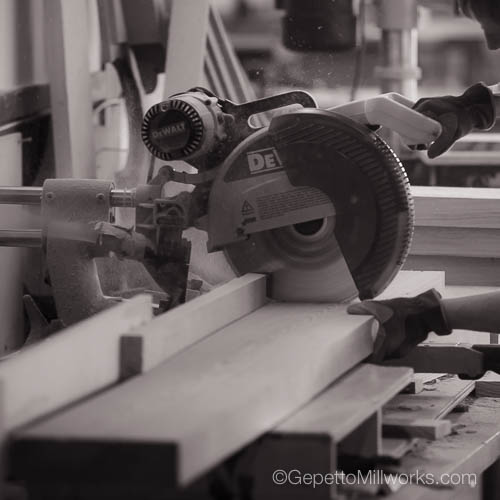
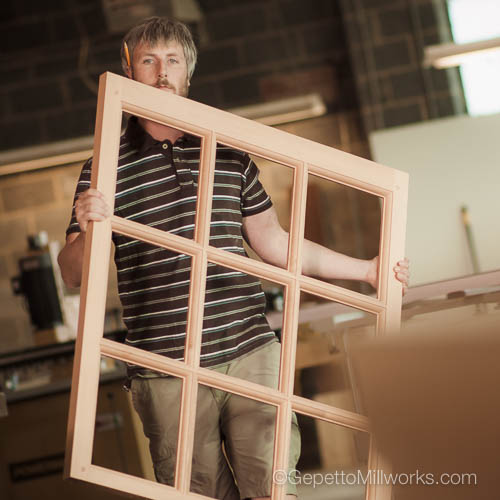
“Millwork” refers to the stuff traditionally made in a mill. Items such as base trim, crown molding, interior doors, door frames, window casing, chair rails and wood paneling are all examples of millwork. These items are all cut and created from raw lumber – in a sawmill – thus, giving them the umbrella term “millwork.” Millwork may also include decorative products, such as mantels and door casings. Millwork can be made from common woods such as pine and oak, but it may also include uncommon woods such as fir, poplar, hickory and maple. Some manufactured wood products also have a high enough density to be used for millwork, such as MDF. Millwork products only need nails, screws or adhesives to be installed, which makes using them easy and convenient. Millwork can be at standard lengths and can be stained or painted.
Architectural millwork does not have to necessarily be built-in to a structure. It can be a free-standing piece such as this rolling kitchen island (pictured right) that South Shore Millwork built for a home on the South Shore. Not to mention architectural millwork can be either stock (“off-the-shelf”), semi-custom, or custom such as what South Shore Millwork provides.